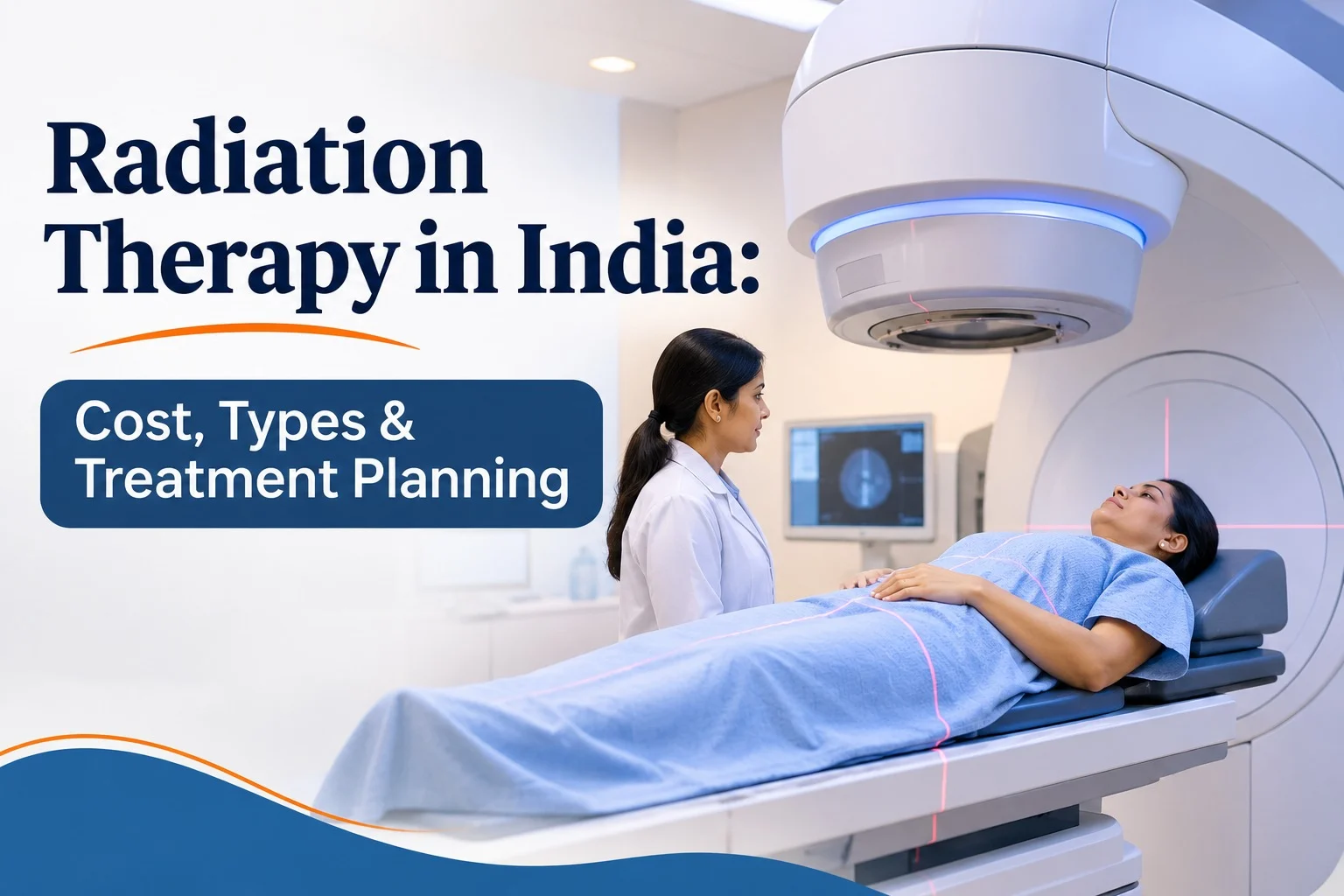
Radiation Therapy in India: Types, Cost & Treatment Planning
Radiation therapy in India is an important treatment option for patients diagnosed with different types of cancer. It uses high-energy radiation to damage cancer cells, control tumour growth or reduce the size of a tumour. Depending on the diagnosis, radiation may be recommended alone or alongside surgery, chemotherapy and other cancer treatments. Patients considering oncology treatment in India can consult a radiation oncologist to understand the most suitable treatment approach.
The radiation therapy cost in India generally ranges from ₹60,000 to ₹3.5 lakh or more, depending on the radiation technique, cancer type, number of sessions and hospital facilities. Conventional radiotherapy, IMRT, IGRT and stereotactic radiation have different planning and treatment requirements.
India has several cancer hospitals with radiation oncology departments, linear accelerators and image-guided treatment systems. Patients from India and overseas can access specialist consultations, treatment planning and supportive cancer care.
This guide covers the types of radiation therapy, estimated treatment expenses, planning process, number of sessions, possible side effects and important factors to consider when choosing a hospital.
In this guide
- What Is Radiation Therapy?
- What Are the Different Types of Radiation Therapy Available in India?
- How Much Does Radiation Therapy Cost in India?
- What Is the IMRT Cost in India?
- What Is the IGRT Treatment Cost?
- What Is the Stereotactic Radiotherapy Cost?
- What Factors Affect Radiation Therapy Cost?
- How Is Radiation Therapy Planned?
- How Many Radiation Therapy Sessions Are Required?
- What Are the Side Effects of Radiation Therapy?
- Which Hospitals in India Offer Radiation Therapy?
- Radiation Treatment for International Patients in India
- How to Choose the Right Radiation Oncologist in India
- How HealthRoop Helps Patients Seeking Radiation Therapy in India
- Conclusion
- Latest Articles
- FAQs
What Is Radiation Therapy?
Radiation therapy, also called radiotherapy, is a cancer treatment that uses high-energy radiation to damage the DNA of cancer cells. This prevents them from growing and dividing normally, eventually causing many damaged cells to die.
The radiation is directed towards a specific treatment area while the medical team works to limit exposure to nearby healthy tissues.
Radiotherapy may be recommended for different purposes:
- Curative treatment: To eliminate cancer in selected patients.
- Adjuvant treatment: To reduce the risk of cancer returning after surgery.
- Neoadjuvant treatment: To shrink a tumour before surgery.
- Concurrent treatment: Alongside chemotherapy when clinically appropriate.
- Palliative treatment: To reduce symptoms such as pain, bleeding or pressure caused by cancer.
The treatment objective depends on the cancer type, stage, tumour location and patient's overall health.
What Are the Different Types of Radiation Therapy Available in India?
The choice of radiation technique depends on the tumour's size, shape, location and proximity to important organs. The radiation oncologist selects the method after reviewing the patient's medical reports and imaging.
1. External Beam Radiation Therapy (EBRT)
External beam radiation therapy uses a machine called a linear accelerator to deliver radiation from outside the body towards the tumour.
The patient lies on a treatment table while the machine directs radiation beams from planned angles. It is commonly used for breast, lung, prostate, brain, head and neck and several other cancers.
2. Three-Dimensional Conformal Radiation Therapy (3D-CRT)
3D-CRT uses CT and other imaging information to create a three-dimensional picture of the tumour.
Radiation beams are shaped according to the target area to help reduce unnecessary exposure to surrounding healthy tissues.
3. Intensity-Modulated Radiation Therapy (IMRT)
IMRT cost India is an important consideration for patients who require advanced radiation planning.
Intensity-modulated radiation therapy uses multiple beams with different radiation intensities. This allows the treatment team to adjust the dose according to the shape and location of the tumour.
IMRT may be used for head and neck cancers, prostate cancer, brain tumours and selected pelvic or breast cancers.
4. Image-Guided Radiation Therapy (IGRT)
IGRT treatment India involves using imaging before or during radiation sessions to check the position of the tumour and surrounding anatomy.
This is particularly useful when the target may move due to breathing or changes in bladder and bowel filling.
IGRT can be combined with IMRT and other external beam techniques when required.
5. Stereotactic Radiosurgery (SRS)
SRS delivers highly focused radiation to selected targets, usually in the brain or nervous system. Despite its name, it does not involve a surgical incision.
It may be recommended for selected brain tumours and metastatic brain lesions. Depending on the diagnosis, treatment may involve one or a small number of sessions.
6. Stereotactic Body Radiation Therapy (SBRT)
SBRT delivers focused radiation to selected tumours outside the brain, often in fewer sessions than conventional radiotherapy.
It may be considered for certain lung, liver, prostate, adrenal and spinal tumours.
The stereotactic radiotherapy cost is influenced by the planning requirements, number of fractions and equipment used.
7. Brachytherapy
Brachytherapy is an internal radiation treatment in which a radioactive source is placed inside or close to the tumour.
It is used in selected cases of cervical, prostate, breast and vaginal cancers. It may be performed alone or alongside external radiation, depending on the treatment plan.
How Much Does Radiation Therapy Cost in India?
The radiotherapy cost India varies according to the cancer type, treatment technique, number of sessions and hospital.
The following table provides indicative treatment estimates for financial planning.
Radiation Therapy Cost in India: Price Comparison
| Treatment Type | Estimated Cost (INR) | Approx. Cost (USD) |
|---|---|---|
| Conventional Radiation Therapy | ₹60,000–₹1,00,000 | $640–$1,067 |
| 3D-CRT | ₹60,000–₹1,20,000 | $640–$1,281 |
| IMRT | ₹1,50,000–₹2,95,000 | $1,601–$3,150 |
| IGRT | ₹1,50,000–₹3,50,000 | $1,601–$3,737 |
| SBRT / SRS | ₹1,80,000–₹3,50,000+ | $1,922–$3,737+ |
| Brachytherapy | ₹50,000–₹2,00,000 | $534–$2,135 |
| Proton Therapy | On Request | On Request |
Price references: Tata Memorial Centre/ACTREC institutional schedule of charges and published Indian radiotherapy pricing references.
Note: These are indicative estimates, not fixed hospital package prices. The final quotation depends on treatment complexity, hospital charges and the patient's medical condition. USD conversions are approximate at ₹93.69 per US dollar. Individual hospital quotations may differ, and some treatment components may be charged separately.
What Is the IMRT Cost in India?
The IMRT cost India generally ranges from ₹1.5 lakh to ₹2.95 lakh for a treatment course.
The final expense may include:
- Radiation oncologist consultation.
- CT simulation.
- Computer-based treatment planning.
- Medical physics and dosimetry checks.
- Radiation delivery.
- Image verification.
- Follow-up assessment.
Some hospitals include planning and imaging in the package, while others charge separately.
What Is the IGRT Treatment Cost?
The cost of IGRT may range from ₹1.5 lakh to ₹3.5 lakh or more, depending on the treatment plan and hospital.
The quotation may vary according to imaging frequency, number of sessions and whether IGRT is combined with IMRT or another radiation technique.
What Is the Stereotactic Radiotherapy Cost?
Stereotactic radiation treatment may cost approximately ₹1.8 lakh to ₹3.5 lakh or more.
The main cost factors include tumour location, treatment complexity, imaging, immobilisation equipment and the number of sessions.
Patients should obtain a written quotation after the radiation oncologist confirms that SRS or SBRT is appropriate.
What Factors Affect Radiation Therapy Cost?
The total treatment expense is not the same for every patient. The following factors influence the final quotation:
- Cancer type and stage: The tumour's location and extent determine the treatment approach.
- Radiation technique: IMRT, IGRT and stereotactic treatments may require more specialised planning.
- Number of sessions: Longer treatment courses generally involve more appointments.
- Treatment planning: CT simulation, imaging and dose calculations contribute to the expense.
- Hospital facilities: Charges vary between government hospitals and private cancer centres.
- Additional treatment: Chemotherapy, medicines, investigations and follow-up may be billed separately.
Patients should request an itemised estimate before starting treatment.
How Is Radiation Therapy Planned?
Radiation treatment planning helps the medical team identify the target area and deliver the prescribed dose while protecting nearby organs.
The process generally includes the following steps.
Step 1: Radiation Oncology Consultation
The radiation oncologist reviews the biopsy report, cancer stage, previous treatments and imaging results.
The doctor decides whether radiation is suitable and whether it should be combined with surgery or chemotherapy.
Step 2: Medical Report Review
The team may review:
- Biopsy and histopathology reports.
- CT and MRI scans.
- PET-CT reports.
- Previous surgery records.
- Chemotherapy details.
- Previous radiation treatment records.
Previous radiation details are particularly important if the patient has already received treatment in the same body region.
Step 3: CT Simulation
CT simulation is performed to determine the patient's treatment position and identify the target area.
Depending on the cancer location, special positioning devices or moulds may be used to help the patient remain still during treatment.
Step 4: Treatment Planning
The radiation oncologist outlines the tumour and nearby organs. A medical physicist and dosimetry team then calculate the radiation dose and beam arrangements.
The plan is checked to ensure that the prescribed dose can be delivered within the required safety limits.
Step 5: Quality Checks
Before treatment begins, the approved plan undergoes technical verification and quality assurance.
Step 6: Radiation Sessions
The patient attends the hospital according to the prescribed schedule. The team checks positioning before delivering radiation.
How Many Radiation Therapy Sessions Are Required?
The number of sessions depends on the cancer type, treatment objective and radiation technique. Each session is commonly called a fraction.
| Treatment Technique | General Treatment Schedule |
|---|---|
| Conventional radiotherapy | 15–30 or more sessions |
| 3D-CRT | Around 15–30 sessions |
| IMRT | Around 20–35 sessions |
| IGRT | Depends on the treatment plan |
| SBRT | Commonly 1–5 sessions |
| SRS | Often 1 session; sometimes more |
| Brachytherapy | Depends on the cancer and protocol |
These are general examples, not fixed schedules. Some patients need shorter treatment courses, while others require additional sessions.
External beam radiation is commonly delivered once a day on weekdays, although schedules vary according to the diagnosis.
What Are the Side Effects of Radiation Therapy?
Radiation can affect healthy tissues near the treatment area. Side effects depend on the body part receiving radiation, total dose and number of sessions.
Common side effects include:
- Fatigue: Patients may feel tired during treatment and for some time afterwards.
- Skin changes: Redness, dryness, itching or darkening may occur in the treated area.
- Hair loss: Hair loss can occur in the area receiving radiation.
- Digestive problems: Abdominal radiation may cause nausea, diarrhoea or discomfort.
- Mouth and throat problems: Head and neck radiation may cause dry mouth, mouth sores or difficulty swallowing.
- Urinary symptoms: Pelvic radiation may cause frequent urination or discomfort.
Some patients may develop late side effects months or years after treatment. These can include tissue stiffness, changes in organ function and fertility problems.
Patients should report new or worsening symptoms to their treating team rather than managing them with medicines without medical advice.
Which Hospitals in India Offer Radiation Therapy?
Choosing a hospital requires checking the radiation oncology department, available equipment and specialist experience.
The following hospitals are listed in the HealthRoop hospital directory with oncology or radiation-related services.
1. Apollo Hospitals
Apollo Hospitals operates a large network across India. Its hospital listing includes oncology services and advanced cancer treatment facilities. Patients should confirm the availability of the required radiation technique at their preferred branch.
2. Fortis Healthcare
Fortis Healthcare has hospitals across India, including Delhi NCR. Patients can enquire about radiation oncology services, treatment planning and the availability of IMRT or IGRT at the selected centre.
3. Medanta – The Medicity
Located in Gurugram, Medanta has a dedicated cancer institute and radiation oncology services. Patients can enquire about available radiation technologies and multidisciplinary cancer care.
4. Narayana Health
Narayana Health operates hospitals in Bengaluru and other Indian cities. Patients should contact the relevant centre to confirm external beam radiation and specialised treatment availability.
5. Manipal Hospitals
Manipal Hospitals has a network of multispecialty hospitals, including facilities in Bengaluru. Patients can enquire about radiation oncology consultations and treatment options.
6. Max Healthcare
Max Healthcare operates hospitals across Delhi NCR and other cities. Its network includes advanced oncology facilities, with treatment availability varying by branch.
7. HCG Cancer Centre
HCG specialises in cancer care and offers radiation oncology services through its cancer hospital network. Patients can enquire about linear accelerators, IMRT, IGRT and stereotactic treatment.
Important: A hospital's presence in the directory does not confirm that every branch provides every radiation technique. Always verify the equipment, specialist availability and treatment schedule directly.
You can review the hospitals listed in India before requesting a treatment estimate.
Radiation Treatment for International Patients in India
India is an option for patients travelling from other countries for cancer treatment. Radiation treatment for international patients requires advance coordination because the number of hospital visits depends on the prescribed treatment schedule.
Before travelling, patients should share their biopsy reports, scans, previous treatment records and current prescriptions.
International patients should confirm:
- Availability of the required radiation technique.
- Specialist consultation arrangements.
- Complete treatment cost.
- Number of radiation sessions.
- Expected duration of stay.
- Accommodation and transport arrangements.
- Follow-up and emergency support.
- Medical visa documentation requirements.
Conventional radiation may require several weeks, whereas selected stereotactic treatments may involve fewer visits. The hospital should confirm the expected schedule before travel arrangements are finalised.
How to Choose the Right Radiation Oncologist in India
Choosing an experienced radiation oncologist India patients can consult is an important part of cancer treatment planning.
Consider these factors:
- Qualifications: Check the doctor's specialist training and experience in radiation oncology.
- Cancer-specific experience: Ask whether the doctor regularly treats the particular cancer type.
- Treatment technology: Confirm the availability of the recommended radiation technique.
- Medical physics support: Ask about treatment planning and quality assurance facilities.
- Cost transparency: Request a complete written quotation.
- Follow-up care: Understand how treatment response and side effects will be monitored.
The most expensive treatment is not automatically the most appropriate. The radiation technique should be selected according to medical evidence and individual treatment requirements.
How HealthRoop Helps Patients Seeking Radiation Therapy in India
Choosing a cancer hospital and arranging treatment can involve several medical and practical decisions. HealthRoop helps patients explore suitable oncology hospitals, connect with specialists and obtain treatment estimates based on their medical reports and requirements.
Its patient coordination support includes:
- Hospital Selection: Assistance in identifying cancer hospitals offering relevant radiation services.
- Specialist Consultation: Help arranging appointments with radiation oncologists.
- Medical Report Coordination: Assistance with sharing biopsy reports, scans and previous treatment records.
- Treatment Cost Estimates: Help obtaining hospital-specific quotations and understanding package inclusions.
- International Patient Support: Coordination for overseas patients planning cancer treatment in India.
- Travel Assistance: Support with accommodation, airport transfers and appointment arrangements.
- Follow-up Coordination: Assistance with follow-up consultations and hospital communication.
Diagnosis and treatment decisions remain the responsibility of the treating medical team.
Conclusion
Radiation therapy is an important part of cancer treatment and may help control tumours, reduce recurrence risk or relieve symptoms in selected patients. The appropriate technique depends on the cancer type, stage, tumour location and overall medical condition.
The radiation therapy cost in India varies according to the treatment technology, planning requirements, number of sessions and hospital facilities. IMRT, IGRT and stereotactic treatments may involve higher expenses because of their specialised planning and delivery requirements.
Before selecting a hospital, consult a qualified radiation oncologist, understand the proposed treatment plan and request a complete cost estimate. International patients should also confirm treatment availability, expected stay and follow-up arrangements before travelling.
Price Disclaimer: The prices mentioned in this article are indicative estimates based on previously available hospital pricing schedules and treatment cost references, primarily from the previous year. Actual charges may change according to the hospital, cancer type, radiation technique, number of sessions and individual medical requirements. For exact and updated treatment costs, hospital-specific packages and availability, please call +91 96023 62831 or email healthroop@gmail.com before making a treatment decision.
Latest Articles
Frequently Asked Questions
Answers on radiation therapy cost, types, sessions and planning in India.
The average radiation therapy cost in India can range from ₹60,000 to ₹3.5 lakh or more, depending on the treatment technique, cancer type and number of sessions. IMRT, IGRT and stereotactic treatments may cost more because they require specialised planning.
The number of sessions depends on the cancer type, tumour location and treatment objective. Conventional radiation may require 15–30 or more sessions, while selected stereotactic treatments can be completed in one to five sessions.
IMRT adjusts radiation beam intensity to shape the dose around the tumour and nearby organs. IGRT uses imaging before or during treatment to verify positioning. Both techniques can be combined when clinically appropriate.
External beam radiation therapy is generally painless during delivery. Patients lie on a treatment table while the machine directs radiation towards the planned area. Side effects such as fatigue, skin irritation or discomfort may develop during treatment.
Radiation therapy is an established cancer treatment when appropriately prescribed and planned. Modern techniques help control radiation delivery and protect nearby healthy tissues. However, side effects and long-term risks are possible and should be discussed with the radiation oncologist.
IMRT treatment in India may cost approximately ₹1.5 lakh to ₹2.95 lakh, depending on the hospital, cancer type and number of sessions. Planning, imaging and follow-up charges may be included or billed separately.
Radiation therapy is used for breast, prostate, lung, cervical, brain, head and neck, and rectal cancers, among others. Its suitability depends on tumour location, stage and treatment objectives. It may be recommended alone or alongside other treatments.
Yes, international patients can enquire about radiation treatment at Indian cancer hospitals. They should share biopsy reports, scans and previous treatment records for specialist review. The hospital can then provide an estimated schedule, cost and travel requirements.
A conventional radiation course may take three to six weeks, depending on the prescribed sessions. Some patients receiving SBRT or SRS require fewer visits. Initial consultation, CT simulation, planning and follow-up can extend the total hospital stay.
A radiation therapy package may include consultation, CT simulation, treatment planning, physics checks and radiation sessions. Some hospitals charge separately for imaging, medicines, laboratory tests and follow-up. Patients should confirm all inclusions before accepting a quotation.
