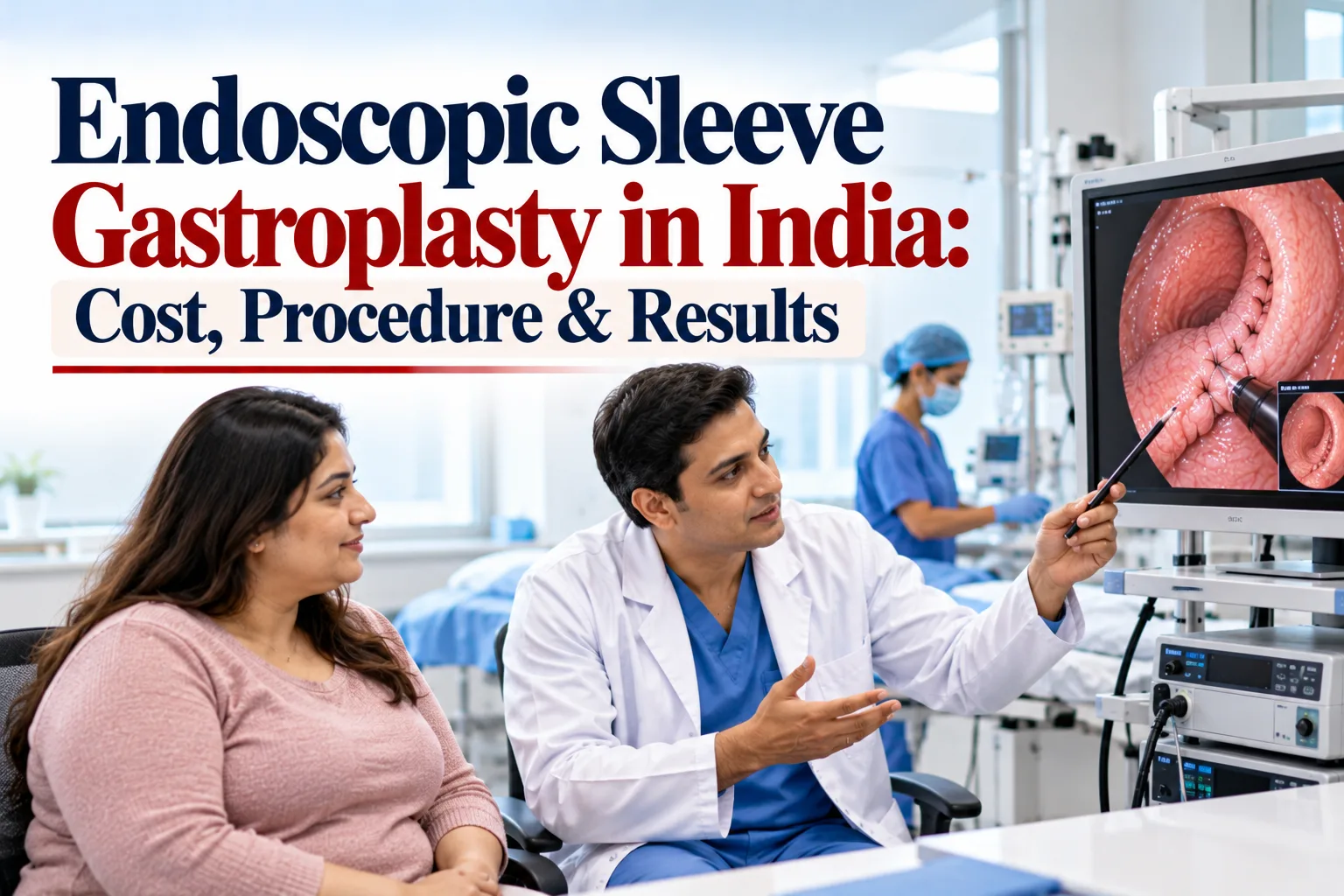
Endoscopic Sleeve Gastroplasty in India: Non-Surgical Weight Loss Procedure
Losing weight can be difficult when dietary changes and regular exercise have not produced lasting results. For people living with obesity, endoscopic sleeve gastroplasty in India offers another treatment option that reduces the stomach's capacity without removing part of the stomach or making abdominal incisions. The procedure may be considered as part of a structured bariatric treatment plan, particularly for patients who need more support than lifestyle changes alone can provide.
Endoscopic sleeve gastroplasty (ESG) is performed through the mouth using a flexible endoscope and specialised suturing equipment. The doctor places stitches inside the stomach to make it smaller and change its shape. Patients generally feel full after eating smaller portions, which can help them reduce their calorie intake.
ESG is not a substitute for healthy eating, physical activity or medical follow-up. The results depend on several factors, including the patient's starting weight, eating habits, medical conditions and commitment to long-term care. Before choosing this procedure, patients should understand its benefits, limitations, possible complications and total cost.
What Is Endoscopic Sleeve Gastroplasty?
Endoscopic sleeve gastroplasty in India is a minimally invasive, endoscopic weight-loss procedure used to treat selected patients with obesity. It reduces the functional capacity of the stomach by placing a series of internal sutures that fold the stomach wall inward.
The procedure is performed using a flexible tube called an endoscope, which carries a camera and specialised instruments. The doctor passes it through the mouth into the stomach and places the sutures under direct visual guidance.
Unlike traditional sleeve gastrectomy, ESG does not involve surgically removing a portion of the stomach. It also differs from gastric bypass, which changes the route food takes through the digestive system.
The smaller stomach generally holds less food, and its altered shape may slow the passage of food. These effects can help patients feel full sooner and eat smaller portions.
However, ESG is still a medical procedure requiring anaesthesia or deep sedation, specialist expertise and a planned recovery period. Although it avoids abdominal incisions, it is not free from complications.
Who Is Eligible for Endoscopic Sleeve Gastroplasty?
Eligibility for endoscopic sleeve gastroplasty in India depends on body mass index (BMI), obesity-related health conditions, previous weight-management attempts and the patient's overall medical fitness.
ESG may be considered for adults who:
- Have obesity and need additional help with weight management.
- Have not achieved sufficient or lasting weight loss through structured lifestyle treatment.
- Prefer an endoscopic approach rather than an operation involving removal of stomach tissue.
- Have obesity-related conditions that may improve with weight reduction.
- Are medically suitable for the procedure and able to attend follow-up appointments.
- Are willing to follow dietary instructions and make long-term lifestyle changes.
What BMI is required for ESG?
BMI is one factor used to assess eligibility, but it should not be the only consideration. Clinical guidance supports ESG for selected patients with a BMI of 30 or higher, while some guidelines and individual treatment pathways consider lower BMI thresholds when obesity-related health conditions are present.
For Asian patients, doctors may also consider the health risks associated with obesity at lower BMI levels. The appropriate threshold depends on the clinical guideline being followed and the patient's circumstances.
A specialist should assess waist circumference, diabetes, high blood pressure, sleep apnoea, previous treatment attempts and other relevant factors before recommending ESG.
Who may not be suitable for ESG?
The procedure may be unsuitable or require additional investigation for patients with:
- Certain significant stomach or oesophageal disorders.
- Active gastrointestinal bleeding or some untreated ulcers.
- A large hiatal hernia or other anatomical problems that affect the procedure.
- Medical conditions that make anaesthesia unsafe.
- Previous gastrointestinal surgery that has significantly altered stomach anatomy.
- An inability to follow the required dietary plan or attend follow-up care.
These are examples, not a complete list of contraindications. Some conditions can be treated before ESG, while others may make an alternative weight-management approach more appropriate.
How Does Endoscopic Sleeve Gastroplasty Work?
The main purpose of ESG is to reduce the amount of food the stomach can comfortably accommodate at one time.
During the procedure, the doctor uses an endoscope and a specialised suturing device to place a planned pattern of stitches inside the stomach. These stitches pull sections of the stomach wall inward, creating a narrower, sleeve-like shape.
The stomach remains in place, but its functional capacity is reduced. Patients generally need smaller meals and may feel satisfied sooner than before treatment.
ESG does not directly remove body fat, and it does not prevent the body from absorbing all the calories consumed. Weight loss occurs mainly because the patient can eat less and maintain a lower calorie intake.
The procedure works best when combined with dietary counselling, appropriate physical activity, behavioural support and medical follow-up.
What Happens During the ESG Procedure?
The process includes an initial assessment, preparation, endoscopic treatment and recovery. The exact plan depends on the patient's health and the hospital's protocol.
Step 1: Medical assessment
The specialist reviews weight history, previous weight-loss attempts, current medicines and obesity-related conditions. Blood tests and other investigations may be required to assess general health and fitness for anaesthesia.
An endoscopy may be performed to examine the stomach and identify conditions that could affect the procedure.
Step 2: Preparation before treatment
The hospital provides instructions about fasting, medicines and any required dietary changes before the procedure.
Patients should disclose all prescription medicines, supplements and allergies. Medicines that affect blood clotting or blood sugar may need adjustment, but changes should only be made on the treating doctor's advice.
Step 3: Anaesthesia or deep sedation
ESG is usually performed under general anaesthesia or deep sedation, depending on the clinical plan. The medical team monitors breathing, heart rate, blood pressure and other vital signs throughout the procedure.
Step 4: Endoscopic suturing
The doctor passes the endoscope through the mouth into the stomach. Using the attached suturing equipment, the doctor places internal stitches to reduce stomach capacity.
The procedure often takes around one to two hours, although duration varies with stomach anatomy and technical factors.
Step 5: Recovery and observation
After the procedure, the patient is monitored while the effects of anaesthesia wear off. Nausea, abdominal discomfort and bloating can occur during the early recovery period.
Some patients can return home the same day, while others may need overnight observation. The decision depends on recovery, medical history and the hospital's protocol.
How Much Weight Can You Lose After ESG?
Weight loss after ESG varies from one patient to another. Published studies commonly report an average total body weight reduction of approximately 15–20% over the first year or longer, although individual outcomes may fall below or above this range.
For example, a person weighing 100 kg who loses 15% of their starting weight would weigh approximately 85 kg. This is an illustration of the calculation, not a prediction of an individual patient's result.
The amount of weight lost depends on:
- Starting weight and overall health.
- Eating habits and portion sizes.
- Physical activity and daily routine.
- Attendance at follow-up appointments.
- Management of diabetes, hormonal conditions and other medical problems.
- The patient's response to the procedure.
Weight loss may slow after the initial months. Some patients regain weight if portion sizes increase or old eating habits return. Others may need additional medical treatment to maintain progress.
A realistic goal should be discussed with the treating specialist and dietitian. The focus should be on sustained weight reduction and improved health, not simply reaching a particular number on the weighing scale.
What Are the Benefits of Endoscopic Sleeve Gastroplasty?
ESG offers several potential advantages for appropriately selected patients.
- No abdominal incisions: The procedure is performed through the mouth, so there are no external surgical cuts.
- Stomach tissue is preserved: The doctor reshapes the stomach with internal sutures rather than removing a portion of it.
- Shorter initial recovery: Many patients return to normal daily activities sooner than they would after major abdominal surgery, although recovery varies.
- Reduced food intake: A smaller functional stomach capacity can help patients feel full after smaller meals.
- Potential improvement in obesity-related conditions: Weight loss may improve blood sugar control, blood pressure, sleep apnoea and other weight-related health problems. The degree of improvement varies.
- Option for selected patients who do not want traditional surgery: ESG may suit some people who need procedural weight management but prefer to avoid an operation involving stomach removal.
These advantages should be weighed against the expected amount of weight loss, the patient's health and the alternatives available.
What Are the Risks and Possible Complications?
Although serious complications are uncommon in experienced centres, ESG is not risk-free.
Common short-term effects
Patients may experience:
- Nausea or vomiting.
- Abdominal pain or cramping.
- Bloating.
- Acid reflux or indigestion.
- Difficulty tolerating food during the early recovery period.
These symptoms are often manageable with prescribed medicines and dietary adjustments. Persistent vomiting or inability to drink enough fluids requires medical attention.
Less common but serious complications
Potential complications include bleeding, infection, perforation of the stomach wall, injury to nearby structures and problems related to anaesthesia. Some complications may require additional endoscopic treatment, hospital admission or surgery.
Patients should ask the treating centre about its complication-management arrangements and whom to contact after discharge.
Can weight return after ESG?
Yes. ESG does not permanently prevent weight gain. The stomach may change over time, and eating patterns can influence long-term outcomes. Continued nutritional support, physical activity and regular reviews are important for maintaining weight loss.
The treating team should explain how weight regain will be assessed and what options may be considered if progress stalls.
What Is the Recovery Period After ESG?
Recovery is usually shorter than after major bariatric surgery, but patients still need time to adjust to the changes in stomach capacity.
The first few days may involve nausea, abdominal discomfort and reduced tolerance for food. Prescribed medication can help manage symptoms.
Diet is generally introduced in stages, according to the treating team's instructions.
| Recovery stage | Typical dietary approach |
|---|---|
| Early recovery | Clear liquids and other permitted fluids |
| Next stage | Full liquids and prescribed protein-rich options |
| Following weeks | Gradual introduction of pureed and soft foods |
| Later recovery | Gradual return to suitable solid foods |
| Long-term | Smaller, balanced meals and ongoing nutritional guidance |
The timing of each stage varies. Patients should not move to the next stage simply because they feel better; the dietitian or doctor should confirm when it is appropriate.
Practical recovery advice
- Take small sips of permitted fluids throughout the day.
- Follow the prescribed diet instead of introducing solid foods too early.
- Take medication exactly as directed.
- Avoid large meals and eating quickly.
- Attend scheduled follow-up appointments.
- Resume exercise gradually after medical approval.
- Contact the treating team if symptoms worsen or fluids cannot be tolerated.
Severe or increasing abdominal pain, persistent vomiting, fever, blood in vomit or black stools require urgent medical assessment.
ESG vs Gastric Sleeve Surgery: What Is the Difference?
Endoscopic sleeve gastroplasty and laparoscopic sleeve gastrectomy are different procedures. The right choice depends on the patient's BMI, medical conditions, expected weight-loss needs and preferences.
| Feature | Endoscopic sleeve gastroplasty | Laparoscopic sleeve gastrectomy |
|---|---|---|
| Approach | Endoscope passed through the mouth | Keyhole abdominal surgery |
| External incisions | None | Small abdominal incisions |
| Stomach tissue removed | No | Yes |
| Anaesthesia | Usually general anaesthesia or deep sedation | General anaesthesia |
| Hospital stay | May be same-day or short observation | Often requires a hospital stay |
| Weight-loss effect | Generally less than surgical sleeve in comparative studies | Usually greater average weight loss |
| Recovery | Often shorter initially | Usually longer than ESG |
| Long-term follow-up | Required | Required |
ESG should not be described as a universally better alternative to surgery. It generally produces less weight loss than surgical sleeve gastrectomy in short- to medium-term comparisons, although the difference in risk, recovery and treatment suitability matters.
Patients with more severe obesity or certain metabolic conditions may benefit more from a surgical procedure. A multidisciplinary team should explain the expected benefits and drawbacks of each option.
What Is the Cost of Endoscopic Sleeve Gastroplasty in India?
The cost of endoscopic sleeve gastroplasty in India varies by hospital, specialist, equipment, anaesthesia, investigations and follow-up arrangements.
An indicative previous-year planning range is approximately ₹2.5 lakh to ₹4.5 lakh. This should not be treated as a current quotation or a guaranteed package price. Hospitals may quote different amounts depending on what is included.
| Cost component | What can affect the price |
|---|---|
| Initial consultation | Specialist and hospital charges |
| Medical investigations | Blood tests, endoscopy and other required assessments |
| Endoscopic procedure | Specialist fees, suturing equipment and procedure complexity |
| Anaesthesia | Anaesthetist and monitoring charges |
| Hospital observation | Same-day care or overnight stay |
| Medication | Prescribed medicines during recovery |
| Dietitian consultations | Number and duration of nutritional reviews |
| Follow-up care | Additional consultations and investigations |
Resource: Yashoda Hospitals — Sleeve Gastrectomy Cost in India. The published page lists an indicative ESG price range; confirm the current cost directly with the hospital because packages and inclusions can change.
What should an ESG package include?
Before booking treatment, request a written estimate covering:
- The specialist's fee and endoscopic suturing equipment.
- Anaesthesia and recovery-room charges.
- Required investigations and pre-procedure endoscopy.
- Hospital observation or overnight accommodation.
- Medicines prescribed after the procedure.
- Dietitian support and follow-up consultations.
- Additional costs if complications require further treatment.
International patients should also ask whether the estimate includes airport transfers, accommodation, translation support and follow-up before travelling home.
Price disclaimer: The price range mentioned in this article is based on previous-year published data and is provided for preliminary planning only. Current charges may differ according to the hospital, doctor, equipment and individual treatment plan. For exact and updated pricing, call or email Healthroop or request a written quotation from the selected hospital before making a decision.
How to Choose a Hospital for ESG in India
Not every hospital that performs bariatric surgery also offers endoscopic sleeve gastroplasty. Patients should confirm the availability of ESG specifically rather than assuming that a general weight-loss programme includes it.
Hospitals to enquire with
- Manipal Hospitals: The directory lists bariatric surgery and gastroenterology-related facilities. Contact the intended branch to confirm whether ESG is offered and whether a trained therapeutic endoscopist is available.
- Apollo Hospitals: The directory lists gastroenterology among its specialties. Ask the specific location whether it performs ESG, what equipment is used and how postoperative follow-up is arranged.
- Fortis Healthcare: The network lists several medical and surgical specialties. Confirm whether the relevant branch provides ESG and has a multidisciplinary weight-management team.
These are starting points for enquiries, not a ranking or confirmation that every listed branch offers the procedure.
Questions to ask the hospital
- How many ESG procedures has the treating specialist performed?
- Is the specialist trained in therapeutic endoscopy and obesity management?
- What pre-procedure investigations are required?
- What are the hospital's arrangements for managing complications?
- Is a dietitian involved before and after treatment?
- How often will follow-up visits be needed?
- What happens if weight loss is lower than expected?
- What is included in the written quotation?
The hospital should be able to explain its treatment pathway clearly and provide realistic expectations about outcomes.
How Healthroop Helps You Explore Weight-Loss Treatment in India
Healthroop helps patients explore hospitals and treatment options in India by assisting with medical enquiries and treatment coordination. For people considering ESG, the process can begin with a review of available medical records and previous weight-management attempts. A qualified specialist must determine whether the procedure is appropriate after assessing the patient's health, BMI and treatment goals.
Healthroop can assist with:
- Hospital enquiries: Identify hospitals from its network and ask about the availability of ESG.
- Consultation coordination: Help arrange enquiries with relevant specialists, subject to availability.
- Medical record sharing: Organise existing reports for review by the treating team.
- Cost estimates: Request an itemised quotation covering the procedure and follow-up services.
- Travel planning: Help coordinate practical arrangements for international patients, depending on the services available.
- Follow-up coordination: Clarify arrangements for post-treatment consultations and ongoing care.
Final Thoughts
Endoscopic sleeve gastroplasty is an option for selected adults who need additional support with weight management and prefer a procedure that does not involve removing stomach tissue. It reduces the stomach's functional capacity through internal sutures and may help patients lose a meaningful amount of weight when combined with dietary changes and continued medical care.
However, ESG is not suitable for everyone, and results vary. The decision should be based on a proper medical assessment, a clear understanding of the risks and a realistic discussion about long-term weight management.
Before choosing a hospital, compare the specialist's experience, follow-up arrangements, expected outcomes and complete treatment cost. A well-planned approach helps patients make decisions based on their health needs rather than price or weight-loss promises.
Frequently Asked Questions
Answers on endoscopic sleeve gastroplasty eligibility, results, recovery, and cost in India.
Endoscopic sleeve gastroplasty is a minimally invasive weight-loss procedure that uses internal sutures to reduce the functional capacity of the stomach. A flexible endoscope is passed through the mouth, so no abdominal incisions are required and stomach tissue is not removed.
Eligibility depends on BMI, obesity-related conditions, previous weight-loss attempts and overall medical fitness. ESG may be considered for selected adults with obesity who need additional help managing their weight. A specialist must assess the patient's stomach anatomy, medical history and ability to follow long-term care.
Weight loss varies, but published studies commonly report average total body weight reductions of around 15–20% over the first year or longer. Individual results may differ considerably. Diet, physical activity, follow-up and other medical factors influence how much weight a patient loses and maintains.
ESG avoids abdominal incisions and removal of stomach tissue, but it still carries risks related to endoscopy, anaesthesia, bleeding and perforation. It generally produces less weight loss than surgical sleeve gastrectomy. A specialist should compare the benefits and risks for the individual patient.
Many patients resume routine activities within several days, although recovery varies. The stomach needs time to adjust, and patients must follow a staged diet, take prescribed medicines and attend follow-up visits. Strenuous exercise and dietary progression should follow the treating team's advice.
An indicative previous-year estimate is approximately ₹2.5 lakh to ₹4.5 lakh, but actual charges vary by hospital, specialist, equipment, anaesthesia and follow-up. Ask for a written quotation that lists the procedure, investigations, hospital care and any additional charges.
Yes. ESG does not prevent weight regain permanently. Changes in eating habits, reduced activity and other factors can affect long-term results. Regular follow-up, nutritional guidance, physical activity and medical support are important for maintaining weight loss after the procedure.
ESG does not remove stomach tissue, but that does not mean it can always be easily or completely reversed. Sutures and the resulting stomach shape may be difficult to reverse, and further procedures carry risks. Discuss future treatment options with the specialist before deciding.
Some patients with type 2 diabetes and obesity may be considered for ESG, and weight loss can improve blood sugar control. Suitability depends on the severity of diabetes, other medical conditions and treatment goals. Diabetes medication may need adjustment under medical supervision as weight changes.
Choose a centre with a trained therapeutic endoscopist, appropriate equipment, anaesthesia support and a structured nutrition and follow-up programme. Confirm that the specific branch performs ESG, ask about complication management and obtain an itemised estimate before agreeing to treatment.
Latest Articles
