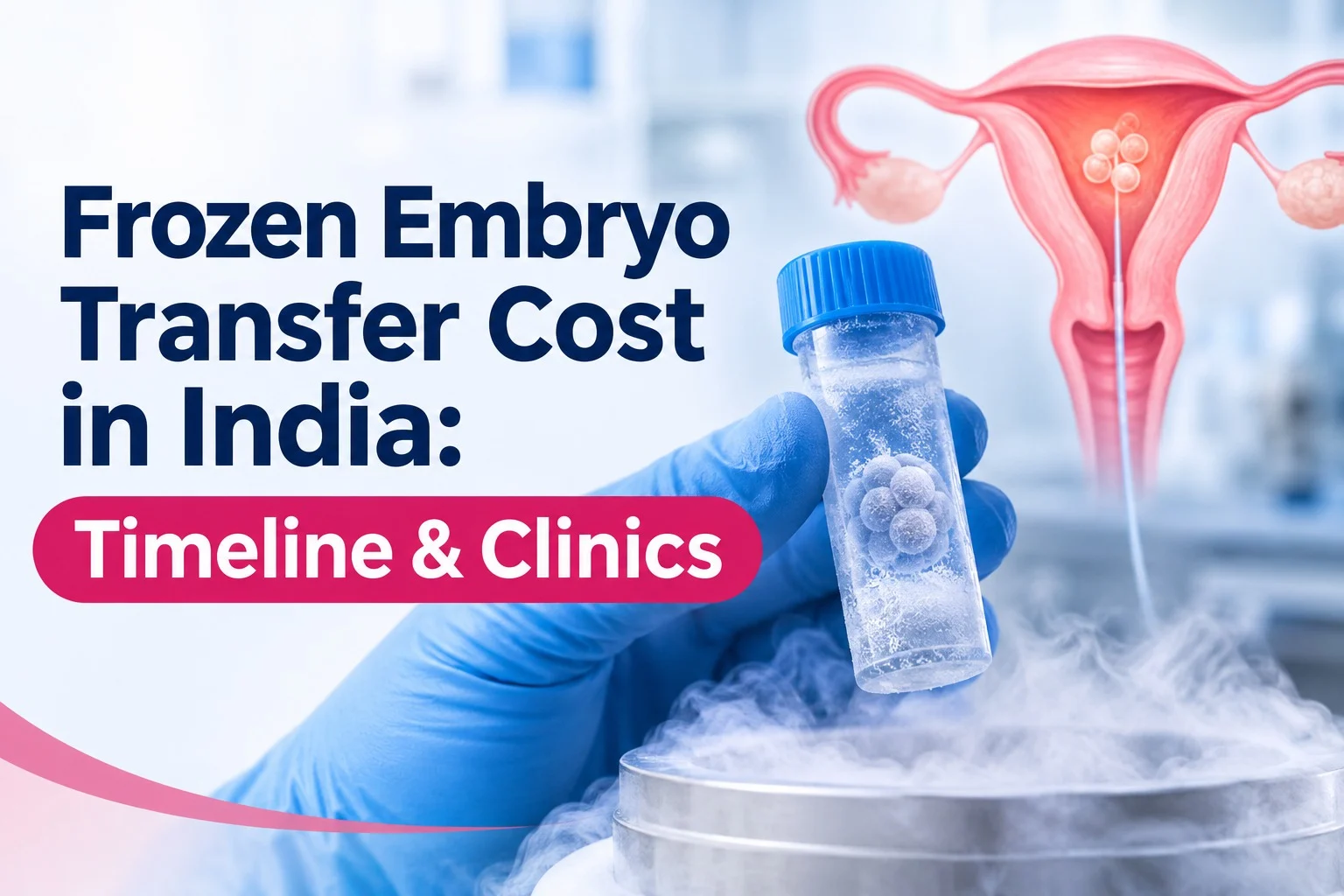
Frozen Embryo Transfer in India: Cost, Timeline & Clinics
Frozen Embryo Transfer (FET) is a fertility procedure in which a previously frozen embryo is thawed and transferred into a woman's uterus to achieve pregnancy. It is commonly performed after an IVF cycle when suitable embryos have been preserved for future use. Couples considering infertility treatment in India can consult experienced fertility specialists and access established IVF facilities at several Indian hospitals.
India is a popular destination for fertility treatment because of its experienced reproductive medicine specialists, modern embryology laboratories and comparatively affordable treatment options. FET also allows patients to use embryos from an earlier IVF cycle without undergoing another round of ovarian stimulation and egg retrieval.
However, the frozen embryo transfer cost in India varies depending on the hospital, medication, laboratory services and individual medical requirements. Understanding the procedure, expected expenses and treatment timeline can help patients prepare before selecting a fertility centre.
This guide covers the FET process, estimated costs, preparation, success factors and important considerations for Indian and international patients.
In this guide
- What Is Frozen Embryo Transfer (FET)?
- Why Do Doctors Recommend FET?
- What Is the Frozen Embryo Transfer Cost in India?
- What Factors Affect the Total FET Cost?
- Natural Cycle FET vs Medicated FET: Which Is Better?
- Frozen Embryo Transfer Timeline: How Long Does FET Take?
- What Is Included in FET Preparation?
- Frozen Embryo Transfer Success Factors
- Does FET Have a Higher Success Rate Than Fresh IVF?
- Frozen Embryo Transfer Clinics in India: Hospitals to Consider
- How to Choose the Right FET Clinic in India?
- What Should International Patients Know About FET Treatment in India?
- Benefits and Limitations of Frozen Embryo Transfer
- How HealthRoop Helps Patients Planning FET in India
- Conclusion
- Latest Articles
- FAQs
What Is Frozen Embryo Transfer (FET)?
Frozen Embryo Transfer is a procedure in which an embryo created during an earlier IVF cycle is stored at a very low temperature and transferred into the uterus at a later date.
During IVF, eggs are collected and fertilised with sperm in a laboratory. Suitable embryos may be transferred during the same cycle or frozen for future treatment. When a patient chooses FET, the fertility specialist prepares the uterine lining before arranging the transfer.
The procedure generally involves three stages:
- Endometrial preparation: The doctor prepares and monitors the uterine lining.
- Embryo thawing: The embryology team warms the selected frozen embryo using established laboratory procedures.
- Embryo transfer: The embryo is placed inside the uterus through a thin catheter.
FET is generally an outpatient procedure and does not usually require general anaesthesia.
Why Do Doctors Recommend FET?
A fertility specialist may recommend frozen embryo transfer when:
- Suitable embryos are available from a previous IVF cycle.
- A fresh embryo transfer was postponed for medical reasons.
- The patient needs additional time for uterine preparation.
- Embryos have undergone preimplantation genetic testing.
- The specialist considers a later transfer more appropriate.
- The patient wants to use previously frozen embryos for another pregnancy.
FET can reduce the need to repeat certain stages of IVF, but it still requires medical assessment, hormonal monitoring where appropriate and careful laboratory handling.
What Is the Frozen Embryo Transfer Cost in India?
The frozen embryo transfer cost in India generally ranges from approximately ₹35,000 to ₹80,000 at private fertility centres, depending on the treatment protocol and services included.
The final amount may be higher if additional investigations, medication, embryo storage or specialised laboratory services are required.
Estimated FET Procedure Cost in India
| Treatment Component | Cost (INR) | Cost (USD) |
|---|---|---|
| Fertility specialist consultation | ₹1,000–₹3,000 | 12–35 |
| Ultrasound and initial assessment | ₹1,500–₹4,000 | 18–47 |
| Hormonal tests and monitoring | ₹2,000–₹5,000 | 24–59 |
| Endometrial preparation medication | ₹3,000–₹10,000 | 35–118 |
| Progesterone medication | ₹2,000–₹8,000 | 24–94 |
| Embryo thawing and laboratory charges | ₹5,000–₹12,000 | 59–141 |
| Embryo transfer procedure | ₹10,000–₹25,000 | 118–294 |
| Follow-up and additional monitoring | ₹2,000–₹5,000 | 24–59 |
Estimated planning range: ₹35,000–₹80,000.
Resource: Indicative 2025 reference pricing from publicly available Indian fertility treatment cost information. Individual component prices are approximate and are not standardised hospital tariffs. Patients should request an itemised quotation before starting treatment.
What Factors Affect the Total FET Cost?
The FET procedure cost India patients pay depends on several clinical and hospital-related factors.
1. Treatment Protocol
Natural-cycle FET and medicated FET have different preparation requirements. A natural cycle may involve fewer medicines, while a medicated cycle generally requires hormonal support and additional monitoring.
2. Medication Expenses
Oestrogen and progesterone are commonly used during medicated FET. The dosage and duration depend on the patient's response and the specialist's instructions. These expenses contribute to the overall FET medication cost.
3. Embryo Storage
Embryos preserved during an earlier IVF cycle may have separate annual storage charges. Outstanding storage fees should be checked before scheduling the transfer.
4. Laboratory Charges
Embryo warming, laboratory assessment and other embryology services may be included in the package or billed separately.
5. Hospital and Specialist Fees
Costs vary between hospitals, cities and fertility centres. The experience of the treating specialist and the facilities available at the selected branch may also influence pricing.
Patients should compare complete treatment quotations rather than choosing a hospital based only on its advertised starting price.
Natural Cycle FET vs Medicated FET: Which Is Better?
The fertility specialist selects the preparation method according to the patient's menstrual cycle, ovulation pattern and medical history.
| Feature | Natural Cycle FET | Medicated FET |
|---|---|---|
| Ovulation | Uses natural ovulation | Uses a planned hormonal protocol |
| Medication | Often requires fewer medicines | Usually requires oestrogen and progesterone |
| Monitoring | Focuses on ovulation timing | Focuses on uterine lining and hormone preparation |
| Scheduling | Depends on natural cycle | Offers more scheduling flexibility |
| Medication expenses | Generally lower | Generally higher |
| Suitable patients | Selected patients with regular ovulation | Patients requiring controlled preparation |
Neither approach is suitable for everyone. The specialist should recommend a protocol based on clinical requirements, not simply the difference in medication expenses.
Frozen Embryo Transfer Timeline: How Long Does FET Take?
The frozen embryo transfer timeline generally takes around two to four weeks, although the duration depends on the preparation protocol and the patient's response.
Step 1: Initial Consultation and Assessment
Approximate duration: 1–7 days
The fertility specialist reviews previous IVF records, embryo reports and medical history.
The assessment may include:
- Previous IVF and embryo transfer records.
- Embryo grading and freezing details.
- Menstrual cycle history.
- Uterine ultrasound.
- Relevant hormone tests.
- Previous pregnancy outcomes.
The doctor uses this information to select the appropriate FET protocol.
Step 2: Uterine Preparation
Approximate duration: 10–20 days in many medicated cycles
The uterine lining must be prepared to support implantation.
In a medicated cycle, oestrogen is generally prescribed to support endometrial development. Ultrasound examinations help the specialist assess the lining.
Progesterone is introduced at the appropriate time according to the embryo's developmental stage and the clinic's protocol.
Natural-cycle FET follows the patient's ovulation pattern instead.
Step 3: Embryo Thawing
Once the uterine preparation is considered appropriate, the embryology team schedules the selected embryo for warming.
The embryo is assessed after warming to determine whether it is suitable for transfer. The laboratory coordinates the procedure with the timing of endometrial preparation.
Step 4: Embryo Transfer
Approximate procedure duration: 10–20 minutes
The doctor places the embryo inside the uterus using a thin catheter. Ultrasound guidance may be used to help position the catheter.
The procedure generally does not require hospital admission. Most patients can return home after a short observation period.
Step 5: Pregnancy Testing
Usually 9–14 days after transfer
A blood beta-hCG test is performed to check for pregnancy. The exact testing date depends on the embryo stage and clinic protocol.
Patients should continue prescribed medicines and avoid testing earlier than advised by their fertility specialist.
FET Timeline at a Glance
| Treatment Stage | Approximate Duration |
|---|---|
| Initial consultation | 1–7 days |
| Uterine preparation | 10–20 days |
| Embryo thawing | As scheduled |
| Embryo transfer | One outpatient visit |
| Pregnancy test | 9–14 days after transfer |
These timings are estimates. Some patients may require additional monitoring or a longer preparation period.
What Is Included in FET Preparation?
FET preparation focuses on making sure the uterine lining is ready when the embryo is transferred.
The specialist may recommend the following steps:
- Medical history review: Previous IVF records, medical conditions and treatment outcomes are assessed.
- Uterine examination: Ultrasound helps evaluate the endometrium and identify possible abnormalities.
- Hormonal preparation: Oestrogen and progesterone may be prescribed depending on the selected protocol.
- Embryo assessment: The embryology team reviews embryo development, grading and available genetic testing reports.
- Transfer scheduling: The transfer date is coordinated with embryo development and progesterone exposure.
Patients should follow medication instructions carefully. Changing the dose or stopping prescribed hormones without medical advice can affect treatment scheduling.
Frozen Embryo Transfer Success Factors
The frozen embryo transfer success factors include embryo quality, age at egg retrieval, uterine health, laboratory standards and the underlying fertility condition.
There is no single success rate that applies to every patient.
1. Age at Egg Retrieval
The woman's age when the eggs were collected is an important factor in embryo development and chromosomal health. For embryos created using her own eggs, age at retrieval is generally more relevant to embryo prognosis than age at the later transfer.
2. Embryo Quality
Embryo grading helps embryologists assess development and identify embryos suitable for transfer. However, a good morphological grade does not guarantee implantation or pregnancy.
3. Chromosomal Health
Chromosomal abnormalities can affect implantation and pregnancy development. Where genetic testing has been performed, the results may provide additional information for treatment planning. Such testing is not necessary for every patient.
4. Uterine Health
The uterine lining must be appropriately prepared for implantation. Its thickness, appearance and timing in relation to progesterone exposure are considered by the fertility specialist.
5. Laboratory Standards
Embryo freezing, storage and warming require trained embryology professionals and appropriate laboratory procedures. Patients should ask about embryo traceability, storage monitoring and warming protocols.
6. Underlying Medical Conditions
Certain uterine abnormalities and uncontrolled medical conditions may require assessment before transfer. The specialist should address relevant health concerns as part of the treatment plan.
Does FET Have a Higher Success Rate Than Fresh IVF?
Not necessarily. Both fresh and frozen embryo transfers can result in pregnancy.
The outcome depends on the patient's medical condition, embryo characteristics and treatment protocol. FET may be preferable in specific clinical situations, but frozen transfer is not automatically more successful for every patient.
Frozen Embryo Transfer Clinics in India: Hospitals to Consider
Choosing among frozen embryo transfer clinics India requires more than comparing hospital names. Patients should check specialist experience, embryology facilities, treatment costs and the availability of FET at the selected location.
The following hospital networks are listed in HealthRoop's infertility treatment information.
1. Apollo Hospitals
Apollo Hospitals is a multi-specialty healthcare network with IVF included among its listed fertility services. Patients can enquire about reproductive medicine consultations, embryo freezing and transfer facilities at the relevant branch.
2. Max Healthcare
Max Healthcare is included in the hospital network for infertility treatment. Patients should confirm the availability of FET, fertility specialists and embryology laboratory services at their preferred location.
3. Fortis Healthcare
Fortis Healthcare is another hospital network listed for infertility-related services. Before booking, patients should check the specific branch's fertility treatment facilities and available specialist consultations.
4. Manipal Hospitals
Manipal Hospitals is included in HealthRoop's fertility hospital information. Patients can enquire about IVF services, embryo cryostorage and frozen embryo transfer availability.
You can review the hospitals listed in the HealthRoop network before shortlisting a treatment centre.
Important: This is not a ranking of India's best FET clinics. Service availability may differ between branches. Confirm the hospital's current ART registration, FET facilities and specialist availability directly before making a decision.
How to Choose the Right FET Clinic in India?
Before selecting a hospital, consider these important points:
- Check ART Registration: Verify that the clinic meets the applicable registration requirements under India's Assisted Reproductive Technology (Regulation) Act, 2021.
- Review Specialist Experience: Ask about the fertility specialist's experience with frozen embryo transfer and different preparation protocols.
- Understand Laboratory Procedures: Enquire about embryo freezing, storage monitoring, warming procedures and embryo identification systems.
- Ask About Success Rates: Understand whether the clinic reports positive pregnancy tests, clinical pregnancies or live births. These are different outcomes.
- Request a Detailed Cost Estimate: Check whether consultation, medicines, monitoring, embryo warming and transfer are included.
A written treatment plan and transparent cost estimate make hospital comparisons more useful.
What Should International Patients Know About FET Treatment in India?
India is an option for overseas couples seeking fertility treatment. However, international patients should plan their travel according to the medical schedule rather than assuming that the transfer will take place on a fixed date.
Embryo transfer for overseas patients requires coordination between the fertility specialist, embryology laboratory and the patient's local doctor, where applicable.
Documents to Carry
Before travelling, arrange:
- Previous IVF treatment summaries.
- Embryo freezing and storage reports.
- Embryo grading details.
- Previous pregnancy or transfer records.
- Recent ultrasound reports.
- Relevant hormone test results.
- Current medication details.
- Genetic testing reports, if available.
The hospital may request additional investigations after reviewing these documents.
How Long Should Overseas Patients Stay in India?
Many medicated FET cycles require approximately two to three weeks of planning around uterine preparation and transfer. The actual stay depends on the patient's condition, preparation protocol and tests already completed.
Some initial assessments may be possible in the patient's home country after coordination with the Indian fertility specialist.
Before booking flights, confirm:
- Whether an online consultation is available.
- Which tests can be completed before travelling.
- The recommended arrival date.
- Expected transfer timing.
- Required stay after transfer.
- Pregnancy testing and follow-up arrangements.
Benefits and Limitations of Frozen Embryo Transfer
Benefits
- Uses embryos preserved during an earlier IVF cycle.
- Avoids repeating ovarian stimulation and egg retrieval when suitable embryos are available.
- Gives doctors additional time for uterine preparation.
- Allows flexibility in scheduling certain treatment cycles.
- Can be considered after embryo genetic testing.
- May support future pregnancy planning using remaining frozen embryos.
Limitations
- Not every embryo survives the warming process.
- Hormonal medication may be required.
- Additional monitoring and storage charges may apply.
- Pregnancy is not guaranteed.
- Treatment may be postponed if the uterine lining is not ready.
- The procedure requires suitable laboratory facilities.
Patients should discuss both the benefits and limitations with their fertility specialist before proceeding.
How HealthRoop Helps Patients Planning FET in India
HealthRoop helps Indian and international patients connect with relevant hospitals and fertility specialists for treatment enquiries. Patients can share their previous IVF records and medical reports to help coordinate consultations and request treatment estimates. Clinical decisions, eligibility and treatment recommendations remain the responsibility of the treating fertility specialist.
HealthRoop can assist with:
- Hospital Selection: Helping patients shortlist hospitals from its healthcare network.
- Fertility Specialist Consultation: Coordinating enquiries and appointments, subject to availability.
- Medical Report Coordination: Organising previous IVF records, embryo reports and investigation results.
- Treatment Cost Estimates: Helping patients request itemised quotations from hospitals.
- International Patient Support: Assisting with medical travel arrangements and treatment coordination.
- Visa Assistance: Providing guidance regarding medical travel documentation.
- Accommodation and Transport: Helping overseas patients plan their stay in India.
- Follow-up Coordination: Supporting communication with the hospital after the procedure.
Patients can also read about the HealthRoop patient support process before planning treatment.
Conclusion
Frozen embryo transfer allows patients to use embryos preserved during an earlier IVF cycle without repeating the complete egg retrieval process. It is an established fertility treatment that requires appropriate uterine preparation, laboratory support and careful timing.
The frozen embryo transfer cost in India depends on the preparation protocol, medication, hospital charges and embryo storage requirements. Patients should compare complete treatment estimates and check the facilities available at the selected clinic.
Before proceeding, consult a qualified fertility specialist, review your previous IVF records and understand the expected treatment schedule. Choosing a clinic with appropriate medical expertise and laboratory facilities is more important than selecting treatment based on price alone.
Disclaimer: The prices mentioned in this article are indicative estimates based on previous-year (2025) reference data. They are provided for general information and financial planning only. Actual costs may have changed and can vary according to the hospital, city, specialist, medication and individual treatment requirements.
For the latest and exact frozen embryo transfer cost in India, please call or email HealthRoop to request an updated estimate. Final prices should be confirmed directly with the selected hospital.
Medical Disclaimer: This article is intended for educational purposes only and does not replace professional medical advice, diagnosis or treatment. Consult a qualified fertility specialist before making any decision about frozen embryo transfer.
Latest Articles
Frequently Asked Questions
Answers on frozen embryo transfer cost, timeline, clinics and success factors in India.
The estimated cost of FET in India is approximately ₹35,000–₹80,000 at private fertility centres. The final amount depends on medication, monitoring, embryo warming, transfer charges and storage fees. Patients should request an updated quotation because hospital prices and treatment requirements can change.
A typical FET cycle takes around two to four weeks, depending on the preparation protocol. This includes uterine lining preparation, monitoring, embryo thawing and transfer. A blood pregnancy test is generally performed 9–14 days after transfer, according to the treating specialist's instructions.
FET is generally less expensive than a complete fresh IVF cycle when suitable frozen embryos are already available. It does not require another round of ovarian stimulation or egg retrieval. However, medication, monitoring, laboratory procedures and embryo storage may still contribute to the total cost.
Medication expenses depend on the treatment protocol, dosage and duration. Medicated FET commonly involves oestrogen and progesterone, while natural-cycle transfers may require fewer medicines. Patients should ask whether medication is included in the hospital package or charged separately.
No. A successful embryo transfer does not guarantee implantation or pregnancy. Outcomes depend on embryo characteristics, age at egg retrieval, uterine health and other medical factors. A fertility specialist can assess individual chances after reviewing previous IVF records and current medical findings.
Apollo Hospitals, Max Healthcare, Fortis Healthcare and Manipal Hospitals are included in HealthRoop's infertility treatment information. Patients should confirm FET availability, specialist experience and embryology facilities at the specific branch before scheduling a consultation.
FET is generally a minimally invasive procedure and usually does not require anaesthesia. Some patients may experience mild discomfort, temporary cramping or light spotting. Severe pain, heavy bleeding or fever should be reported to the treating medical team.
Yes, overseas patients can enquire about frozen embryo transfer at eligible Indian fertility centres. They should share previous IVF records and embryo reports before travelling. The specialist can advise on preparation, treatment duration, travel dates and follow-up requirements.
An embryo may occasionally fail to survive the warming process or may not remain suitable for transfer. The embryology team assesses its condition and informs the treating specialist. If another suitable embryo is available, the doctor may discuss the next steps.
A blood beta-hCG test is commonly scheduled around 9–14 days after embryo transfer. The exact date depends on the embryo stage and the clinic's protocol. Patients should continue prescribed medication and follow the testing schedule provided by their fertility specialist.
