Spine Surgery in India for Oman Patients
Looking for spine surgery in India for Oman patients that treats persistent back or neck pain properly, without a long wait or a bill that puts off getting it done? Omani patients with herniated discs, spinal stenosis, or degenerative spine conditions increasingly travel to India for microdiscectomy, spinal fusion, and disc replacement, drawn by experienced spine teams and a cost that stays well within reach compared to Europe or the Gulf's private hospitals.
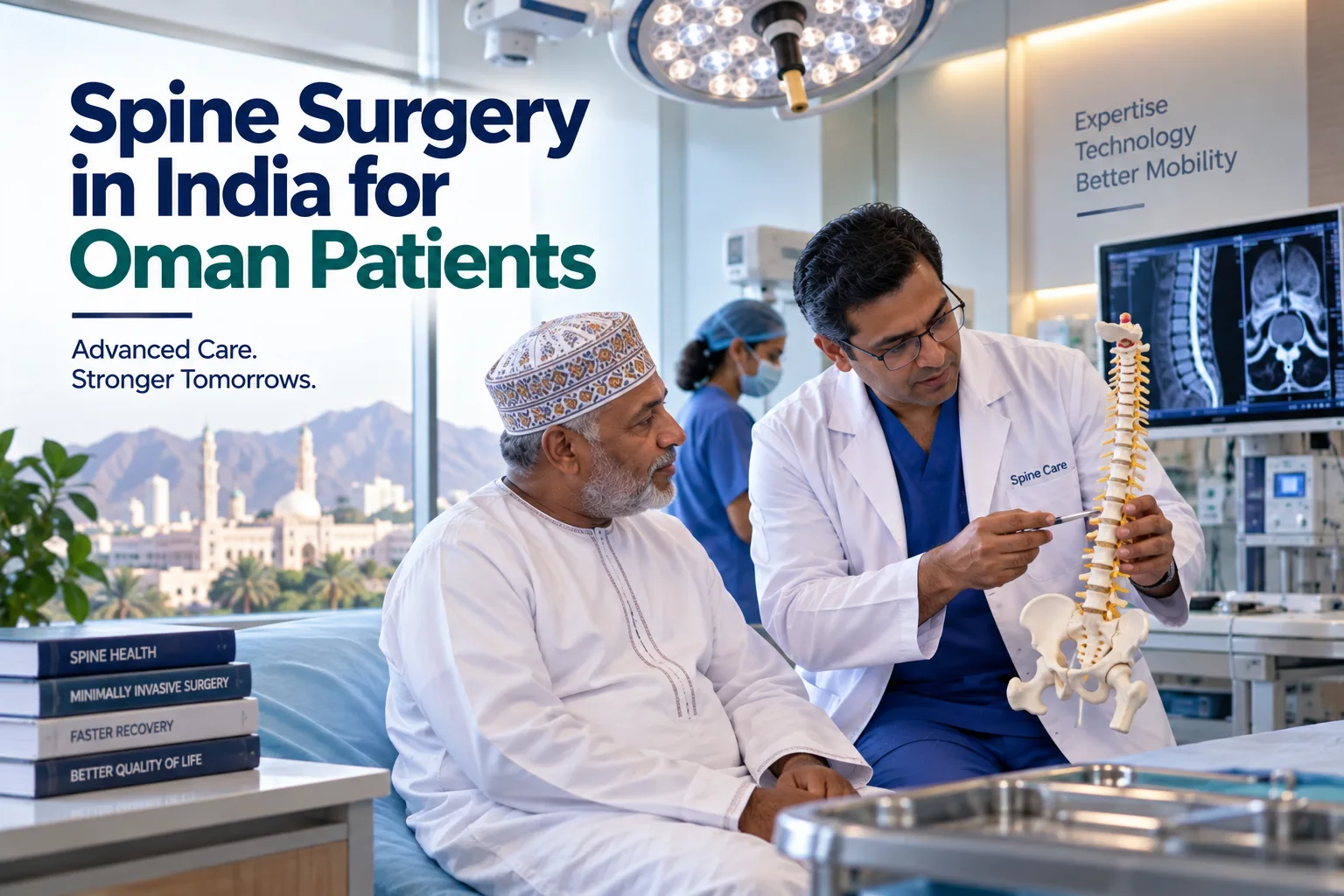
India performs more spine surgeries on international patients than any other country in Asia, and that volume is what has given Indian spine surgeons the depth of experience they now have across straightforward discectomies and far more complex multi-level fusions and deformity corrections. Oman is regularly listed among the source countries for this patient flow, alongside other Gulf and East African nations.
Spine surgery outcomes depend heavily on accurate diagnosis before the operating table is even booked, so leading Indian centers pair advanced MRI and CT imaging with a spine surgeon's clinical assessment before recommending surgery over non-surgical management.
Why Omani Patients Choose India for Spine Surgery
Cost is the clearest advantage. Spine surgery cost in India for Oman patients typically runs 60-80% lower than the same procedure in the US or UK, without any drop in implant quality or surgical standards.
Surgical experience runs deep, with senior spine surgeons at leading Indian centers managing a high volume of discectomy, fusion, and deformity correction cases every year.
Advanced technology is widely available, including minimally invasive spine surgery, robotic-assisted implant placement, and artificial disc replacement for suitable candidates.
Waiting time is short. Once MRI and clinical assessment are reviewed, a surgical plan and date can often be confirmed within days rather than the months a public orthopaedic or neurosurgery queue can involve.
Several hospitals maintain coordinators experienced with Gulf patients, including Arabic-speaking staff who help with documentation and day-to-day communication during the stay.
Common Spine Surgery Procedures Available in India
Microdiscectomy removes the portion of a herniated disc pressing on a spinal nerve, typically through a small incision, and is usually the first surgical option considered once conservative treatment has failed to relieve leg or arm pain.
Laminectomy or decompression surgery removes bone or tissue narrowing the spinal canal, relieving pressure on the spinal cord or nerves, and is commonly used for spinal stenosis.
Spinal fusion joins two or more vertebrae together using screws, rods, or cages, restoring stability where a segment of the spine has become unstable, badly degenerated, or required significant bone removal during decompression.
Artificial disc replacement removes a damaged disc and replaces it with a mobile implant rather than fusing the segment, aiming to preserve more natural spinal movement in suitable patients. Minimally invasive and robotic-assisted techniques are increasingly used across these procedures to reduce muscle disruption and support a faster early recovery.
Best Spine Surgery Hospitals in India for Oman Patients
Medanta, The Medicity, Gurugram runs a dedicated spine institute offering minimally invasive, robotic-assisted, and complex deformity correction surgery.
Apollo Hospitals operates dedicated spine surgery centers with an established international patient desk experienced in coordinating for Gulf patients.
Fortis Healthcare runs dedicated spine units offering discectomy, fusion, and disc replacement across multiple Indian cities.
Max Healthcare and Manipal Hospitals are known for managing complex spine cases, including multi-level fusion and revision surgery.
P.D. Hinduja Hospital also runs a well-established spine surgery programme with a strong track record in both degenerative and deformity cases.
Spine Surgery Cost in India for Oman Patients
| Procedure | Cost Range (USD) |
|---|---|
| Consultation and diagnostic imaging (MRI/CT) | 150 – 500 |
| Microdiscectomy / decompression (laminectomy) | 3,500 – 6,000 |
| Spinal fusion, single level (with implants) | 6,000 – 9,500 |
| Multi-level or complex spinal fusion | 9,500 – 14,000 |
| Artificial disc replacement | 7,000 – 11,000 |
| Scoliosis or spinal deformity correction | 10,000 – 18,000 |
These figures generally cover the surgical team, implants where needed, hospital stay, and initial physiotherapy sessions. Final pricing depends on the number of spinal levels involved, the implant brand chosen, and any pre-existing conditions, and is confirmed only after the surgeon reviews MRI and clinical reports.
Recovery and Success Rates
Published outcomes from India's leading spine centers show high rates of significant pain relief and improved function, particularly for well-selected microdiscectomy and decompression cases, broadly in line with international results.
Recovery depends heavily on the procedure. Microdiscectomy patients often begin light activity within two to four weeks, while spinal fusion patients generally need six to twelve weeks before light activity and three to six months before heavier lifting, twisting, or high-impact movement.
Most Omani patients undergoing microdiscectomy or decompression plan two to three weeks in India, while those having spinal fusion with implants often plan three to five weeks, allowing enough recovery time before flying home.
Medical Visa for Spine Surgery in India from Oman
Omani patients apply for an Indian medical visa through the Embassy of India in Muscat or its authorised visa service. Documents generally required include a passport valid for at least six months, a hospital invitation letter, MRI or CT reports supporting the need for surgery, and proof of funds.
Indian medical visa rules typically allow up to two attendants to accompany the patient, which is usually enough for a family caregiver throughout the hospital stay and early recovery. Hospitals help fast-track the invitation letter so scheduling is not delayed by paperwork.
How HealthRoop Supports You
Managing hospital selection, visa paperwork, and travel logistics on your own adds unnecessary stress to an already difficult decision. HealthRoop handles this entire journey for Omani patients, from the first call through to full recovery back home.
Services include:
- Free MRI and medical report review with treatment guidance
- Appointment booking with leading spine surgery hospitals
- Hospital and specialist selection based on the specific diagnosis
- Transparent cost estimates in USD and INR
- Second opinion from Indian spine surgeons
- Medical visa invitation and application assistance
- FRRO registration and visa extension support
- Travel and flight planning from Muscat
- Currency exchange and local SIM assistance
- Airport pickup and local transportation
- Hotel and recovery accommodation booking
- Arabic interpreter support
- Help with medical documentation and insurance coordination
- Dedicated case manager throughout
- Telemedicine follow-up after returning home
- 24x7 support during the stay in India
Frequently Asked Questions
Yes. India performs more spine surgeries on international patients than any other country in Asia, with leading centers using the same implant systems, imaging technology, and minimally invasive or robotic-assisted techniques used in Europe and the Gulf.
Spine surgery cost in India for Oman patients typically ranges from 3,500 to 18,000 USD depending on the procedure, from a straightforward microdiscectomy to complex multi-level fusion or deformity correction, which is 60-80% lower than the same surgery in the US or UK.
Microdiscectomy removes the portion of a herniated disc pressing on a nerve and is a shorter procedure with a faster recovery, while spinal fusion joins two or more vertebrae together using implants, typically used for instability, severe degeneration, or after removing a larger portion of the spine.
Yes, several leading Indian spine centers offer minimally invasive and robotic-assisted spine surgery, using smaller incisions and computer-guided implant placement to support greater precision and often a faster early recovery.
Recovery depends on the procedure. Microdiscectomy patients often resume light activity within two to four weeks, while spinal fusion patients generally need six to twelve weeks before light activity and three to six months before heavier lifting or twisting.
Patients undergoing microdiscectomy or decompression typically plan two to three weeks in India, while those having spinal fusion with implants often plan three to five weeks, covering evaluation, surgery, and enough recovery to travel safely.