Organ Transplant in Chennai for Bangladesh Patients
Dialysis three times a week wears a person down long before the transplant conversation even starts. For families in Dhaka, Chittagong, and Sylhet facing kidney or liver failure, Chennai has become a well worn path.
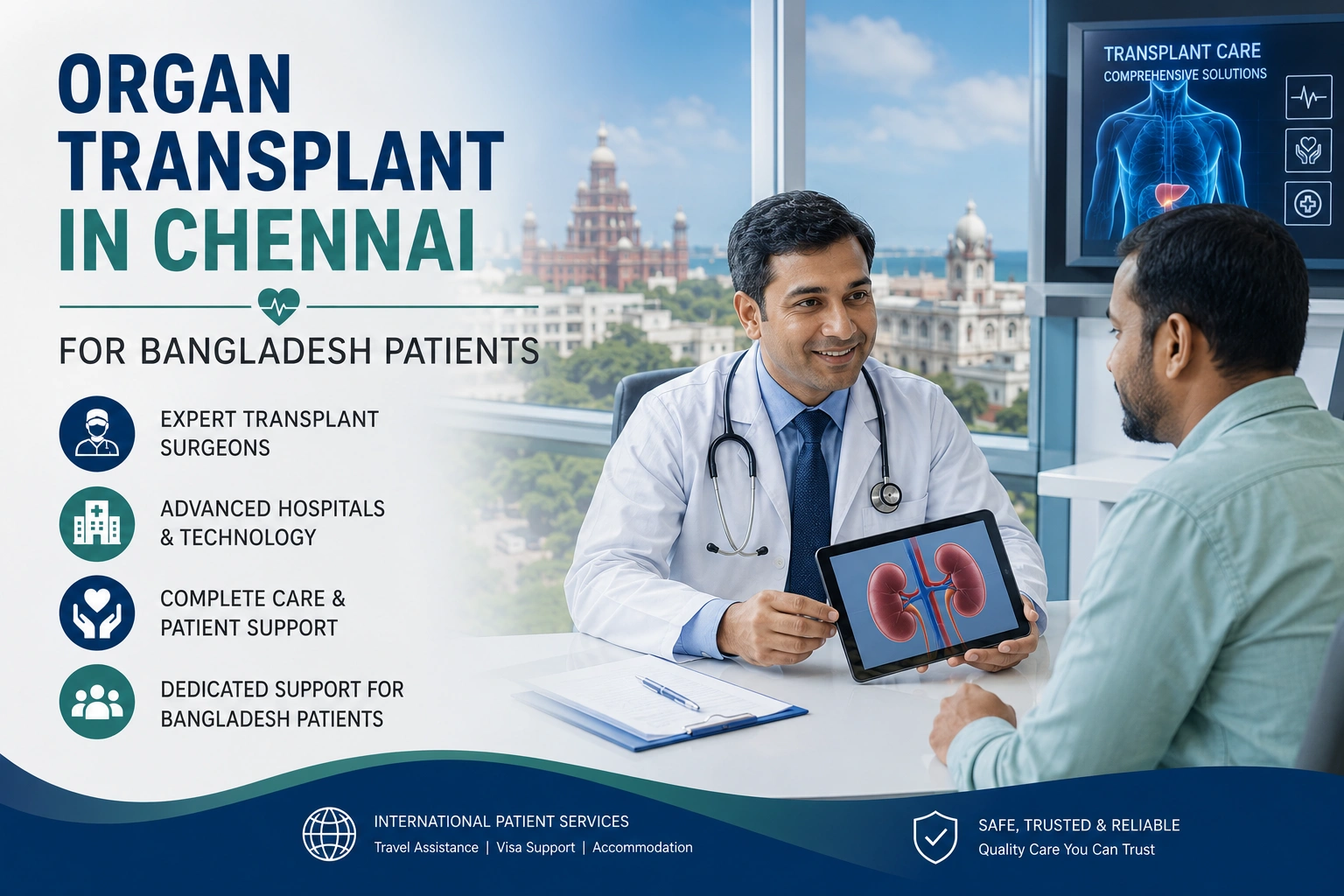
Chennai's transplant units combine deep surgical experience with transparent, predictable pricing. The city runs some of the highest volume kidney and liver transplant programs in South Asia.
That volume grew alongside Chennai's broader reputation as a cardiac and nephrology hub over the past two decades.
Kidney and Liver Transplant Options
Kidney transplant is the most common procedure for Bangladeshi patients, usually following a period of dialysis once kidney function has declined significantly. Living donor transplant, typically from a close relative, is the faster and more common route.
Deceased donor transplant depends on India's regulated waitlist, which is generally not accessible to foreign nationals under current rules. Living donation remains the realistic path for most international patients.
Liver transplant follows a similar living donor model. A portion of a healthy relative's liver is transplanted, and both the donor's and recipient's livers regenerate over the following months.
This applies to conditions like cirrhosis, certain liver cancers within transplant criteria, and acute liver failure. Pre-transplant workup covers blood typing, tissue matching, and a full health screening of both donor and recipient.
Why Bangladeshi Patients Choose Chennai
Cost is the most immediate factor. Organ transplant surgery in Chennai typically costs a fraction of equivalent treatment in Southeast Asia or Gulf private transplant programs.
Surgical experience runs deep. Chennai's leading transplant surgeons often perform this surgery weekly, and that consistency shows directly in graft survival rates.
Proximity matters too. Direct and short-connection flights from Dhaka to Chennai run under three hours, which matters for a recovering patient and donor alike.
Legal donor protocols are well established, with clear documentation requirements that protect both patient and donor throughout the process.
Best Hospitals for Organ Transplant in Chennai
Apollo Hospitals, Chennai runs one of the earliest and highest volume transplant programs in India, covering kidney, liver, and combined transplants.
Fortis Healthcare, Chennai operates a dedicated transplant unit with strong nephrology and hepatology backup support.
Manipal Hospitals, Chennai has an established track record in living donor kidney transplant with a dedicated international patient department.
Medanta and Max Healthcare also run recognized transplant programs, particularly relevant for patients weighing options across multiple Indian cities.
P.D. Hinduja Hospital is known specifically for nephrology and transplant nursing care standards.
Organ Transplant Cost in Chennai for Bangladeshi Patients
| Procedure | Cost Range (USD) |
|---|---|
| Living donor kidney transplant | 13,000 – 18,000 |
| Living donor liver transplant | 32,000 – 45,000 |
| Pre-transplant donor and recipient workup | 1,500 – 2,500 |
| Post-transplant medication (first month) | 800 – 1,500 |
These figures generally cover the surgical team for both donor and recipient, hospital stay for both, and ICU monitoring. Lifelong anti-rejection medication after returning home is a separate ongoing cost.
Donor Rules and Legal Documentation
India permits living donor transplant from close relatives, defined under law as spouse, parents, children, and siblings. Other relations require additional legal clearance through a government approval committee.
Bangladeshi patients need notarized proof of relationship with the donor. Hospitals verify this carefully, both for legal compliance and to prevent organ trafficking.
The donor undergoes a full independent medical and psychological evaluation, separate from the recipient's workup, confirming both physical suitability and voluntary consent.
Recovery Timeline
Kidney transplant recipients typically spend five to seven days in hospital. The donor is usually discharged slightly earlier, often within four to five days given laparoscopic donor nephrectomy techniques.
Liver transplant recipients generally need two to three weeks in hospital given the complexity involved. The donor typically recovers over seven to ten days before discharge.
Both donor and recipient are generally advised to stay in Chennai for four to six weeks post-discharge for follow-up monitoring, longer for liver transplant given the regeneration process.
Medical Visa for Organ Transplant in Chennai from Bangladesh
Documents typically needed include a passport with sufficient validity, hospital invitation and treatment letter, medical records supporting the need for transplant, and donor relationship documentation.
Both patient and accompanying donor generally require separate medical visa applications. Hospitals usually assist with invitation letters for both.
How HealthRoop Supports You
An organ transplant decision rarely comes with much time to research calmly, and for Bangladeshi families weighing where to go, having someone coordinate the details matters. HealthRoop supports patients and donors from the first call through full recovery.
Services include:
- Free medical report review and treatment guidance
- Appointment booking with leading transplant hospitals
- Hospital and specialist selection based on the specific case
- Transparent cost estimates in USD and INR
- Second opinion from Indian transplant specialists
- Medical visa invitation and assistance for both patient and donor
- FRRO and visa extension support
- Travel and flight planning
- Currency exchange and local SIM assistance
- Airport pickup and local transportation
- Extended-stay accommodation booking
- Interpreter support
- Help with medical documentation and insurance coordination
- Dedicated case manager throughout
- Telemedicine follow-up after returning home
- 24x7 emergency support during the stay in India
Frequently Asked Questions
Yes. Chennai's leading transplant centers perform high surgical volumes with outcomes tracked against international transplant registries.
Only with additional legal clearance through a government approval committee, since Indian law restricts living donation primarily to close relatives.
Typically four to six weeks post-discharge for kidney transplant, longer for liver transplant.
Yes, anti-rejection medication is a lifelong requirement that needs to be sourced reliably back home after returning to Bangladesh.
Several Chennai centers offer ABO-incompatible transplant protocols in select cases, though this adds complexity and needs direct specialist evaluation.