Hair Transplant in India for Oman Patients
Looking for hair transplant in India for Oman patients that delivers a natural-looking hairline without a price tag that makes you put it off another year? Omani patients dealing with male or female pattern baldness increasingly choose India for FUE, FUT, and DHI hair transplants, where the same procedure often costs a fraction of what a comparable session runs to in Muscat.
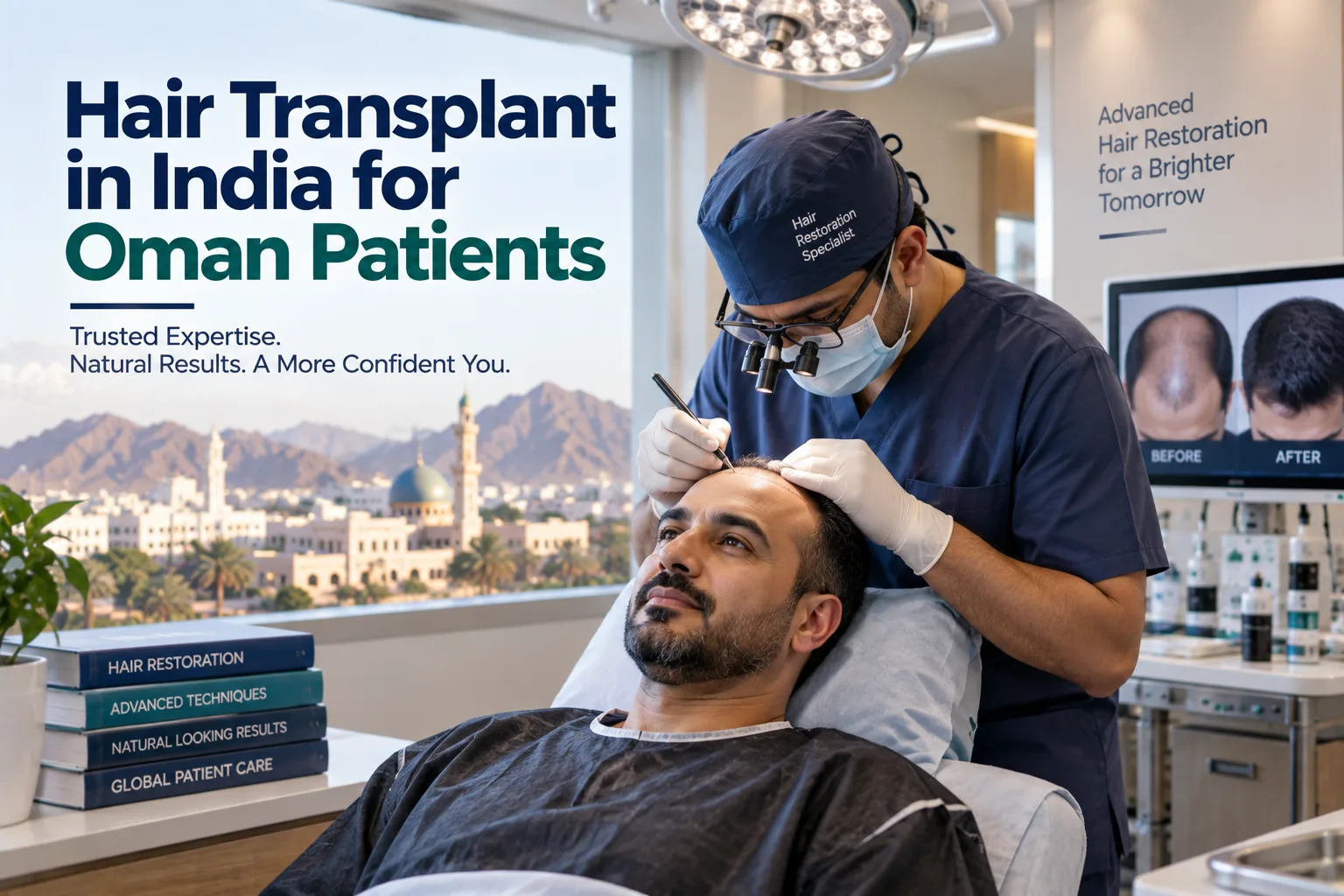
India carries out one of the highest volumes of hair transplant procedures in the world, and that scale has pushed clinics to specialise deeply in graft extraction, hairline design, and density planning rather than treating it as a side service. A hair transplant in Oman for 1,500 to 2,000 grafts commonly runs to around 5,000 to 6,000 USD, while a comparable session in India is typically priced well below that, which is the main reason so many Omani patients now travel for the procedure.
Because a hair transplant is a day procedure rather than major surgery, the trip itself is usually short and straightforward, with most of the planning going into choosing the right technique and graft count for the individual's stage of hair loss.
Why Omani Patients Choose India for Hair Transplant
Cost is the clearest reason. Hair transplant cost in India for Oman patients is typically a fraction of the price for the same graft count in Muscat, which matters given that most transplants are paid for entirely out of pocket rather than through insurance.
Surgeon experience runs deep, with leading Indian clinics performing thousands of FUE, FUT, and DHI sessions a year, giving surgeons a refined sense of natural hairline design across different hair types.
Technique choice is broad. Patients can choose between FUE, FUT, DHI, and robotic-assisted extraction depending on their baldness stage, budget, and how much scarring they are willing to accept.
Turnaround is fast. A consultation, procedure, and short follow-up can usually be completed within a single short trip, without the multi-week stay that major surgeries require.
Several clinics maintain coordinators experienced with Gulf patients, including Arabic-speaking staff who help with pre-procedure planning and travel logistics.
FUE, FUT, and DHI: Choosing a Hair Transplant Technique
FUE (Follicular Unit Extraction) removes individual hair follicles one at a time from the donor area, leaving small, quickly healing dot scars rather than a linear scar, making it a popular choice for patients who prefer to wear their hair short.
FUT (Follicular Unit Transplantation) removes a thin strip of scalp containing many follicles, which are then separated and implanted. It generally costs less per graft and can cover a larger area in a single session, but leaves a linear scar along the donor area.
DHI (Direct Hair Implantation) extracts follicles and implants them directly using a specialised pen-like tool without first creating recipient sites, which can allow more precise control over hairline angle and density, often at a higher cost.
The right technique, and the number of grafts needed, depends on the Norwood stage of hair loss, the quality of the donor area, and the patient's own priorities around cost, scarring, and hairline design, and is best confirmed after a scalp assessment rather than decided in advance.
Best Hair Transplant Clinics in India for Oman Patients
Medanta, The Medicity, Gurugram runs a dedicated cosmetology and hair restoration unit offering FUE, FUT, and DHI within its wider hospital network.
Apollo Hospitals operates dermatology and hair transplant services with an established international patient desk experienced in coordinating for Gulf patients.
Fortis Healthcare offers hair restoration services through its dermatology and cosmetology units across multiple Indian cities.
Max Healthcare and Manipal Hospitals provide hair transplant consultations alongside broader dermatology and cosmetic care.
P.D. Hinduja Hospital also runs a well-regarded cosmetology programme offering hair restoration procedures.
Hair Transplant Cost in India for Oman Patients
| Procedure | Cost Range (USD) |
|---|---|
| Consultation and scalp assessment | 50 – 150 |
| FUT hair transplant (per session) | 800 – 1,800 |
| FUE hair transplant (per session) | 1,200 – 2,500 |
| DHI hair transplant (per session) | 1,800 – 3,500 |
| Robotic-assisted hair transplant | 2,500 – 4,500 |
| Beard or eyebrow transplant | 600 – 1,200 |
These figures generally cover the consultation, procedure, and same-day medication, and vary mainly with the number of grafts required and the technique chosen. Final pricing is confirmed only after a scalp assessment determines the Norwood stage and realistic graft count.
Recovery and Results Timeline
Most patients notice significant recovery within five to seven days, with the scalp largely healed within ten to fifteen days. Transplanted hair typically sheds within the first few weeks, which is a normal part of the process and not a sign the transplant has failed.
New growth usually begins around three to four months after the procedure, with visible density building over six to nine months. Full results, including natural texture and thickness, are generally seen at twelve to eighteen months.
Most Omani patients plan for three to five days in India, covering the consultation, the procedure itself, and a short follow-up check before flying home, with remaining healing and growth happening naturally afterwards.
Travel and Visa for Hair Transplant in India from Oman
Omani patients travelling for a hair transplant generally apply for an Indian medical or tourist visa through the Embassy of India in Muscat or its authorised visa service, depending on the length and purpose of the trip. Documents typically required include a passport valid for at least six months, a clinic appointment confirmation, and proof of funds.
Because a hair transplant is a short, day-procedure trip rather than a multi-week hospital stay, most patients do not need a formal medical visa attendant arrangement, though the clinic can provide an appointment letter if one is requested for visa purposes.
How HealthRoop Supports You
Comparing clinics, techniques, and pricing on your own can be confusing when every source quotes something different. HealthRoop handles this entire process for Omani patients, from the first call through to the follow-up check.
Services include:
- Free scalp photo review and technique guidance
- Appointment booking with leading hair transplant clinics
- Clinic and technique selection based on the specific baldness stage
- Transparent cost estimates in USD and INR
- Second opinion from Indian hair transplant surgeons
- Visa and appointment letter assistance
- Travel and flight planning from Muscat
- Currency exchange and local SIM assistance
- Airport pickup and local transportation
- Hotel accommodation booking for the short stay
- Arabic interpreter support
- Help with post-procedure care instructions
- Dedicated case manager throughout
- Telemedicine follow-up after returning home
- Support if a second session is needed later
Frequently Asked Questions
Yes. India performs a very high volume of FUE, FUT, and DHI hair transplants every year, with experienced surgeons and the same graft-extraction technology used at premium clinics in the Gulf and Europe.
Hair transplant cost in India for Oman patients typically ranges from 800 to 4,500 USD depending on the technique and number of grafts, compared to figures often around 5,000 to 6,000 USD or more for a similar session in Oman.
FUE extracts individual follicles one at a time and leaves no linear scar, FUT removes a strip of scalp and can cover a larger area at a lower cost per graft, and DHI implants extracted follicles directly using a specialised pen-like tool, generally suiting patients who want a more precise hairline design.
The number of grafts depends on the Norwood stage of hair loss, typically ranging from around 800-1,200 grafts for early-stage thinning to 4,000-6,000 grafts for more advanced baldness.
Transplanted hair typically sheds within the first few weeks, which is normal, before new growth begins around three to four months. Visible density usually builds over six to nine months, with full results at twelve to eighteen months.
Most patients plan for three to five days in India, covering consultation, the procedure itself, and a short follow-up check before flying home.