Cardiac Surgery in India for Iraq Patients
Limited advanced cardiac care infrastructure back home sends a steady stream of Iraqi patients abroad each year for heart treatment. India has become one of the most trusted destinations for cardiac surgery from Iraq.
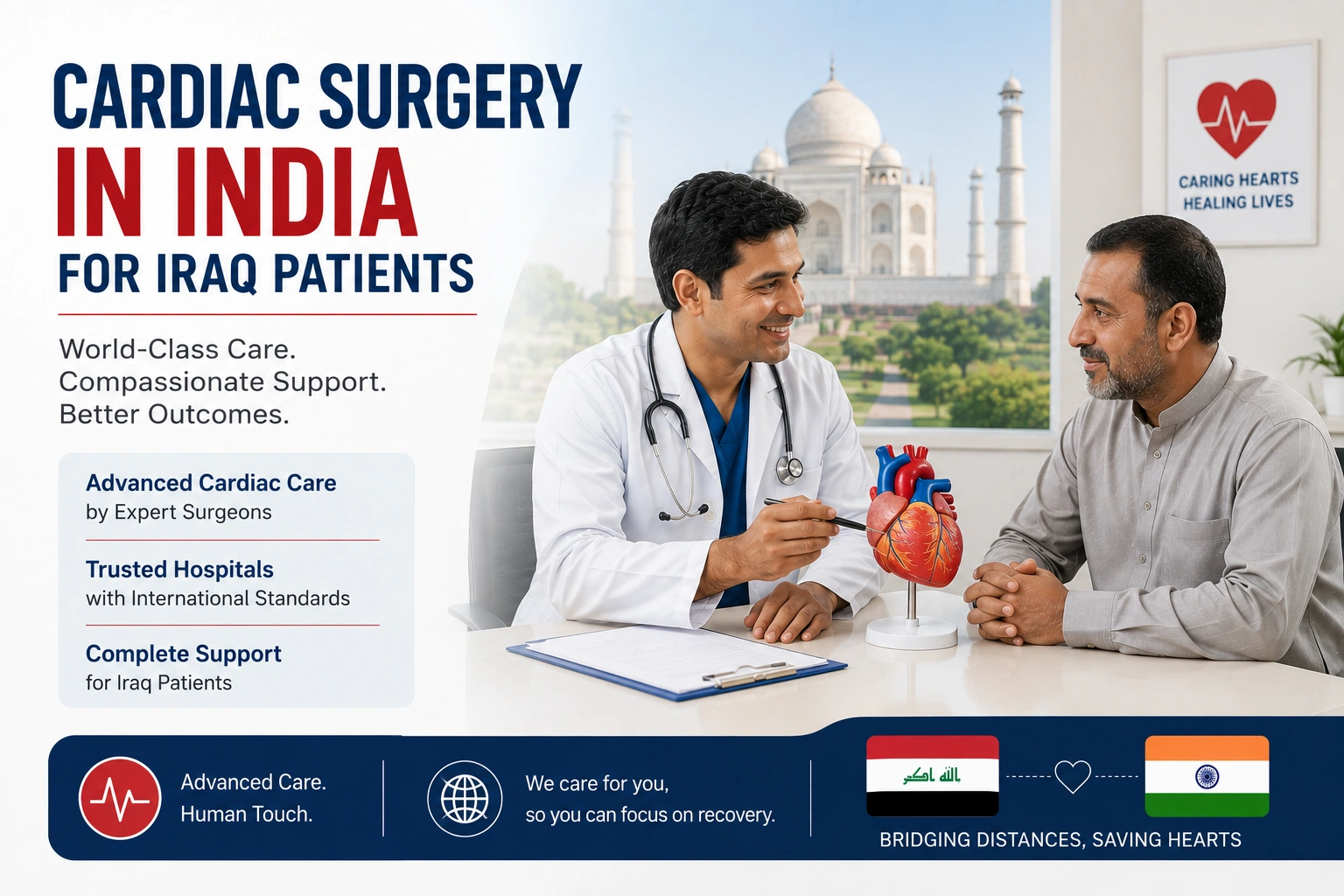
Indian cardiac hospitals combine very high surgical volume with pricing that remains accessible compared to European or Gulf private options. Several Indian heart institutes rank among the busiest in the world.
That volume shows up directly in outcomes, particularly for complex multi-vessel or high-risk cardiac cases.
Why Iraqi Patients Choose India for Cardiac Surgery
Cost is the primary driver. Cardiac surgery in India typically costs a fraction of equivalent treatment in Europe, and remains considerably more affordable than Gulf private hospitals.
Surgical experience runs deep, with senior Indian cardiac surgeons often completing several hundred procedures annually across bypass and valve surgery.
Advanced technology is broadly available, including TAVI, minimally invasive bypass, and robotic-assisted cardiac procedures at leading centers.
Waiting times are short, with urgent cases often scheduled within days once diagnostic workup is complete, an important factor for patients dealing with advanced cardiac disease.
Several hospitals have dedicated coordinators experienced with Iraqi patients, including Arabic-speaking staff and support with documentation.
Bypass and Valve Surgery Options
Coronary bypass, or CABG, is recommended when arteries are significantly blocked and stenting isn't suitable. Traditional on-pump bypass remains standard for multi-vessel disease.
Off-pump beating-heart surgery avoids the heart-lung machine for suitable cases, generally allowing a somewhat faster recovery. Minimally invasive bypass applies to select single or double vessel cases.
Valve surgery addresses a narrowed or leaking valve. Surgeons generally prefer repairing a patient's own valve over replacement where the anatomy allows it.
TAVI, a catheter-based valve replacement done without open surgery, suits higher-risk or older patients who may not tolerate open surgery well.
Best Hospitals for Cardiac Surgery in India
Medanta, The Medicity, Gurugram runs one of the largest heart institutes in India, handling routine to highly complex redo cardiac surgery.
Apollo Hospitals has one of the country's earliest cardiac surgery programs with dedicated coordination for international patients, including a growing Iraqi patient base.
Fortis Healthcare operates dedicated cardiac units across multiple cities with strong volume in bypass, valve, and congenital procedures.
Max Healthcare and Manipal Hospitals are known for taking on high-risk and repeat cardiac cases with experienced surgical teams.
P.D. Hinduja Hospital also runs an established cardiac program with a track record in complex valve surgery.
Cardiac Surgery Cost in India for Iraq Patients
| Procedure | Cost Range (USD) |
|---|---|
| Coronary angioplasty with stent (single vessel) | 3,500 – 6,000 |
| Bypass surgery (CABG), standard case | 5,500 – 8,500 |
| Off-pump or minimally invasive bypass | 7,000 – 10,000 |
| Valve repair or replacement (single valve) | 6,500 – 10,000 |
| TAVI (transcatheter valve replacement) | 15,000 – 22,000 |
| Combined valve and bypass surgery | 10,000 – 15,000 |
These figures generally cover the surgical team, hospital stay, standard implants or grafts, and immediate ICU care. Final cost depends on the number of grafts, valve type, and ICU duration, confirmed only after angiogram results come in.
Recovery and Success Rates
Published data from India's leading cardiac centers typically shows bypass surgery success rates well above 95%. Valve surgery sits in a similar range for elective cases.
Days one and two after surgery are spent in ICU with gradual movement. Days three to five involve the general ward with assisted walking.
Discharge usually happens around week two, with cardiac rehab starting around the same time. Most patients are close to normal activity levels by month three.
Medical Visa for Cardiac Surgery in India from Iraq
Documents generally needed include a passport valid for at least six months, an invitation letter from the treating hospital, medical records supporting the need for surgery, and proof of funds.
One accompanying attendant is permitted under the medical attendant visa category. Given how time-sensitive cardiac cases usually are, hospitals help expedite the invitation letter for urgent cases.
How HealthRoop Supports You
Managing hospital selection, visa paperwork, and travel logistics alone adds unnecessary stress to an already difficult decision. HealthRoop handles that entire process for Iraqi patients from the first call through full recovery.
Services include:
- Free medical report review and treatment guidance
- Appointment booking with leading cardiac hospitals
- Hospital and specialist selection based on the specific diagnosis
- Transparent cost estimates in USD and INR
- Second opinion from Indian cardiologists
- Medical visa invitation and visa assistance
- FRRO and visa extension support
- Travel and flight planning
- Currency exchange and local SIM assistance
- Airport pickup and local transportation
- Hotel and recovery accommodation booking
- Interpreter support
- Help with medical documentation and insurance coordination
- Dedicated case manager throughout
- Telemedicine follow-up after returning home
- 24x7 emergency support during the stay in India
Frequently Asked Questions
Yes. India's leading cardiac centers perform very high surgical volumes with outcomes broadly in line with international benchmarks.
For urgent cases, once diagnostics are complete, surgery can often be scheduled within days.
This depends entirely on the angiogram findings. A cardiologist reviewing the actual results is the only reliable way to answer this.
Most patients stay two to three weeks after surgery before flying home, allowing time for wound healing and initial rehab.
Yes, most cardiac centers offer remote review of angiogram and echo reports before a patient decides to travel.