Cancer Treatment in India for Saudi Arabia Patients
Looking for cancer treatment in India for Saudi Arabia patients that combines advanced oncology with a cost the family can genuinely plan around? A cancer diagnosis is difficult enough without also weighing a long wait for a specialist slot or a private bill that keeps climbing, and India has become a trusted option for Saudi patients needing surgery, chemotherapy, radiation, or advanced treatment such as CAR-T cell therapy.
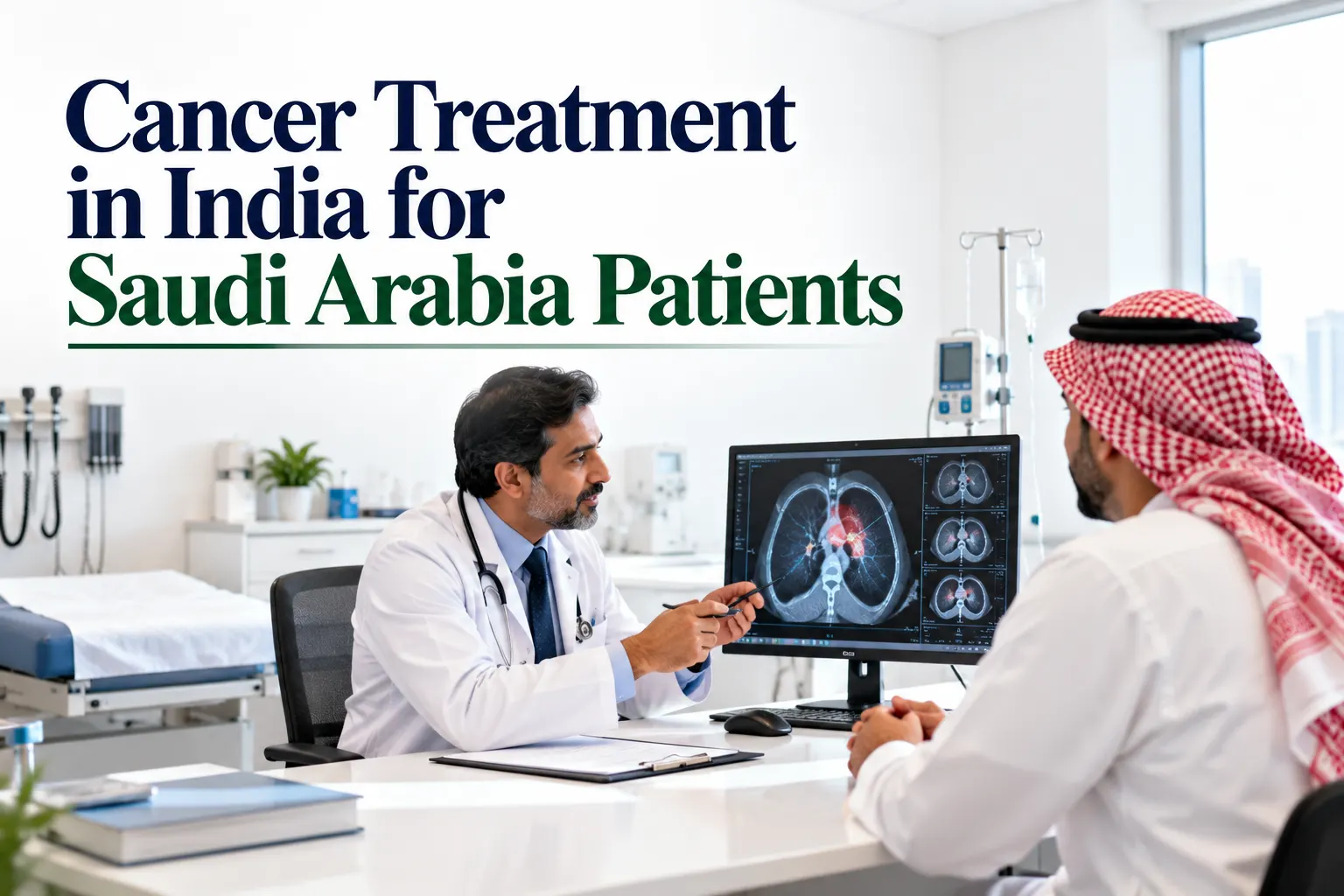
Saudi Arabia's own oncology sector is genuinely strong. King Faisal Specialist Hospital and Research Centre in Riyadh treats roughly a quarter of all cancer cases in the Kingdom and is the only centre in the Arab world manufacturing CAR-T cell therapy locally, having treated more than 200 patients with it since 2020. Even so, that capacity is limited relative to national demand, and private-sector treatment within Saudi Arabia is still considerably more expensive than the equivalent care in India.
India treats more international cancer patients than any other country in Asia, and its leading oncology centers offer proton therapy, CAR-T cell therapy, robotic-assisted surgery, and genomic-guided treatment planning alongside standard surgery, chemotherapy, and radiation. That volume matters because outcomes in oncology are closely tied to how many similar cases a tumour board and surgical team manage each year.
Why Saudi Patients Choose India for Cancer Treatment
Cost is a major factor. Cancer treatment in India for Saudi Arabia patients typically costs less per chemotherapy or targeted-therapy cycle than the same treatment billed privately within the Kingdom, and considerably less than in the UK, US, or Europe.
Clinical experience runs deep, with India's leading cancer institutes managing very high patient volumes across breast, prostate, lung, and blood cancers, giving multidisciplinary tumour boards broad exposure to complex and advanced-stage cases.
Advanced technology is widely available, including proton therapy, CAR-T cell therapy, robotic-assisted tumour surgery, and targeted or immunotherapy drugs matched to a patient's specific tumour profile.
Waiting time is short. Once scans and pathology reports are reviewed, a treatment plan and surgery date can often be confirmed within days rather than joining a long specialist queue.
Several hospitals offer halal food, prayer facilities, and Arabic-speaking coordinators who help with documentation and day-to-day communication throughout what can be a lengthy treatment course.
Cancer Treatment Options Available in India
Surgery remains central to treating most solid tumours, ranging from breast-conserving surgery and mastectomy to complex tumour resections, increasingly performed with robotic assistance for greater precision and a faster recovery.
Chemotherapy uses drug protocols matched to the cancer type and stage, typically delivered in cycles over several weeks or months, often alongside surgery or radiation as part of a combined treatment plan.
Radiation therapy, including IMRT and IGRT techniques, targets tumours with precision while limiting damage to surrounding tissue, and proton therapy is now available at select Indian centers for cases where conventional radiation carries higher risk to nearby organs.
Targeted therapy and immunotherapy use drugs matched to a tumour's specific genetic or molecular profile, and CAR-T cell therapy is available for certain blood cancers that have not responded to standard treatment. Bone marrow and stem cell transplant is used for leukaemia, lymphoma, and other blood disorders where high-dose chemotherapy is followed by donor or the patient's own stem cells.
Best Cancer Hospitals in India for Saudi Patients
Medanta, The Medicity, Gurugram runs a comprehensive cancer institute covering surgical, medical, and radiation oncology under one multidisciplinary team.
Apollo Hospitals operates one of the country's largest oncology networks, with dedicated cancer centers and an established international patient desk experienced in coordinating for Gulf patients.
Fortis Healthcare runs established oncology units offering surgery, chemotherapy, and radiation across multiple Indian cities.
Max Healthcare and Manipal Hospitals are known for managing complex and advanced-stage cancers, including cases with co-existing conditions that need closer monitoring.
P.D. Hinduja Hospital also runs a well-regarded oncology programme with a strong track record across surgical and medical cancer care.
Cancer Treatment Cost in India for Saudi Arabia Patients
| Treatment | Cost Range (USD) |
|---|---|
| Diagnostic workup (PET-CT, biopsy, tumour markers) | 500 – 1,500 |
| Cancer surgery (e.g. mastectomy, tumour resection) | 3,000 – 8,000 |
| Chemotherapy (per cycle, drug-dependent) | 200 – 1,500 |
| Radiation therapy (full course, IMRT/IGRT) | 3,000 – 6,000 |
| Bone marrow or stem cell transplant | 20,000 – 35,000 |
| Targeted therapy or immunotherapy (per cycle) | 1,500 – 4,000 |
These figures vary widely by cancer type, stage, and the number of chemotherapy or radiation cycles needed, so a full treatment course is usually costed as a combination of several line items above rather than a single flat fee. A chemotherapy and targeted-therapy cycle billed privately within Saudi Arabia is commonly quoted in the range of 3,000 to 12,000 USD, compared to a lower per-cycle cost in India. Final pricing is confirmed only after the oncology team reviews scans, biopsy results, and staging.
Treatment Timeline and Outcomes
Outcomes in cancer treatment depend heavily on cancer type and stage at diagnosis, so India's leading centers focus on early, accurate staging through PET-CT and pathology review before finalising a treatment plan.
Surgery typically involves a hospital stay of three to seven days, depending on the procedure, with chemotherapy and radiation delivered on an outpatient basis over several weeks once the patient has recovered enough to travel between sessions.
Not every patient needs to remain in India for a full treatment course. Many complete surgery and the first phase of treatment in India, then continue routine chemotherapy cycles closer to home, returning periodically for scans and specialist review.
Medical Visa for Cancer Treatment in India from Saudi Arabia
Saudi-based patients apply through the Embassy of India in Riyadh or the Consulate General of India in Jeddah, or use the e-Medical Visa route where their nationality is eligible. Documents generally required include a passport valid for at least six months, a hospital invitation letter, medical reports, biopsy or pathology results, and proof of funds. Visa applications submitted at Riyadh and Jeddah are typically processed within three working days.
Up to two medical attendants can accompany the patient, which matters given how much family support a cancer treatment journey can involve. Hospitals help fast-track the invitation letter, and a medical visa can generally be extended in India if the treatment plan runs longer than initially expected.
How HealthRoop Supports You
Coordinating a cancer treatment plan, hospital selection, and travel logistics on your own adds unnecessary stress to an already difficult diagnosis. HealthRoop handles this entire journey for Saudi patients, from the first call through to follow-up care back home.
Services include:
- Free biopsy and scan review with treatment guidance
- Appointment booking with leading cancer hospitals
- Hospital and specialist selection based on the specific diagnosis
- Transparent cost estimates in USD and INR
- Second opinion from Indian oncologists
- Medical visa invitation and e-Medical Visa application assistance
- FRRO registration and visa extension support for longer treatment courses
- Travel and flight planning from Riyadh, Jeddah, and Dammam
- Halal meal and prayer-friendly accommodation arrangements
- Airport pickup and local transportation
- Extended-stay accommodation booking for multi-cycle treatment
- Arabic interpreter support
- Help with medical documentation and insurance coordination
- Dedicated case manager throughout
- Telemedicine follow-up between treatment cycles
- 24x7 support during the stay in India
Frequently Asked Questions
Yes. India treats more international cancer patients than any other country in Asia, and its leading centers offer the same surgery, chemotherapy, radiation, and advanced options such as proton therapy and CAR-T cell therapy used at Saudi Arabia's top oncology centers.
Cancer treatment cost in India for Saudi Arabia patients typically ranges from 3,000 to 35,000 USD depending on the cancer type, stage, and treatment plan. A chemotherapy and targeted-therapy cycle in India generally runs lower than the equivalent cycle billed privately within the Kingdom.
King Faisal Specialist Hospital and Research Centre is a genuinely strong national cancer centre, but its capacity is limited relative to demand, and private treatment cost within the Kingdom is still considerably higher than in India, which is why many families weigh both options rather than assuming one is automatically better.
India's top cancer hospitals offer proton therapy, CAR-T cell therapy, robotic-assisted cancer surgery, targeted therapy, immunotherapy, and genomic-guided treatment planning, alongside standard surgery, chemotherapy, and radiation.
Not always. Surgery and the initial treatment plan are typically done in India, and many patients then continue routine chemotherapy cycles or follow-up closer to home, returning to India periodically for scans and specialist review.
Indian medical visa rules generally allow up to two attendants to accompany the patient, which is usually enough for close family support through diagnosis, treatment, and recovery.