Bone Marrow Transplant in India for Oman Patients
Looking for bone marrow transplant in India for Oman patients that combines genuine haematology expertise with a cost the family can plan around? Omani patients with leukaemia, thalassemia, sickle cell disease, and other blood disorders increasingly travel to India, drawn by experienced transplant units and pricing that sits well below the US, UK, or private Gulf hospitals.
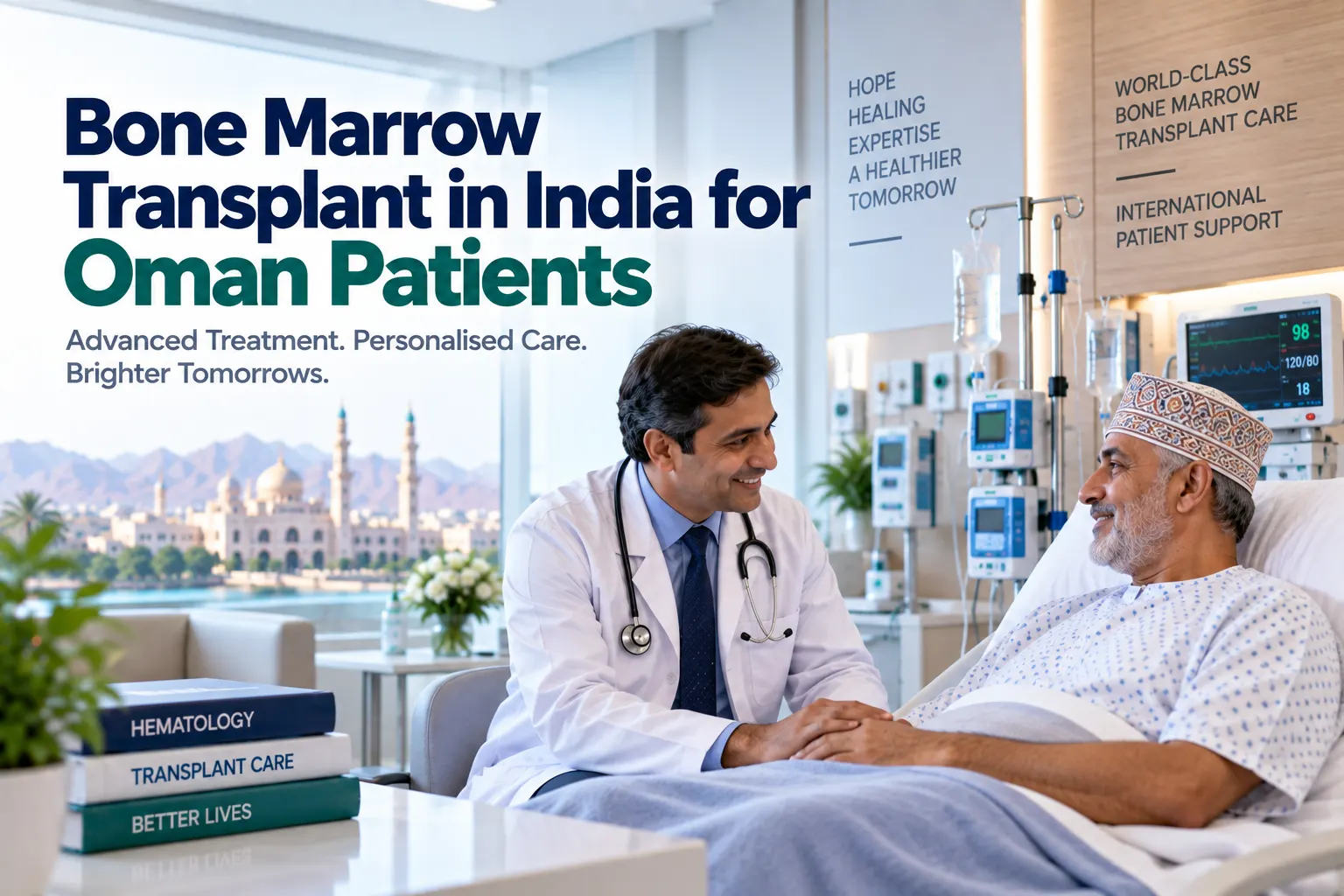
India's leading bone marrow transplant centers operate HEPA-filtered transplant units with dedicated haematology teams, infection control specialists, and in-house blood banks, and many have completed well over a thousand transplants. That volume matters because BMT outcomes depend heavily on how experienced a team is at managing engraftment, infection risk, and the early weeks of recovery.
Thalassemia and sickle cell disease are relatively common across the Gulf region, and Indian transplant centers have specific, well-established experience treating these conditions in patients travelling from Oman and neighbouring countries, alongside leukaemia, lymphoma, and other blood cancers.
Why Omani Patients Choose India for Bone Marrow Transplant
Cost is the clearest reason. Bone marrow transplant treatment in India for Oman patients typically costs a fraction of the same procedure in the US or UK, where a comparable transplant can exceed 200,000 USD.
Clinical experience runs deep, with leading Indian transplant units managing autologous, allogeneic, haploidentical, and unrelated-donor transplants across a high volume of cases every year.
Donor flexibility gives more patients a realistic path to transplant. Where no matched family donor is available, Indian centers can search international donor registries or proceed with a half-matched family donor rather than treatment stalling for lack of a perfect match.
Waiting time is short once donor evaluation and HLA typing are complete, since transplant scheduling does not depend on a long public referral queue.
Several hospitals maintain coordinators experienced with Gulf patients, including Arabic-speaking staff who support families through a long and demanding treatment process.
Types of Bone Marrow Transplant and Donor Matching
Autologous transplant uses the patient's own stem cells, collected and frozen before high-dose chemotherapy, then reinfused afterwards. It does not need a donor and is generally used for conditions such as multiple myeloma and certain lymphomas.
Allogeneic transplant uses stem cells from a matched donor, most often a sibling, which is why the whole immediate family is typically tested through HLA typing early in the process.
Haploidentical transplant uses a half-matched donor, usually a parent, child, or sibling, and has become a well-established option when no fully matched relative is available.
Unrelated donor transplant is used when no suitable family match exists. Indian transplant centers can search international stem cell donor registries for a matched unrelated donor, an option not available for solid organ transplants such as kidney or liver, where only a near relative is legally permitted to donate in India.
Best Bone Marrow Transplant Hospitals in India for Oman Patients
Medanta, The Medicity, Gurugram runs a comprehensive haemato-oncology and BMT programme covering autologous, allogeneic, and haploidentical transplants.
Apollo Hospitals operates a high-volume BMT programme with developed protocols for haploidentical stem cell transplants, including for sickle cell disease, and an established international patient desk.
Fortis Healthcare runs a dedicated, HEPA-filtered BMT unit with a multidisciplinary team of haematologists and infectious disease specialists and an in-house blood bank.
Max Healthcare and Manipal Hospitals are known for managing complex transplant cases, including patients with co-existing conditions that need closer monitoring.
P.D. Hinduja Hospital also runs a well-regarded haematology and bone marrow transplant programme with an experienced clinical team.
Bone Marrow Transplant Cost in India for Oman Patients
| Transplant Type | Cost Range (USD) |
|---|---|
| Pre-transplant evaluation and HLA typing | 500 – 1,500 |
| Autologous bone marrow transplant | 14,000 – 22,000 |
| Allogeneic transplant (matched related donor) | 22,000 – 35,000 |
| Haploidentical transplant (half-matched family donor) | 32,000 – 50,000 |
| Unrelated donor transplant (matched via registry) | 70,000 – 90,000 |
These figures generally cover the conditioning chemotherapy, transplant procedure, hospital stay, and immediate post-transplant care. Final pricing depends heavily on the underlying condition, donor type, and any complications such as infection or delayed engraftment, and is confirmed only after the haematology team reviews the case.
Recovery and Success Rates
Published data from India's leading BMT centers typically shows success rates between 60% and 90%, depending heavily on the transplant type, donor match quality, and the patient's underlying condition and disease stage at the time of transplant.
The transplant itself is followed by two to four weeks in a HEPA-filtered isolation unit while the new stem cells engraft and the immune system recovers, with close monitoring for infection and, in allogeneic cases, graft-versus-host disease.
Most Omani patients and, where relevant, their donor plan for six to ten weeks in India in total, covering evaluation, the transplant, hospital recovery, and follow-up before it is safe to fly home.
Medical Visa for Bone Marrow Transplant in India from Oman
Omani patients apply for an Indian medical visa through the Embassy of India in Muscat or its authorised visa service. Documents generally required include a passport valid for at least six months, a hospital invitation letter, medical reports supporting the need for transplant, and proof of funds, along with donor test results where a family donor is involved.
Indian medical visa rules typically allow up to two attendants to accompany the patient, usually enough to cover a donor and one family caregiver. Hospitals help fast-track the invitation letter, and a medical visa can generally be extended in India if recovery takes longer than initially planned.
How HealthRoop Supports You
Coordinating donor testing, hospital selection, and travel logistics on your own adds unnecessary stress to an already difficult diagnosis. HealthRoop handles this entire journey for Omani patients and their families, from the first call through to follow-up care back home.
Services include:
- Free medical report review and treatment guidance
- Appointment booking with leading BMT hospitals
- Hospital and specialist selection based on the specific diagnosis
- Transparent cost estimates in USD and INR
- Guidance on donor testing and HLA typing coordination
- Medical visa invitation and application assistance
- FRRO registration and visa extension support
- Travel and flight planning from Muscat
- Currency exchange and local SIM assistance
- Airport pickup and local transportation
- Extended-stay accommodation booking for patient and donor
- Arabic interpreter support
- Help with medical documentation and insurance coordination
- Dedicated case manager throughout
- Telemedicine follow-up after returning home
- 24x7 emergency support during the stay in India
Frequently Asked Questions
Yes. India's leading BMT centers report success rates of 60-90% depending on the transplant type and underlying condition, using HEPA-filtered transplant units and protocols in line with international standards.
Bone marrow transplant cost in India for Oman patients ranges from around 14,000 USD for an autologous transplant to 90,000 USD for an unrelated-donor transplant, compared to 200,000 USD or more for the same procedure in the US or UK.
An autologous transplant uses the patient's own stem cells, collected before chemotherapy and reinfused afterwards, and does not need a donor. An allogeneic transplant uses stem cells from a matched donor, either a family member or an unrelated donor identified through a registry.
Not necessarily. A matched sibling or family donor is preferred when available, but if no suitable family match is found, Indian transplant centers can search international donor registries for an unrelated matched donor, or proceed with a haploidentical, half-matched family donor.
Bone marrow transplant is used to treat leukaemia, lymphoma, multiple myeloma, aplastic anaemia, thalassemia, and sickle cell disease, among other blood and immune system disorders.
Most patients plan for six to ten weeks in India, covering pre-transplant evaluation, the hospital stay during transplant and early recovery, and close monitoring for infection or rejection before it is safe to fly home.