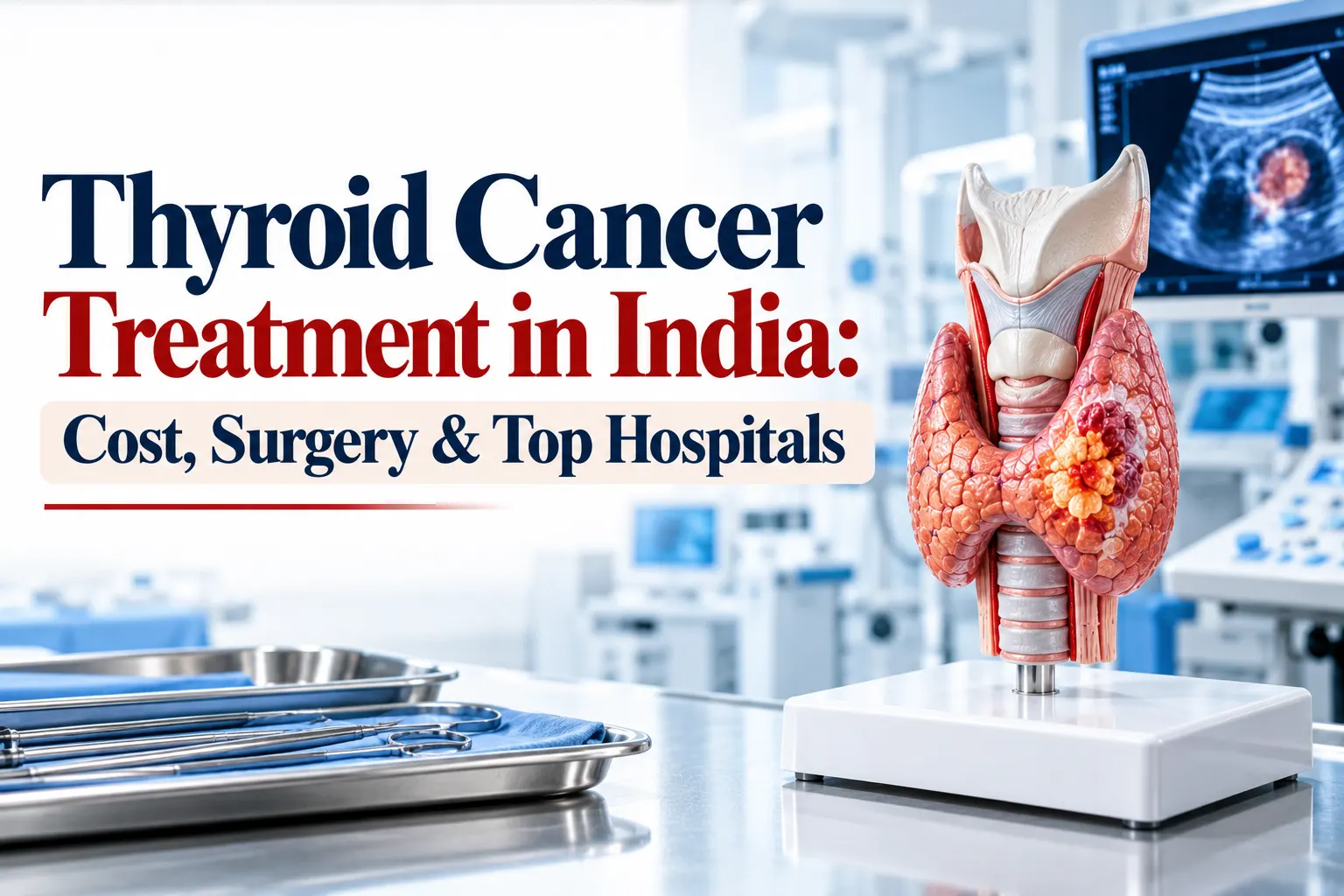
Thyroid Cancer Treatment in India for International Patients
Thyroid cancer treatment in India may include surgery, radioactive iodine therapy, thyroid hormone treatment, radiation or targeted medicines, depending on the type and stage of cancer. For international patients, treatment planning also involves medical records, hospital selection, travel arrangements, treatment costs and follow-up care.
India has several hospitals with oncology, endocrine surgery, nuclear medicine and international-patient departments. The right hospital depends on the patient's diagnosis, pathology, tumour size, lymph-node involvement and overall health.
For international patients, understanding the thyroidectomy cost India hospitals quote is important, but price should not be the only deciding factor. A hospital may quote a different amount depending on whether the patient needs a lobectomy, total thyroidectomy, lymph-node surgery or radioactive iodine.
This guide covers treatment options, surgery costs, international-patient preparation, hospital selection, recovery and important questions to ask before travelling to India.
What Is Thyroid Cancer?
Thyroid cancer develops when abnormal cells grow in the thyroid gland, located at the front of the neck.
The main types are:
- Papillary thyroid cancer
- Follicular thyroid cancer
- Medullary thyroid cancer
- Anaplastic thyroid cancer
Papillary and follicular cancers are generally called differentiated thyroid cancers. They often have different treatment pathways from medullary and anaplastic thyroid cancers.
Treatment is selected according to the cancer type, tumour size, stage, spread to lymph nodes or other organs and the patient's general health.
What Are the Main Treatments for Thyroid Cancer?
There is no single treatment that suits every thyroid cancer patient.
Thyroid Surgery
Surgery is a common treatment for localised thyroid cancer.
Depending on the case, the surgeon may recommend:
- Lobectomy — removal of one thyroid lobe
- Total thyroidectomy — removal of the entire thyroid
- Completion thyroidectomy — removal of the remaining thyroid tissue
- Neck lymph-node dissection — removal of affected lymph nodes
The extent of surgery depends on the tumour and its risk features.
Radioactive Iodine Therapy
Radioactive iodine, also called RAI or I-131, may be recommended after surgery for selected differentiated thyroid cancers.
It can destroy remaining thyroid tissue and cancer cells that retain iodine uptake. It is not routinely useful for medullary thyroid cancer.
The need for RAI depends on factors such as tumour size, lymph-node involvement, spread outside the thyroid and recurrence risk.
Thyroid Hormone Therapy
Patients who undergo total thyroidectomy generally need thyroid hormone replacement.
In some patients, the hormone dose is adjusted to keep TSH below a certain level because TSH can stimulate thyroid cells. The target depends on the patient's cancer risk and response to treatment.
Radiation and Targeted Treatment
External-beam radiation may be considered for selected advanced cases.
Targeted medicines may be used when thyroid cancer has spread or no longer responds adequately to radioactive iodine. The choice depends on cancer type, molecular findings and previous treatment.
How Is Thyroid Cancer Diagnosed?
A treatment plan should be based on a confirmed diagnosis.
Ultrasound
Thyroid ultrasound evaluates the size and characteristics of a thyroid nodule and can also identify suspicious lymph nodes.
Fine-Needle Aspiration
A fine-needle aspiration biopsy collects cells from a thyroid nodule for examination under a microscope.
Blood Tests
Thyroid-function tests, particularly TSH, are commonly used during evaluation.
Additional blood tests may be ordered depending on the suspected cancer type.
Imaging
CT, MRI, PET or other scans may be required when doctors need more information about the tumour, lymph nodes or possible spread.
Pathology Review
International patients who have already undergone biopsy or surgery should bring their pathology reports. In some cases, the Indian hospital may request the original slides or tissue blocks for review.
This can be useful when treatment decisions depend on the exact cancer classification.
When Is Thyroidectomy Recommended?
Thyroidectomy means surgical removal of part or all of the thyroid.
Lobectomy
A lobectomy removes one side of the thyroid. It may be appropriate for selected small, localised cancers.
Total Thyroidectomy
Total thyroidectomy removes the complete thyroid gland.
It may be considered when:
- The tumour is more extensive
- Both thyroid lobes are involved
- There are high-risk features
- Radioactive iodine is expected to be part of treatment
- Other clinical factors support complete thyroid removal
The National Cancer Institute recognises both lobectomy and total thyroidectomy as surgical options for selected papillary and follicular thyroid cancers.
If cancer has spread to regional lymph nodes, the surgeon may also recommend lymph-node dissection.
What Is the Thyroidectomy Cost in India?
The thyroidectomy cost India patients encounter varies according to the operation, hospital, surgeon, city and complexity of the case.
Published Indian hospital estimates put thyroidectomy costs broadly between ₹50,000 and ₹4 lakh, while extensive thyroid cancer surgery may cost more.
Indicative Thyroid Cancer Treatment Cost
| Treatment / Service | Approx. INR Cost | Approx. USD Cost |
|---|---|---|
| Thyroid cancer surgery | ₹1–4 lakh | 1,040–4,170 |
| Total thyroidectomy | ₹50,000–₹4 lakh | 520–4,170 |
| Thyroid lobectomy | ₹50,000–₹1.8 lakh | 520–1,875 |
| Thyroidectomy with neck dissection | ₹1.75–₹5.5 lakh | 1,825–5,730 |
| Radioactive iodine therapy | ₹50,000–₹1.5 lakh | 520–1,560 |
| External-beam radiation | ₹1–₹4 lakh | 1,040–4,170 |
| Targeted therapy | Varies | Varies |
Resource: These are indicative figures based on published 2025 Indian cost information. Actual hospital charges vary according to treatment plan, cancer stage, surgery type, investigations, medicines, room category and complications.
Important: An online cost range is not a final quotation. International patients should request an itemised estimate after their medical records and pathology have been reviewed.
What Can Increase the Treatment Cost?
The final bill can change because of several factors.
Type of Surgery
A lobectomy usually involves less surgery than total thyroidectomy with lymph-node dissection.
Lymph-Node Surgery
If cancer has spread to lymph nodes, additional surgery can increase hospital and surgeon charges.
Pathology
Detailed pathology is important for confirming the cancer type, margins and lymph-node status.
Radioactive Iodine
Patients who require RAI will have additional nuclear-medicine and follow-up expenses.
Hospital Stay
A longer stay because of complications or additional treatment increases the total cost.
Medicines
Thyroid hormone replacement is required after total thyroidectomy. Other medicines may also be needed depending on the patient's condition.
What Are the Risks of Thyroid Cancer Surgery?
Thyroid surgery is a common procedure, but it is still important to understand its possible risks.
Potential complications include:
- Bleeding
- Infection
- Temporary or permanent voice changes
- Recurrent laryngeal nerve injury
- Low calcium levels
- Hypoparathyroidism
- Need for further treatment
Risk depends on the extent of surgery, tumour location, previous neck operations and the patient's health.
Before surgery, patients should ask the surgeon about the specific risks associated with their planned operation.
What Happens After Total Thyroidectomy?
After complete thyroid removal, the body cannot produce sufficient thyroid hormone naturally.
Patients therefore require thyroid hormone replacement.
Follow-up may include:
- TSH testing
- Thyroglobulin testing where appropriate
- Anti-thyroglobulin antibodies
- Neck ultrasound
- Radioactive iodine scanning when indicated
- Clinical examination
- Additional imaging when required
The follow-up schedule depends on the cancer type, pathology and risk level.
Thyroid Cancer Surgery for Foreigners
Thyroid cancer surgery for foreigners is available at Indian hospitals that treat international patients.
Patients should send their medical records before travelling. Useful documents include:
- Passport copy
- Biopsy and pathology reports
- Thyroid ultrasound
- CT or MRI reports
- Blood-test results
- Previous discharge summaries
- Current medication list
- Previous treatment records
- Pathology slides or tissue blocks, if available
A preliminary review can help the hospital understand the case and recommend the next consultation.
However, remote assessment does not replace an in-person examination. Doctors may repeat investigations after the patient arrives.
Should Foreign Patients Get a Second Pathology Opinion?
It can be useful when the treatment decision depends on the exact tumour type or risk classification.
A pathology review may clarify:
- Cancer type
- Tumour size
- Surgical margins
- Lymph-node involvement
- Lymphovascular invasion
- Aggressive features
- Molecular findings where relevant
Patients should carry the original pathology report and ask whether the hospital wants the original slides or tissue blocks.
How to Choose the Best Thyroid Cancer Hospital in India
There is no single best thyroid cancer hospital India for every patient.
A suitable hospital should have the medical departments required for the patient's particular cancer.
Check Surgical Expertise
Thyroid surgery takes place close to important nerves, parathyroid glands and blood vessels. Ask about the surgeon's experience with thyroid and neck cancer procedures.
Look for Multidisciplinary Care
Depending on the case, treatment may involve:
- Endocrine or head-and-neck surgery
- Medical oncology
- Radiation oncology
- Nuclear medicine
- Endocrinology
- Radiology
- Pathology
Check Nuclear Medicine Facilities
A nuclear medicine department is important if radioactive iodine is expected to be part of treatment.
Review International Patient Services
International patients may need:
- Medical-visa assistance
- Airport transfers
- Interpretation
- Accommodation support
- Online consultations
- Follow-up coordination
Compare Written Estimates
Ask hospitals to separate surgery, pathology, hospitalisation, medicines, radioactive iodine and follow-up costs.
This makes price comparisons more meaningful.
Top Hospitals Listed by Healthroop
The following hospitals are included in Healthroop's hospital network. This list is not a ranking of thyroid cancer outcomes. Patients should confirm the specific department, surgeon and current treatment availability before booking.
Apollo Hospitals
Apollo is listed with oncology and surgical services, along with international-patient support such as visa assistance, airport transfers, interpretation and second-opinion services.
Fortis Healthcare
Fortis is listed with oncology services and international-patient support. Its facilities include radiation therapy and pathology services relevant to cancer evaluation.
Medanta – The Medicity
Medanta in Gurugram is listed with a cancer institute, radiation oncology and PET-CT facilities. Its international-patient department also provides services such as visa assistance and interpreter support.
Narayana Health
Narayana Health is listed with oncology, nuclear medicine and international-patient services. It also provides online consultations and post-treatment teleconsultation options.
Manipal Hospitals
Manipal Hospitals is listed with oncology and international-patient services, including medical-visa assistance and travel support.
Max Healthcare
Max Healthcare is listed with oncology, PET-CT and international patient services, including visa documentation and airport assistance.
HCG Cancer Centre
HCG is a dedicated cancer-care network listed with surgical oncology, radiation oncology, medical oncology, molecular diagnostics and international-patient services.
What Is the Treatment Process for International Patients?
The process generally follows these stages:
1. Medical Records Review
Send pathology, ultrasound, scans, blood reports and previous treatment details.
2. Specialist Consultation
A thyroid surgeon, oncologist or endocrinologist reviews the case.
3. Treatment Plan
The hospital explains whether surgery, additional testing or another treatment is recommended.
4. Cost Estimate
The hospital provides an approximate cost based on the proposed treatment.
5. Travel Preparation
The international-patient department can guide the patient regarding medical-travel documentation and appointments.
6. In-Person Assessment
Doctors may repeat important tests after arrival.
7. Treatment
Surgery or another recommended treatment is performed after final medical clearance.
8. Follow-Up
The patient receives medication instructions, reports and a follow-up plan before returning home.
How Long Should International Patients Stay in India?
The length of stay depends on the treatment.
A straightforward thyroid operation may require a short hospital stay, but international patients should allow extra time for:
- Initial consultation
- Diagnostic tests
- Anaesthesia assessment
- Surgery
- Recovery
- Pathology review
- Follow-up consultation
Patients requiring radioactive iodine may need additional time because of treatment and radiation-safety requirements.
It is better to keep the return journey flexible until the treating doctor confirms that the patient is fit to travel.
Recovery After Thyroid Cancer Surgery
Recovery differs from patient to patient.
After surgery, some patients experience neck discomfort, mild swelling, fatigue or temporary voice changes.
The medical team may monitor calcium levels and other parameters after surgery.
Patients should follow instructions regarding:
- Medicines
- Wound care
- Physical activity
- Follow-up blood tests
- Calcium or vitamin D supplementation when prescribed
- Thyroid hormone replacement
Most importantly, patients should have a follow-up plan before returning to their home country.
What Follow-Up Is Needed?
Thyroid cancer can require long-term monitoring even after successful surgery.
Depending on the patient's risk, follow-up may include:
- Physical examination
- Neck ultrasound
- TSH testing
- Thyroglobulin
- Anti-thyroglobulin antibodies
- Radioactive iodine scans
- CT or other imaging
- Additional biopsy when required
International patients should keep copies of their pathology report, operative notes and discharge summary so their local doctor can continue treatment.
How Healthroop Helps International Patients
Healthroop helps international patients arrange medical care in India by assisting with hospital selection, specialist consultations and practical treatment arrangements.
Support may include:
- Medical-record review
- Hospital identification
- Online specialist consultations
- Appointment coordination
- Treatment-cost estimates
- Medical-document assistance
- Medical-visa support
- Airport and local travel coordination
- Accommodation assistance
- Communication with hospital teams
- Follow-up coordination
Sending complete medical records before travelling can help the hospital understand the case and advise the patient about the next step.
Final Thoughts
Thyroid cancer treatment should be planned according to the cancer type, stage and individual risk rather than a standard treatment package.
For international patients considering treatment in India, the practical first step is to have the pathology, imaging and previous medical records reviewed by a suitable specialist. This helps determine whether surgery is needed and what additional treatment may follow.
Cost is an important part of planning, but patients should compare hospitals based on surgical expertise, pathology, nuclear medicine, oncology support and follow-up arrangements as well.
A written estimate should clearly explain what is included and what may be charged separately. This is especially important when lymph-node surgery or radioactive iodine may be required.
Price Disclaimer: The prices mentioned in this article are based on 2025 published data and are indicative only. Hospital charges may change depending on the hospital, city, surgeon, cancer stage, treatment complexity, investigations, medicines and additional procedures. The exact current cost can only be confirmed after the patient's medical reports are reviewed by the treating hospital. For the latest price and treatment information, please call or email the Healthroop team before making travel arrangements.
Medical Disclaimer: This article is for general educational purposes and does not replace advice from a qualified oncologist, endocrine surgeon, endocrinologist or nuclear-medicine specialist. Treatment decisions should be made after a complete medical evaluation.
Frequently Asked Questions
Answers on thyroid cancer treatment cost, surgery, and planning care in India.
The cost varies according to the cancer type and treatment plan. Thyroid surgery may cost around ₹1 lakh to ₹4 lakh or more, while radioactive iodine, medicines, pathology and additional procedures can increase the total expense. International patients should obtain a hospital-specific quotation.
The thyroidectomy cost India patients pay can range from approximately ₹50,000 to ₹4 lakh, depending on the hospital, surgery type and complexity. Cancer surgery involving lymph-node dissection can cost more because it requires a more extensive procedure and additional hospital resources.
Yes. International patients can receive thyroid cancer evaluation and treatment in India. They should send their medical records to the hospital, obtain specialist advice and arrange the appropriate medical-travel documentation before travelling for surgery or other cancer treatment.
No. Selected patients with small, localised thyroid cancers may be treated with lobectomy. Total thyroidectomy may be recommended when the tumour is more extensive, both lobes are involved or other risk factors support complete thyroid removal.
Not always. Radioactive iodine is considered mainly for selected differentiated thyroid cancers based on tumour characteristics and recurrence risk. It is not routinely effective for medullary thyroid cancer. The treating specialist decides whether the expected benefits justify the treatment.
There is no single hospital that is best for every patient. A suitable centre should have experienced thyroid surgeons, cancer pathology, nuclear medicine when needed, oncology support and international-patient services. Apollo, Fortis, Medanta, Narayana, Manipal, Max and HCG are listed in Healthroop's network.
The duration depends on the planned operation. A straightforward thyroidectomy may be shorter than surgery involving lymph-node dissection. The surgeon can provide a more accurate estimate after reviewing the patient's imaging, biopsy results and planned extent of surgery.
Patients who undergo total thyroidectomy generally need lifelong thyroid hormone replacement. The dose is adjusted according to blood-test results and the patient's clinical requirements. Some thyroid cancer patients also receive a specific hormone dose to suppress TSH.
Patients should wait until the treating doctor confirms that they are fit to travel. They may need a post-operative examination, pathology review and medication instructions before departure. Patients receiving radioactive iodine may require additional time because of treatment and radiation-safety precautions.
Patients should bring their passport, pathology and biopsy reports, ultrasound and scan reports, blood tests, previous discharge summaries and current medication list. If available, original pathology slides or tissue blocks may also be useful for a second review.
