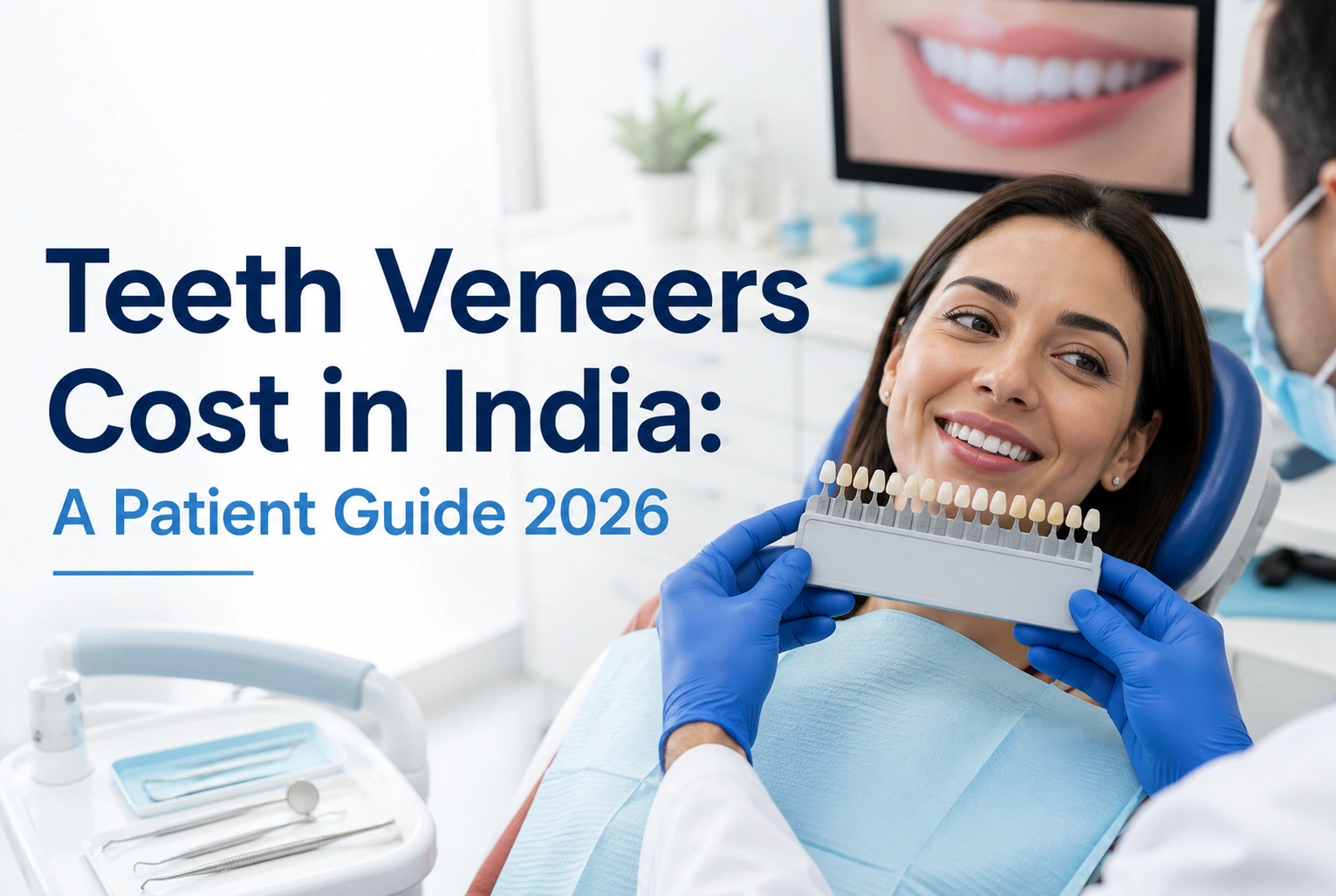
Teeth Veneers Cost in India: A Guide for International Patients
If you're comparing prices before booking a dental trip, here's the short answer first. Teeth veneers cost in India generally falls well below what the same treatment costs in the US or UK, though exact numbers vary a lot by clinic. Our full dental treatment program covers veneers along with other cosmetic and restorative options if you'd like to see the wider picture first.
Composite veneers tend to sit at the lower end of the price range, and porcelain or Emax veneers cost more because of the lab work involved. These are broad patterns, not fixed quotes.
The final number depends on the material, the dentist's experience, the city, and how many teeth need work. For someone flying in from the US, UK, Oman, or an African country, Indian pricing often looks small next to home-country costs.
That gap is the main reason dental tourism to India has grown. Price alone shouldn't decide where you get treated, though.
A good outcome depends just as much on the dentist's skill and how the case is planned.
How Much Do Teeth Veneers Cost in India?
Published pricing pages from Indian dental clinics in 2026 generally place composite veneers somewhere around ₹4,000 to ₹20,000 per tooth, roughly USD 50 to 240 at current exchange rates. Porcelain or Emax veneers tend to run higher, commonly ₹9,000 to ₹55,000 per tooth, roughly USD 110 to 660.
That's a wide band, and it's wide on purpose. Clinic pricing pages vary a great deal depending on the specific ceramic brand used, the city, and whether digital smile design is included, so treat this as the range you'll likely encounter while shopping around, not a quote.
The only number that matters for your case is the one a specific clinic gives you in writing after reviewing your teeth.
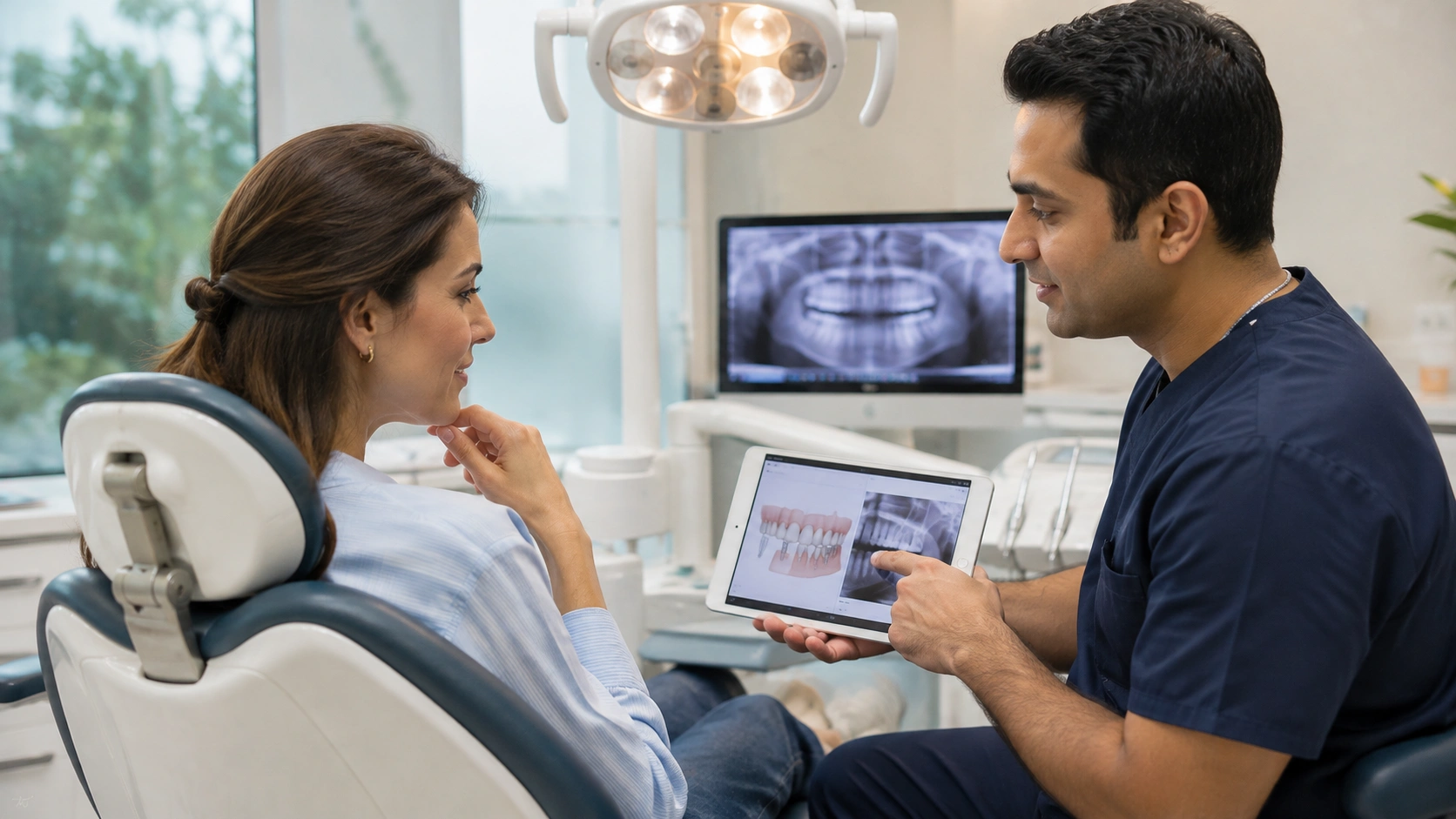
What Actually Changes the Price of Veneers in India
Ask five clinics and you'll probably get five different quotes. That's normal in dentistry, not a red flag by itself.
The material is the biggest factor. Composite veneers are built up directly on the tooth in one sitting and cost less.
Porcelain and Emac (often written as Emax) veneers are made in a lab from a mold. They need more than one visit and cost more because of the lab work involved.
The dentist's experience matters too, sometimes more than people expect. A cosmetic dentist who has placed veneers for years may charge a premium over a general dentist.
That premium can be worth it for front-tooth work, where symmetry and shade matching are unforgiving. City and clinic overheads play a role as well.
Metro clinics in Mumbai, Delhi, or Bangalore often price higher than smaller cities, partly because of rent. The number of teeth being treated changes the per-tooth rate too, though this varies by clinic.
Veneer Cost by Material: Composite, Porcelain, and Emax
Here's a comparison to make the material differences clearer. Treat every number as a general estimate, not a quote for your case.
| Veneer Type | Published Price Range (per tooth) | Chairside Visits | Typical Lifespan |
|---|---|---|---|
| Composite veneers | Roughly ₹4,000 to ₹20,000 (approx. USD 50 to 240) | Usually 1 visit | Often 5 to 7 years, varies with care |
| Porcelain laminate veneers | Roughly ₹9,000 to ₹45,000 (approx. USD 110 to 540) | 2 to 3 visits | Often 10 to 15 years, varies with care |
| Emax veneers | Roughly ₹13,000 to ₹55,000 (approx. USD 155 to 660) | 2 to 3 visits | Often 10 to 15 years, varies with care |
Pricing note: these bands are drawn from published 2026 pricing pages across several Indian dental clinics, not from a single official price list, and INR-to-USD figures are approximate. They are not a quote.
Actual pricing can be higher or lower depending on the dentist, the lab used, the city, and the specific case. Always request a written estimate after a consultation before making travel decisions.
Emax is a type of pressed ceramic known for looking close to natural enamel, which is why it's often chosen for front teeth. Porcelain laminate veneers work on a similar principle with slightly different manufacturing.
Composite sits at the more affordable end. It tends to stain and chip sooner than ceramic options.
Cost of Veneers for Front Teeth
Front teeth get their own conversation because that's where most patients actually want the work done. The cost of veneers for front teeth in India generally sits at the higher end of whatever material range you pick.
That's because these teeth are more visible and need closer shade and shape matching against neighboring teeth. For someone treating just the 2 front teeth, expect a quote closer to the per-tooth rate multiplied by two.
Some clinics fold a consultation or diagnostic wax-up fee into the treatment cost, others charge separately. It's worth asking directly rather than assuming.
If you're treating a full smile makeover, some patients receive veneers on several visible front teeth. The exact number depends on the smile, tooth condition, bite, and what the dentist recommends after examination, not a fixed formula.
Clinics sometimes offer a package rate for larger cases. A package price should still come with a clear breakdown of what's included.
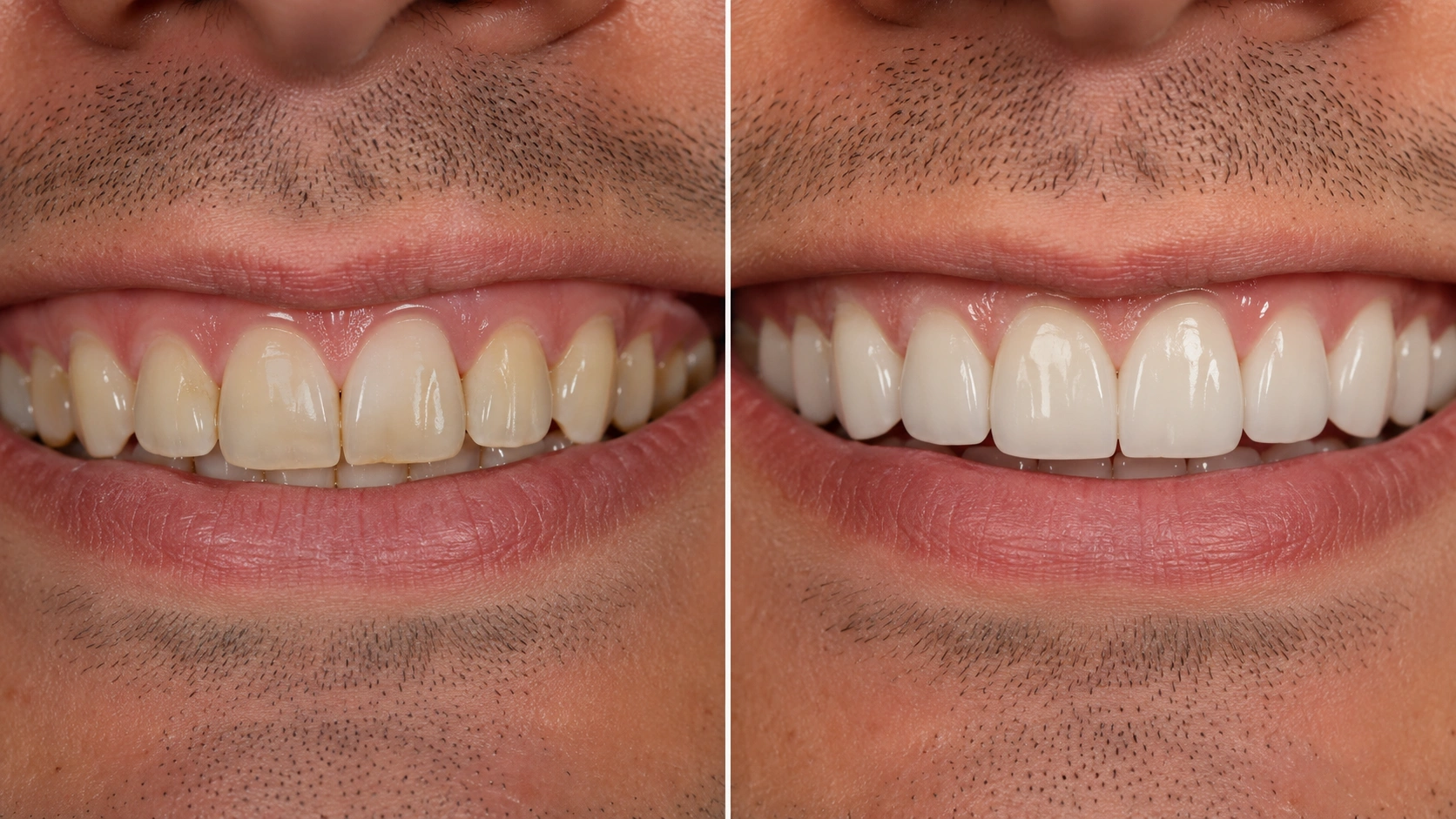
Weighing the Cost of Travel Against the Savings
For patients traveling from the US, UK, Oman, or parts of Africa, treatment costs in India are widely reported to run lower than equivalent care at home, though exact multiples aren't something this article can verify without a specific, sourced comparison. What's more useful is working out your own math.
Flights, accommodation, and time off work all factor into the real total. It's worth adding those up against a written clinic quote rather than relying on generic savings percentages you might see advertised elsewhere.
What's Usually Included in the Quote, and What Might Cost Extra
A veneer quote from an Indian clinic doesn't always mean the same thing from one place to the next. Before you commit, it helps to know what's typically bundled in.
- Initial consultation and dental exam, sometimes free, sometimes a separate charge
- X-rays or scans needed to plan the case
- The veneer material and lab fabrication (for porcelain or Emax)
- Tooth preparation and fitting appointments
Costs that often sit outside the base quote include teeth cleaning or gum treatment before veneers go on, and cavity fillings on the same teeth. Temporary veneers during lab turnaround and any redo work can also cost extra.
None of this is unusual. It's just worth asking upfront so the final bill doesn't surprise you.
What the Treatment Process Looks Like for International Patients
Porcelain or Emax veneer cases often need more than one visit, since the veneers are made in a lab after your teeth are prepared. Composite veneers can sometimes be finished in a single appointment.
This depends on the number of teeth and the dentist's assessment. For someone flying in specifically for this, trip length varies by case and by clinic.
It's worth asking your dentist for a realistic estimate rather than assuming a fixed number of days. Some clinics now offer video consultations before you travel.
This lets the treatment plan and rough estimate get worked out ahead of time rather than on arrival. It's reasonable to ask your dentist directly how many visits your case will need.
Also ask what happens if a veneer doesn't fit right the first time, and whether follow-up checks are available once you're home. Any clinic used to treating international patients should answer without hesitation.
Why So Many International Patients Choose India for Dental Work
Cost is the obvious draw, but it's not the only reason patients travel here for veneers. Turnaround time is another factor for many.
Because many clinics have in-house or partner labs, cases that might take longer in a smaller Western practice can sometimes move faster here. That's not guaranteed for every clinic, but it's common enough to ask about.
This makes the total trip length more predictable, which matters when someone is booking flights and taking time off work. It's still worth confirming with your specific dentist rather than assuming.
English is widely spoken in clinics that regularly treat foreign patients, which removes one layer of stress. That said, language comfort still varies clinic to clinic, so it's fair to ask before booking.
Alternatives to Veneers Worth Knowing About
Veneers aren't always the only fix for the problem you're trying to solve. A good dentist should mention alternatives rather than jumping straight to veneers.
Teeth whitening can handle discoloration alone, usually for a fraction of the cost, if the teeth are otherwise healthy and well-shaped. Dental bonding uses a tooth-colored resin applied directly to the tooth, similar to composite veneers but often less invasive.
It doesn't last as long as porcelain, typically 3 to 5 years, but it's reversible in a way veneers usually aren't. Crowns cover the entire tooth rather than just the front surface.
They're usually recommended when a tooth is more heavily damaged rather than just cosmetically imperfect. Your dentist can explain, based on an exam, whether your case genuinely needs a veneer.
Checking a Clinic Before You Commit
Not every clinic that markets to international patients online is equally set up for it. A few checks go a long way before you send a deposit.
Ask whether the dentist is registered under India's dental regulatory authority (this has recently transitioned from the Dental Council of India to the National Dental Commission, so it's worth confirming which registration applies at the time you check). Also ask whether the clinic follows standard sterilization protocols for instruments used across patients.
Reputable clinics won't hesitate to answer this, and most will share photos or a virtual tour if asked. It also helps to ask how long the clinic has treated international patients specifically.
That experience tends to show in smoother coordination around visas, timing, and communication. A clinic new to foreign patients isn't automatically a bad choice, but you may need to manage more logistics yourself.
Aftercare Once the Veneers Are Fitted
Veneers don't need dramatically different care from natural teeth, but a few habits help them last. Avoid biting down on very hard foods like ice directly with veneered teeth.
Chipping is possible even with porcelain. Regular brushing and flossing still matter, since the edges where the veneer meets the tooth can trap plaque if neglected.
If you grind your teeth at night, mention this to your dentist before treatment. A night guard may be recommended to protect the veneers.
Routine dental checkups back home help catch any early issues with the veneer edge. Most dentists suggest checking in within the first few weeks after returning home, and again at your regular cleaning.
Questions Worth Asking Before You Book
A short checklist helps here more than a long one.
- What material is being quoted, and why is it suggested for my case
- Is the price per tooth or for the full set
- What's excluded from this estimate
- How many visits will this realistically take
- What happens if I need a redo after I've left India
None of this requires a dental background to ask. It just means asking before you're already in the chair.
A Rough Timeline for Planning Your Trip
Many patients start by sharing photos and dental history over email or video call before travel. This helps the dentist give a preliminary estimate.
It also helps flag if any prior work needs handling first. Exact timing depends on the clinic's scheduling and how quickly your case is reviewed.
Once you land, the first appointment is typically the exam, X-rays, and treatment plan confirmation. From there, tooth preparation and lab fabrication generally take a few days.
This varies with the lab and the number of teeth involved. The final fitting and bite check usually happen once the veneers are ready.
Some patients build in an extra day or two before flying home in case a minor adjustment is needed. Your dentist is the right person to confirm what your case will require.
How HealthRoop Fits Into a Veneer Trip Like This
A lot of the questions covered above, which clinic to trust, what a quote actually includes, are the kind of thing a case coordinator helps sort out before you book anything. For a veneer trip, that usually means comparing dentist options and getting the quoted price confirmed in writing.
Not every patient needs every service listed below. What applies to your case depends on where you're traveling from and what your treatment plan looks like.
Based on what's outlined on HealthRoop's process page, here's what our team can help coordinate:
- Medical report review and treatment planning, with a response within 24 hours
- Hospital and doctor matching based on your case, plus the option to request a second opinion
- Transparent cost estimates shared upfront before you commit
- Medical visa documentation support alongside your hospital's invitation letter
- Travel, accommodation, and local transport coordination
- Airport pickup on arrival
- Interpreter support for consultations and hospital paperwork
- One dedicated coordinator for your case from inquiry through recovery
- Follow-up support that continues after you fly home
Disclaimer: Treatment suitability and costs vary from patient to patient. A qualified dentist should assess your individual condition before any veneer procedure.
The pricing mentioned in this article is indicative and general in nature. It does not represent a fixed quote from HealthRoop or any specific clinic.
Veneers are one of the more predictable cosmetic dental procedures, but "predictable" still means every case is different. The best way to know your actual cost and timeline is a proper consultation. Contact our team to get started with a written estimate.
Frequently Asked Questions
Answers on teeth veneers cost, materials, and the treatment process in India.
Published 2026 clinic pricing pages generally put composite veneers around ₹4,000 to ₹20,000 per tooth, and porcelain or Emax veneers around ₹9,000 to ₹55,000 per tooth. Exact pricing depends heavily on the clinic, so treat this as a starting range for a conversation, not a fixed quote.
Many clinics treat international patients regularly and follow standard protocols. Outcomes still depend on the specific dentist and clinic you choose, so check qualifications first.
Porcelain and Emax veneers often last 10 to 15 years with proper care. This varies between patients based on habits like grinding and oral hygiene.
Yes, treating just the 2 front teeth is common and doesn't require doing the whole arch. Cost is generally based on the per-tooth rate for whichever material you choose.
This varies by case and clinic, so it's best to ask your dentist for a realistic estimate. Your treatment plan will make the timeline clearer.
This varies by clinic. Some include the exam and X-rays in the package, others bill separately, so confirm before you travel.
Ask the clinic in advance whether adjustments or remakes are covered, and for how long. This policy varies by clinic.
Veneers can often address chips, discoloration, and minor gaps. Suitability depends on the condition of the underlying tooth, so a dentist needs to examine you first.
Both are ceramic materials often compared for strength and appearance. Neither is universally better, and your dentist should recommend one based on your case.
Payment terms vary by clinic, so confirm this in writing before you travel. Some ask for a partial deposit, with the balance due after treatment.
