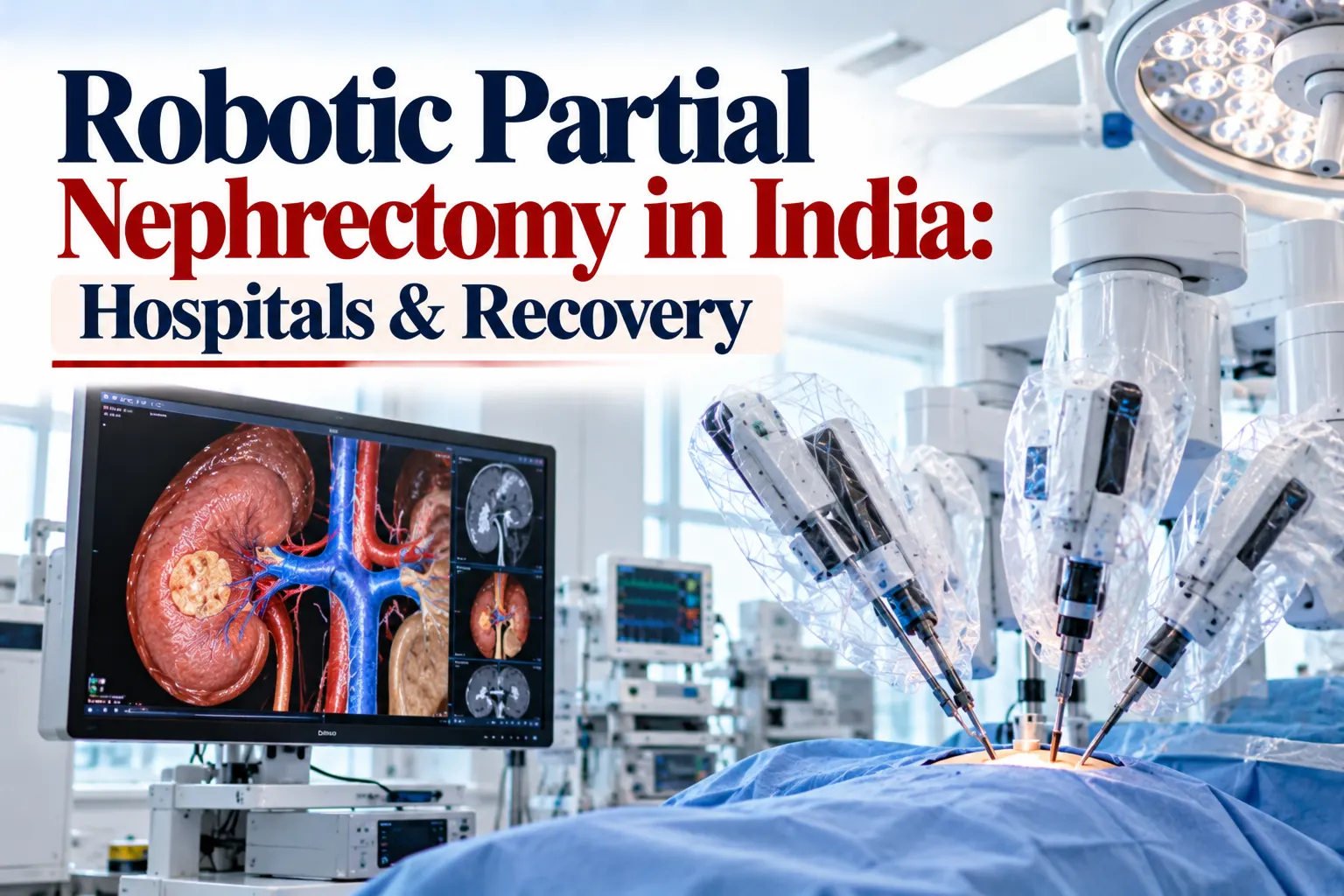
Robotic Partial Nephrectomy in India: Kidney-Sparing Cancer Surgery
Robotic partial nephrectomy in India is a surgical procedure used to remove a kidney tumour while preserving as much healthy kidney tissue as possible. It is often considered for patients with localised kidney cancer when the tumour can be removed safely without taking out the entire kidney. Patients exploring kidney tumour treatment in India can compare hospitals, discuss their diagnosis with a urologist and understand which surgical approach may be suitable for their condition.
Robotic surgery allows the surgeon to operate through small incisions using specialised instruments and a magnified three-dimensional view. The robot does not perform the operation independently; the surgeon controls every movement. The main objective is to remove the tumour completely while protecting the remaining kidney tissue.
For international patients, the decision involves more than choosing a hospital or comparing prices. Tumour size, location, kidney function, the surgeon's experience and postoperative care all influence the treatment plan.
This guide covers the procedure, eligibility, cost, hospital selection, possible complications and recovery.
What Is Robotic Partial Nephrectomy?
Robotic partial nephrectomy is a minimally invasive operation in which a surgeon removes the part of the kidney containing a tumour and repairs the remaining tissue.
It is also known as nephron-sparing surgery. Nephrons are the tiny functional units that filter waste and excess fluid from the blood. Preserving healthy nephrons helps maintain kidney function after surgery.
During the procedure, the surgeon controls robotic instruments from a console. The system provides magnified vision and allows precise movements, which can help when removing a tumour and repairing the kidney.
The procedure is commonly considered for suitable localised renal tumours, including some small kidney cancers. However, it is not the right option for every patient. The tumour's position, relationship to blood vessels, suspected cancer stage and the amount of functioning tissue that can remain all influence the decision.
Why Is Kidney-Sparing Surgery Important?
The kidneys filter waste from the blood, regulate fluid and electrolyte levels, and help control blood pressure. Removing an entire kidney reduces the body's total kidney function, although the remaining kidney can often compensate.
Preserving healthy tissue can be particularly important for patients who already have reduced kidney function, a single functioning kidney, diabetes or other risk factors for future kidney disease.
Potential benefits include:
- Removing a suitable tumour without routinely removing the entire kidney.
- Preserving more functioning kidney tissue.
- Using smaller incisions when a minimally invasive approach is appropriate.
- Potentially reducing blood loss and hospital stay compared with open surgery in selected cases.
- Obtaining a tissue sample for laboratory examination to confirm the diagnosis.
Kidney preservation must not compromise cancer control. If the tumour cannot be removed safely while leaving enough functioning tissue, the surgeon may recommend a different procedure.
Who Can Undergo Robotic Partial Nephrectomy?
A patient may be considered for robotic kidney cancer surgery when the tumour can be removed safely while preserving a useful amount of healthy kidney tissue.
The specialist usually reviews several factors before recommending surgery.
Tumour size and location
Smaller tumours confined to the kidney are often suitable for partial nephrectomy. Some larger tumours may also be considered, depending on their position and complexity. A tumour close to major blood vessels or the urinary collecting system can make the operation more challenging.
Kidney function
Blood tests, including serum creatinine and estimated glomerular filtration rate (eGFR), help assess how well the kidneys are working. Existing kidney disease may make tissue preservation especially important.
Cancer stage
The treatment plan depends on whether the tumour is confined to the kidney or has spread beyond it. Evidence of advanced disease may change the recommended approach.
General health
Heart disease, diabetes, bleeding disorders, previous abdominal surgery and other medical conditions can affect surgical planning and anaesthesia risks.
Imaging and diagnosis
CT or MRI scans help the surgeon understand the tumour's size, location and relationship to surrounding structures. A biopsy may be recommended when its findings could change the treatment decision.
Not every kidney mass is cancer. The specialist should explain the likely diagnosis and whether surgery, surveillance or another treatment is appropriate.
How Is Robotic Partial Nephrectomy Performed?
The operation is performed under general anaesthesia. Its duration depends on the tumour's complexity and the patient's anatomy.
Step 1: Preoperative assessment
The medical team reviews imaging, kidney function, blood tests, medical history and current medicines. Additional investigations may be required before surgery.
Step 2: Anaesthesia and positioning
The patient receives general anaesthesia and is positioned to provide access to the affected kidney.
Step 3: Small incisions
The surgeon makes several small incisions for the camera and robotic instruments. Their placement depends on the surgical technique.
Step 4: Tumour removal
The surgeon separates the tumour from the surrounding kidney tissue. The blood supply may be temporarily clamped to control bleeding during removal.
Step 5: Kidney repair
The surgeon repairs the area where the tumour was removed, controls bleeding and checks for possible urine leakage. The removed tissue is sent for pathological examination.
Step 6: Postoperative monitoring
The medical team monitors pain, urine output, vital signs and kidney function. Patients are encouraged to begin walking when their condition permits.
The operation is planned around two priorities: removing the tumour adequately and preserving as much functioning kidney tissue as safely possible.
What Is the Cost of Robotic Partial Nephrectomy in India?
The cost of robotic partial nephrectomy in India varies according to the hospital, surgeon, city, tumour complexity, robotic equipment charges and length of admission.
For preliminary budgeting, an indicative estimate of ₹4 lakh to ₹7 lakh (approximately US$4,700–US$8,200) may be used for some private-hospital cases. This is not a verified current tariff or a guaranteed package price. Complex surgery, additional investigations or complications can increase the final bill.
Estimated Cost Breakdown
| Expense | What it may cover |
|---|---|
| Surgeon and surgical team | Professional fees and operative care |
| Robotic operating theatre | Robotic equipment, instruments and theatre charges |
| Anaesthesia | Anaesthetist fees, medicines and monitoring |
| Hospital admission | Room, nursing and routine inpatient care |
| Diagnostic tests | Imaging, blood tests and preoperative assessments |
| Pathology | Examination of the removed tumour |
| Postoperative care | Medicines, monitoring and follow-up |
| Additional treatment | Intensive care, transfusion or treatment of complications, if needed |
Cost references: Apollo Hospitals for hospital services and procedure enquiries; European Association of Urology for clinical guidance on kidney cancer treatment. These sources are useful for understanding treatment and obtaining hospital-specific information; they do not verify the cost range above.
What Can Increase the Total Cost?
The final bill can vary considerably between patients.
- Tumour complexity: A tumour close to major blood vessels may require a longer or more difficult operation.
- Hospital and room category: Charges vary by hospital, city and accommodation.
- Length of admission: Additional hospital days increase room, nursing and monitoring costs.
- Existing medical conditions: Patients requiring additional monitoring or specialist input may incur further expenses.
- Complications: Bleeding, urine leakage or other problems may require additional treatment.
- International travel: Flights, accommodation, local transport and visa expenses are separate from the medical bill unless specifically included.
Before booking surgery, request a written estimate covering the operation, robotic equipment, anaesthesia, hospital stay, medicines, pathology and follow-up. Ask which charges may apply if the admission lasts longer than expected.
Which Hospitals in India Can Patients Consider?
The Healthroop hospital directory lists major Indian hospital groups that patients can contact for enquiries about kidney cancer care. However, the inclusion of a hospital below does not confirm that every branch currently performs robotic partial nephrectomy.
| Hospital | Location | What to confirm |
|---|---|---|
| Apollo Hospitals | Chennai and other locations | Robotic urology services and surgeon experience |
| Fortis Healthcare | Gurugram and other locations | Availability of robotic kidney surgery |
| Medanta – The Medicity | Gurugram | Urologic oncology services and surgical expertise |
| Narayana Health | Bengaluru and other locations | Availability of kidney tumour surgery at the selected centre |
| Manipal Hospitals | Bengaluru and other locations | Robotic equipment and the treating urologist |
| Max Healthcare | Delhi NCR and other locations | Experience with kidney-sparing cancer surgery |
| HCG Cancer Centre | Bengaluru and other locations | Coordination between cancer specialists and urologists |
| P.D. Hinduja National Hospital | Mumbai | Relevant urology services and surgical facilities |
Patients should confirm the hospital's current services directly before making travel or treatment arrangements.
How Should You Choose a Hospital?
A hospital's reputation alone does not establish whether it is the right place for a particular operation. The surgeon's experience with similar tumours and the hospital's ability to manage complications are important.
Ask these questions during your consultation:
- How often does the surgeon perform robotic partial nephrectomy?
- Has the team treated tumours with similar size and complexity?
- How much functioning kidney tissue is expected to remain?
- What could make removal of the entire kidney necessary?
- Are emergency surgical support, blood transfusion and intensive care available?
- What does the written cost estimate include?
- What follow-up tests will be needed after discharge?
A second opinion may be helpful if the tumour is complex, the patient has only one functioning kidney or the proposed treatment would significantly affect kidney function.
Robotic Partial Nephrectomy vs Other Treatment Options
The best treatment depends on the tumour, the patient's health and the likely benefits and risks of each option.
| Treatment | Main approach | When it may be considered |
|---|---|---|
| Robotic partial nephrectomy | Removes the tumour using robotic-assisted instruments | Suitable tumours that can be removed safely while preserving kidney tissue |
| Laparoscopic partial nephrectomy | Removes the tumour through small incisions using laparoscopic instruments | Cases where conventional minimally invasive surgery is appropriate |
| Open partial nephrectomy | Removes the tumour through a larger incision | Selected complex cases |
| Radical nephrectomy | Removes the entire kidney | Tumours that cannot be safely treated with partial nephrectomy |
| Active surveillance | Monitors the tumour using scheduled assessments and imaging | Selected small renal masses where immediate treatment may not be necessary |
| Tumour ablation | Destroys tumour tissue using heat or freezing | Selected patients based on tumour characteristics and medical suitability |
Partial nephrectomy is often preferred for suitable localised kidney cancers, but it is not automatically the best choice for everyone. The specialist should explain why one approach is recommended over another.
What Are the Risks of Robotic Kidney Cancer Surgery?
Robotic surgery has potential benefits, but it remains a major operation.
Possible complications include:
- Bleeding, sometimes requiring a transfusion or another procedure.
- Infection at the incision or in the urinary tract.
- Urine leakage from the repaired kidney.
- Temporary or lasting changes in kidney function.
- Injury to nearby organs or blood vessels.
- Blood clots associated with surgery and reduced movement.
- Anaesthesia-related complications.
- Positive surgical margins or cancer recurrence.
- Conversion to open surgery or removal of the entire kidney if safe partial removal is not possible.
The likelihood of these complications depends on the tumour's anatomy, the patient's medical condition and the surgical team's experience.
Before surgery, ask the specialist which risks are most relevant to your case and how complications would be managed.
What Is the Recovery Time After Partial Nephrectomy?
Partial nephrectomy recovery depends on the surgical approach, tumour complexity and the patient's general health. Many patients undergoing robotic surgery remain in hospital for approximately one to three days, although some require longer monitoring.
| Recovery period | Typical expectations |
|---|---|
| First 24–48 hours | Pain control, monitoring and gradual movement |
| First week | Rest, short walks and wound care |
| Weeks 2–4 | Gradual return to light daily activities |
| Weeks 4–6 | Some patients resume more normal activities with medical clearance |
| After six weeks | Activity increases according to recovery and the surgeon's advice |
These are general estimates rather than a fixed schedule. Open surgery or complications can extend recovery.
Tips for Recovery at Home
- Take prescribed medicines as directed.
- Walk regularly for short periods and increase activity gradually.
- Keep the incision sites clean according to the hospital's instructions.
- Follow your doctor's advice about fluid intake, particularly if you have kidney or heart disease.
- Avoid heavy lifting and strenuous exercise until medically cleared.
- Attend follow-up appointments and complete recommended blood tests and imaging.
- Seek urgent medical advice if you develop fever, worsening abdominal or flank pain, heavy bleeding, difficulty passing urine, persistent blood in the urine or discharge from the wound.
Why Is Follow-Up Necessary?
The removed tissue is examined in a laboratory to establish the tumour type, grade and surgical margin status. These findings help the specialist determine whether additional treatment is required.
Follow-up may include kidney function tests, blood pressure checks and imaging. The schedule depends on the pathology report, cancer stage and individual risk.
Preserving kidney tissue does not eliminate the possibility of cancer recurrence, so patients should follow the surveillance plan recommended by their specialist.
How Healthroop Helps Patients Arrange Treatment in India
Healthroop helps patients compare hospitals and coordinate enquiries about treatment in India. Patients considering kidney tumour surgery can share their available medical records for preliminary coordination and ask about specialist appointments, hospital options and estimated expenses. The treating urologist must review the medical details and determine whether robotic partial nephrectomy is appropriate.
Support may include:
- Medical report coordination: Organising scans, pathology reports and kidney function results for specialist review.
- Hospital enquiries: Checking which centres may offer the required procedure.
- Cost estimates: Requesting a written, case-specific estimate from the hospital.
- Second opinions: Coordinating consultations when patients want to compare medical recommendations.
- Travel arrangements: Assisting international patients with appointment planning, accommodation and local transport.
- Follow-up planning: Helping patients understand the recommended review schedule before returning home.
What Should International Patients Prepare Before Travelling?
Patients travelling to India for kidney surgery should organise their medical documents and travel arrangements before booking flights.
Prepare the following:
- Recent CT or MRI images and reports.
- Previous biopsy or pathology reports, if available.
- Kidney function test results and other relevant blood tests.
- A list of current medicines, allergies and existing medical conditions.
- Previous surgical records and discharge summaries.
- Passport and applicable medical visa documents.
- A written estimate and the proposed hospital admission plan.
- A plan for postoperative review and follow-up imaging.
Ask the treating team how long you should remain in India after discharge. Hospital discharge does not automatically mean that air travel is safe. The surgeon should assess your recovery and confirm when you can travel.
Final Thoughts
Robotic partial nephrectomy in India can be a suitable kidney-sparing option for selected patients with localised kidney tumours. Its purpose is to remove the tumour while retaining as much healthy kidney tissue as safely possible.
When comparing hospitals, consider the surgeon's experience, the tumour's complexity, the hospital's ability to manage complications, the complete cost estimate and the follow-up plan. A specialist consultation, and a second opinion where appropriate, can help clarify the available options.
Price disclaimer: The cost figures in this article are indicative estimates based on previously published pricing information, including data from the previous year. They are not guaranteed current hospital quotations. Actual charges may change according to the hospital, city, surgeon, tumour complexity and individual medical requirements. For exact and current pricing, call or email Healthroop or the selected hospital and request a personalised quotation after the medical reports have been reviewed.
Frequently Asked Questions
Answers on robotic partial nephrectomy cost, recovery, and planning care in India.
Robotic partial nephrectomy is an operation that removes a kidney tumour while preserving the remaining healthy kidney tissue. The surgeon controls robotic instruments through a console. It is generally considered for selected localised kidney tumours when the tumour can be removed safely without taking out the entire kidney.
An indicative planning estimate is ₹4 lakh to ₹7 lakh at some private hospitals. The actual cost depends on the hospital, surgeon, tumour complexity, robotic equipment, admission duration and additional treatment. Patients should request a current written estimate because previously published prices may not reflect present hospital charges.
Apollo Hospitals, Fortis Healthcare, Medanta, Manipal Hospitals and Max Healthcare are possible starting points for enquiries about kidney tumour care. Availability varies by location. Confirm that the selected hospital performs robotic partial nephrectomy and ask about the treating surgeon's experience before arranging travel.
Partial nephrectomy can preserve more functioning kidney tissue when a tumour can be removed safely. Radical nephrectomy removes the entire kidney and may be necessary for some complex tumours. The appropriate procedure depends on tumour characteristics, kidney function and the surgeon's assessment.
Many patients stay in hospital for around one to three days and gradually resume light activities over the following weeks. Recovery varies with the complexity of surgery and the patient's health. Heavy lifting and strenuous exercise may need to be avoided for four to six weeks or longer, as advised by the surgeon.
Possible complications include bleeding, infection, urine leakage, changes in kidney function, injury to nearby structures and anaesthesia-related problems. In some cases, the surgeon may need to change the surgical approach or remove the entire kidney. Individual risks should be discussed during the preoperative consultation.
Yes. Cancer can recur after surgery, although the risk varies with tumour type, stage, grade and other pathological findings. Follow-up appointments, blood tests and imaging help monitor kidney function and identify recurrence. Patients should follow the surveillance schedule recommended by their treating specialist.
Patients with suitable localised kidney tumours may be candidates for nephron-sparing surgery. The specialist considers tumour size and location, kidney function, overall health and whether enough healthy tissue can remain. Some complex tumours may also be suitable, while others require a different treatment approach.
No. A kidney tumour can sometimes be assessed through imaging and other clinical findings without a preoperative biopsy. The specialist decides whether biopsy results would change treatment planning. Removed tumour tissue is generally sent for pathological examination to establish the diagnosis and assess surgical margins.
International patients can begin by sharing their medical reports and imaging for specialist review. They should confirm treatment eligibility, hospital availability, costs, visa requirements and the expected recovery period before travelling. A clear postoperative follow-up plan is also important before returning home.
