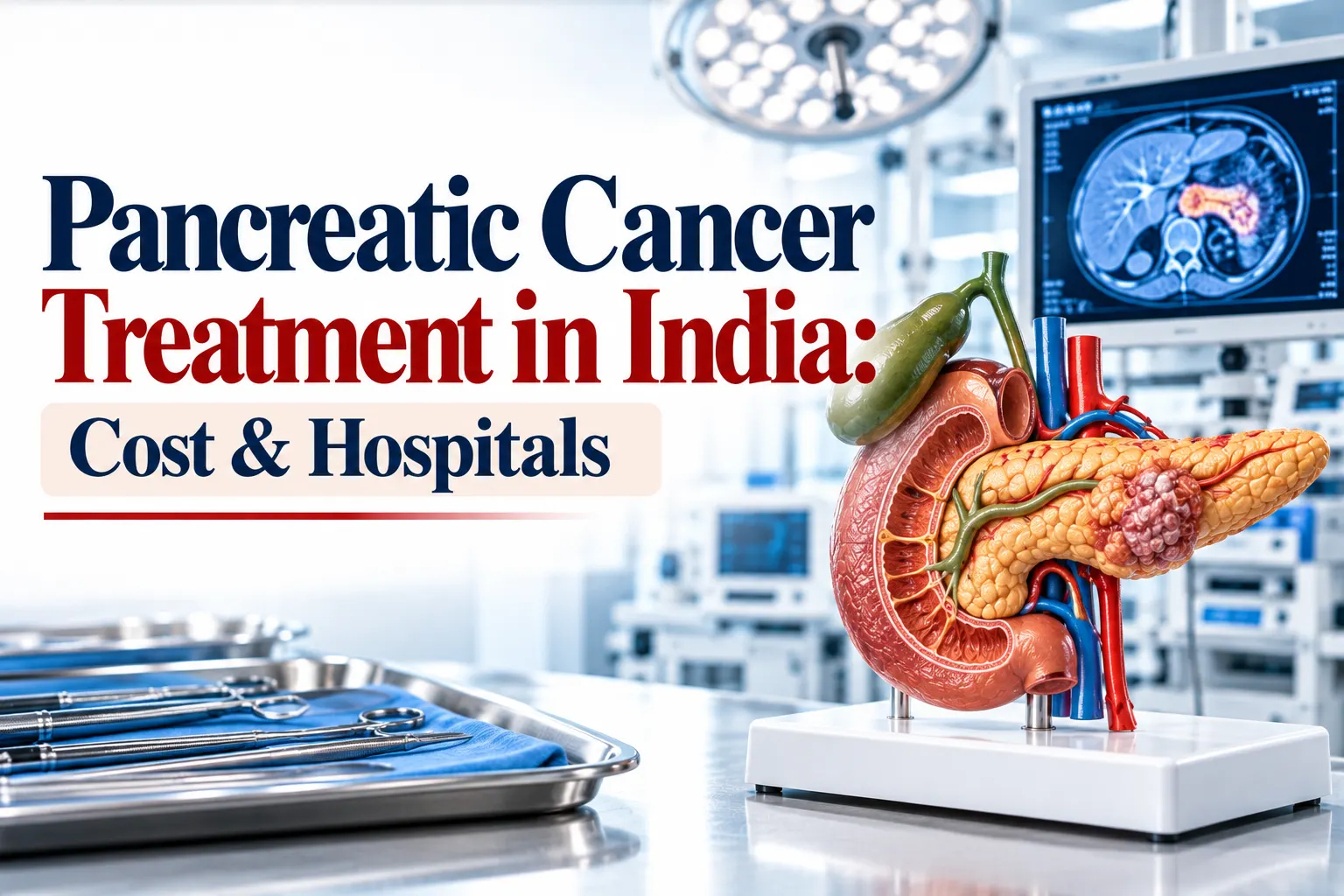
Pancreatic Cancer Treatment in India: Cost and Hospitals
Pancreatic cancer treatment in India depends on the type and stage of cancer, the location of the tumour, whether it can be removed surgically, the patient's general health, and whether the disease has spread to other organs. Treatment may include surgery, chemotherapy, radiation therapy, targeted treatment, immunotherapy in selected cases, or a combination of these approaches.
For patients whose tumour can be removed completely, surgery can offer the best possibility of long-term disease control. The operation may involve a Whipple procedure for a tumour in the head of the pancreas or a distal pancreatectomy for a tumour affecting the body or tail. Patients with locally advanced or metastatic disease may need systemic treatment rather than immediate surgery.
India has established cancer centres with surgical oncology, medical oncology, radiation oncology, gastroenterology, hepatobiliary and pancreatic surgery, pathology, imaging and intensive-care facilities. For overseas patients, the important question is not simply which hospital is cheapest. The treatment team should have experience with pancreatic and hepatobiliary cancers and be able to coordinate the different stages of care.
This guide explains the treatment options, whipple surgery cost india, hospital selection, diagnosis, recovery, treatment for international patients and the questions to ask before travelling.
Quick Overview of Pancreatic Cancer Treatment in India
| Treatment factor | What it means |
|---|---|
| Early/resectable disease | Surgery may be possible, often followed by chemotherapy |
| Borderline resectable disease | Chemotherapy, sometimes with radiation, may be considered before surgery |
| Locally advanced disease | Usually treated with systemic therapy; surgery may be considered in selected cases |
| Metastatic disease | Treatment generally focuses on systemic therapy and symptom control |
| Tumour in pancreatic head | Whipple surgery may be considered |
| Tumour in body or tail | Distal pancreatectomy may be appropriate |
| Advanced symptoms | Biliary drainage, pain management and nutritional support may be required |
| Treatment team | Often involves surgical, medical and radiation oncologists plus gastroenterology and supportive-care specialists |
What Is Pancreatic Cancer?
Pancreatic cancer develops when abnormal cells in the pancreas grow uncontrollably and form a tumour. The pancreas is located behind the stomach and performs two major functions: it produces digestive enzymes and hormones such as insulin that help regulate blood sugar.
The most common pancreatic cancers begin in the exocrine cells of the pancreas. Pancreatic neuroendocrine tumours are a different group and may require a different diagnostic and treatment approach.
One difficulty with pancreatic cancer is that early disease may produce few or non-specific symptoms. By the time symptoms such as jaundice, weight loss, abdominal pain or appetite changes become obvious, the disease may already be advanced.
Common Symptoms
Possible symptoms include:
- Yellowing of the skin or eyes
- Dark urine
- Pale or greasy stools
- Unexplained weight loss
- Reduced appetite
- Upper abdominal pain
- Back pain
- Nausea or vomiting
- Fatigue
- New or worsening diabetes
- Digestive problems
These symptoms do not automatically mean a person has pancreatic cancer. Gallstones, pancreatitis, liver disease and several other conditions can cause similar symptoms.
How Is Pancreatic Cancer Diagnosed?
Diagnosis normally requires a combination of imaging, laboratory testing and tissue assessment when appropriate.
A medical team may recommend:
CT Scan
A pancreas-protocol CT scan can provide detailed information about the tumour and its relationship with nearby blood vessels and organs. This is important when surgeons are deciding whether the tumour can be removed.
MRI and MRCP
MRI can provide additional information about the pancreas, bile ducts and surrounding structures. MRCP is particularly useful for evaluating the pancreatic and biliary ducts.
Endoscopic Ultrasound
Endoscopic ultrasound allows a specialist to examine the pancreas closely and, when appropriate, obtain a tissue sample using fine-needle aspiration or biopsy.
ERCP
Endoscopic retrograde cholangiopancreatography may be used in selected situations, particularly when a blocked bile duct needs treatment with a stent.
Blood Tests and Tumour Markers
CA 19-9 may be used as part of the assessment and follow-up in appropriate patients. It is not, by itself, a diagnostic test for pancreatic cancer.
Biopsy
A biopsy may be required to confirm the diagnosis, particularly before certain non-surgical treatments. The timing and method depend on the clinical situation and the proposed treatment plan.
How Is Pancreatic Cancer Staged?
Treatment decisions depend heavily on whether the cancer can be removed.
Doctors commonly classify pancreatic cancer into categories such as:
Resectable
The tumour appears technically removable without major involvement that would prevent safe complete resection.
Borderline Resectable
The tumour has a relationship with nearby blood vessels or structures that makes complete removal more difficult or uncertain.
Locally Advanced
The cancer has grown into important nearby structures, often including major blood vessels, making immediate surgery unsuitable in many cases.
Metastatic
The cancer has spread to distant organs, such as the liver or lungs.
The National Cancer Institute notes that pancreatic cancer treatment is strongly influenced by resectability and that referral to a high-volume centre should be considered when surgery is being evaluated.
What Are the Main Pancreatic Cancer Treatment Options in India?
There is no single treatment that works for every patient.
The treatment plan may include one or several of the following.
1. Surgery
Surgery is considered when the cancer can be removed safely and the patient is medically fit for a major operation.
The main operations include:
- Whipple procedure
- Distal pancreatectomy
- Total pancreatectomy in selected cases
- Palliative procedures to relieve obstruction or other symptoms
Surgery is complex and should be performed by a team experienced in pancreatic and hepatobiliary surgery.
2. Whipple Procedure
The Whipple procedure, medically known as pancreaticoduodenectomy, is commonly used for cancers located in the head of the pancreas.
During a standard Whipple procedure, the surgeon removes the head of the pancreas, part of the small intestine, the gallbladder and part of the bile duct. Depending on the operation and tumour characteristics, part of the stomach may also be removed. The digestive system is then reconstructed so food, bile and pancreatic secretions can continue to pass through the digestive tract.
It is a major operation and requires careful pre-operative assessment.
When Is Whipple Surgery Used?
It may be considered when:
- The tumour is located in the pancreatic head
- The cancer is considered surgically removable
- There is no distant metastatic disease that would make surgery inappropriate
- The patient is fit enough for major abdominal surgery
In some borderline or high-risk cases, doctors may recommend chemotherapy before surgery. The purpose may be to control microscopic disease, assess tumour behaviour and improve the chances of successful resection in appropriately selected patients.
3. Distal Pancreatectomy
A distal pancreatectomy is generally used for tumours affecting the body or tail of the pancreas.
The operation removes the affected part of the pancreas. The spleen may also need to be removed depending on the tumour's location and blood-vessel involvement.
Patients who undergo this operation may require discussion about pancreatic function, blood sugar control and digestive enzyme production after surgery.
4. Total Pancreatectomy
Total pancreatectomy removes the entire pancreas.
It is not required for most pancreatic cancer patients. It may be considered in selected cases when removing the whole pancreas is necessary to achieve appropriate cancer control.
Because the pancreas produces insulin and digestive enzymes, complete removal has major long-term implications. Patients may need lifelong insulin therapy and pancreatic enzyme replacement.
5. Chemotherapy
Chemotherapy plays an important role in pancreatic cancer management.
It may be given:
- Before surgery
- After surgery
- Instead of surgery when the tumour cannot be removed
- For metastatic disease
- To control symptoms and slow disease progression
Common chemotherapy drugs and combinations vary according to the patient's fitness, disease stage and treatment setting. Regimens may include combinations involving fluorouracil, oxaliplatin, irinotecan, gemcitabine, nab-paclitaxel or capecitabine.
The exact regimen should be selected by a medical oncologist rather than based on an online list of drugs.
6. Radiation Therapy
Radiation may be considered for selected pancreatic cancers.
Its role depends on tumour location, stage, surgical plans and the patient's overall condition. In some cases, radiation may be used with chemotherapy to control a locally advanced tumour or improve local disease control.
It is not automatically required for every patient who undergoes surgery.
7. Targeted Therapy and Immunotherapy
Some patients may benefit from molecular or genetic testing of the tumour.
Specific genetic alterations can occasionally make targeted therapies relevant. Immunotherapy is also appropriate for selected patients with particular molecular characteristics rather than for pancreatic cancer as a whole.
This is why molecular testing can be important when the disease is advanced or when standard treatment options are limited.
Pancreatic Cancer Treatment by Stage
| Disease category | Possible treatment approach |
|---|---|
| Resectable | Surgery followed by chemotherapy in many patients |
| Borderline resectable | Chemotherapy ± radiation, followed by reassessment for surgery |
| Locally advanced | Chemotherapy ± radiation; surgery may be considered in selected cases |
| Metastatic | Systemic treatment, symptom control and supportive care |
| Recurrent disease | Treatment depends on location, previous therapy and general health |
The exact treatment plan should be decided by a multidisciplinary team after reviewing imaging, pathology and the patient's general health.
What Is the Whipple Surgery Cost India Patients Should Expect?
The whipple surgery cost india patients encounter varies considerably between hospitals and individual cases.
Published Indian hospital estimates currently show figures ranging from roughly ₹1.5 lakh to ₹8 lakh for Whipple surgery, with several large hospitals publishing estimates around ₹3 lakh to ₹6 lakh. These figures are not directly comparable because hospitals may include different services in their packages.
For this reason, patients should not treat a website's headline figure as their final treatment cost.
Indicative Whipple Surgery Cost in India
| Treatment / Procedure | Indicative Cost Range |
|---|---|
| Whipple procedure | ₹3 lakh – ₹8 lakh* |
| Distal pancreatectomy | ₹3 lakh – ₹6 lakh* |
| Total pancreatectomy | ₹4 lakh – ₹8 lakh or higher* |
| Diagnostic imaging and staging | Depends on scans required |
| Chemotherapy | Depends on drugs, number of cycles and treatment setting |
| ICU care | Charged according to duration and hospital |
| Extended hospitalization | Additional charges may apply |
Resource: Published Indian hospital estimates, including Apollo, Yashoda Hospitals and CARE Hospitals, indicate significant variation in pancreatic surgery pricing.
*These are indicative planning figures rather than fixed quotations. A patient's actual bill can be higher or lower.
What Affects Pancreatic Cancer Treatment Cost in India?
The total treatment bill is usually much larger than the operation alone.
Important cost factors include:
Hospital and City
Treatment charges vary between hospitals and cities. Room category and hospital infrastructure can also influence the final amount.
Tumour Complexity
A tumour involving nearby blood vessels or other structures may require a more complicated operation.
Surgical Approach
Open, laparoscopic and robotic approaches may have different costs and may not be suitable for every patient.
Surgeon and Specialist Fees
Pancreatic surgery involves multiple specialists, and professional fees can vary.
ICU and Hospital Stay
A complicated recovery can increase ICU and room charges.
Chemotherapy
If chemotherapy is needed before or after surgery, it becomes a separate and potentially substantial component of the overall treatment budget.
Complications
Infections, pancreatic leaks, delayed gastric emptying, bleeding or other complications can extend hospitalization and increase costs.
Follow-Up
Post-operative imaging, pathology, medicines, consultations and further treatment should be included in the overall financial plan.
What Should a Pancreatic Cancer Treatment Quote Include?
Before travelling to India or scheduling surgery, ask for an itemized estimate.
The quotation should clarify:
- Surgeon fees
- Anaesthesia
- Operation theatre charges
- Surgical consumables
- Pathology
- Imaging
- ICU charges
- Room charges
- Nursing
- Medicines
- Blood products, if required
- Implant or specialized equipment charges, if applicable
- Expected hospital stay
- Follow-up consultation
- Possible additional-day charges
A written estimate is much more useful than a verbal promise about the total cost.
Best Pancreatic Cancer Hospital India: How Should You Choose?
Searching for the best pancreatic cancer hospital india patients can use should not be reduced to a ranking based on hospital size or online ratings.
Pancreatic cancer is complex. The relevant hospital should have access to experienced specialists in areas such as:
- Hepatopancreatobiliary surgery
- Surgical oncology
- Medical oncology
- Radiation oncology
- Gastroenterology
- Interventional radiology
- Diagnostic radiology
- Pathology
- Critical care
- Nutrition and rehabilitation
A multidisciplinary tumour board is also valuable because surgery, chemotherapy and radiation may need to be sequenced differently depending on the disease.
Questions to Ask a Pancreatic Cancer Hospital
Before choosing a hospital, ask:
- Does the hospital have a dedicated pancreatic or hepatobiliary surgical team?
- How frequently does the team perform Whipple procedures?
- Is the case reviewed by a multidisciplinary tumour board?
- Does the hospital provide medical and radiation oncology?
- Is advanced pathology available?
- Can molecular testing be arranged when needed?
- Is interventional endoscopy available?
- What happens if the patient requires ICU care?
- What is included in the treatment estimate?
- How will follow-up be managed after the patient returns home?
Hospitals in the Healthroop Network
The current Healthroop hospital network lists major Indian hospitals with oncology, gastroenterology, surgical and multidisciplinary services. The suitability of any hospital should still be assessed according to the patient's specific diagnosis.
Apollo Hospitals
Apollo Hospitals is listed with oncology and gastroenterology among its specialties, along with international patient services, diagnostics and rehabilitation support.
Fortis Healthcare
Fortis Healthcare's listed specialties include oncology, gastroenterology and liver transplant services. Its network also provides international patient support and medical-record coordination.
Medanta – The Medicity
Medanta in Gurugram is listed with a Cancer Institute and gastroenterology services, alongside liver transplant, robotic surgery and international-patient support.
Narayana Health
Narayana Health's network includes oncology and surgical specialties and provides international patient and travel support through its network.
Manipal Hospitals
Manipal Hospitals is listed with oncology, gastroenterology and organ-transplant services and provides international patient assistance.
Max Healthcare
Max Healthcare is listed with oncology and liver and biliary sciences, making its relevant centres worth evaluating for patients seeking complex cancer and hepatobiliary care.
HCG Cancer Centre
HCG Cancer Centre is specifically focused on cancer care and lists medical oncology, radiation therapy, surgical oncology, precision medicine and palliative care among its services.
P.D. Hinduja National Hospital
P.D. Hinduja National Hospital in Mumbai is listed with oncology, gastroenterology and an established cancer centre, along with international patient support.
Important: This list represents hospitals currently shown in the Healthroop network. It should not be interpreted as a clinical ranking or guarantee that every hospital or branch performs every pancreatic procedure.
Pancreatic Cancer Surgery Recovery
Recovery after pancreatic surgery varies from one patient to another.
The hospital stay can be affected by:
- Type of operation
- Patient's age and general health
- Nutritional status
- Surgical complexity
- Pancreatic function
- Post-operative complications
After a Whipple procedure, patients may initially require close monitoring before gradually progressing from liquids to normal food.
Some patients experience changes in digestion or appetite. Pancreatic enzyme replacement may be prescribed if the pancreas does not produce enough digestive enzymes.
Blood sugar can also change after pancreatic surgery. Some patients may require medication or insulin depending on how much pancreatic tissue remains and how well it functions.
Possible Complications of Pancreatic Surgery
Pancreatic surgery is a major operation and carries significant risks.
Potential complications include:
- Bleeding
- Infection
- Pancreatic leak
- Delayed stomach emptying
- Bile leak
- Blood clots
- Digestive difficulties
- Weight loss
- Malabsorption
- Changes in blood sugar
- Need for pancreatic enzyme replacement
- Reoperation in serious cases
The surgeon should explain the patient's individual risk profile before surgery.
Nutrition After Pancreatic Cancer Surgery
Nutrition is an important part of recovery.
Some patients may temporarily struggle with large meals after surgery. Smaller meals throughout the day can be easier to tolerate.
The medical team may recommend:
- Adequate protein
- Calorie-dense foods when weight loss is present
- Smaller, frequent meals
- Sufficient fluids
- Pancreatic enzymes when prescribed
- Vitamin or mineral supplements when required
- Blood sugar monitoring when necessary
A dietitian experienced in cancer and pancreatic surgery can be helpful, particularly when there has been substantial weight loss.
Pancreatic Cancer Treatment for Foreigners
Patients travelling from another country need to plan medical care and travel logistics together.
Pancreatic cancer for foreigners may involve several appointments and, depending on the treatment plan, a prolonged stay in India.
Before travelling, international patients should send their complete medical records to the hospital or treatment coordinator.
Documents to Share
Prepare:
- Passport copy
- Biopsy or pathology report
- CT/MRI/PET reports
- Actual imaging files where available
- Blood-test results
- CA 19-9 reports, if tested
- Previous treatment details
- Chemotherapy records
- Medication list
- Previous operation reports
- Medical summary from the treating doctor
Why Medical Records Should Be Sent Before Travel
A remote review allows the medical team to determine whether the patient needs:
- Additional diagnostic testing
- A second pathology review
- A surgical consultation
- Medical oncology consultation
- Radiation oncology consultation
- Endoscopic intervention
- Chemotherapy before surgery
- Immediate symptom management
It can also prevent a patient from travelling to India without having a clear treatment pathway.
Practical Checklist for International Patients
Before booking flights, confirm:
- Hospital has reviewed medical records
- Specialist consultation is scheduled
- Treatment plan is available
- Written cost estimate received
- Expected hospital stay discussed
- Visa requirements checked
- Accommodation arranged
- Airport transfer arranged
- Medical interpreter arranged if needed
- Post-treatment follow-up discussed
- Emergency contact details available
Conclusion
Pancreatic cancer treatment requires careful coordination between diagnosis, staging, surgery and oncology. The first question is not simply how much treatment costs. It is whether the cancer can be removed, whether treatment should begin with chemotherapy, and which surgical or non-surgical approach is medically appropriate.
For selected patients, pancreatic surgery can provide the possibility of long-term disease control. A Whipple procedure is commonly used for tumours in the pancreatic head, while distal pancreatectomy may be used for tumours in the body or tail. Patients with locally advanced or metastatic disease may need chemotherapy and other treatments instead of immediate surgery.
When comparing pancreatic cancer treatment in India, patients should assess the pancreatic surgery team's experience, multidisciplinary services, pathology and imaging facilities, intensive-care support, treatment plan and follow-up arrangements along with cost.
For overseas patients, medical-record review before travel is particularly important. It allows the treating team to understand the diagnosis, determine which tests are required and provide a more realistic estimate of treatment and hospital stay.
Price Disclaimer
The prices mentioned in this article are indicative and are based on previously published hospital and treatment cost data. Price information has been taken from last year's available data and should not be considered a fixed current quotation. Hospital charges can change based on the patient's condition, cancer stage, surgical complexity, surgeon fees, medicines, ICU requirement, room category, length of stay and complications.
For exact and current treatment pricing, patients should call or email the selected hospital or Healthroop and request a patient-specific quotation after their medical reports and imaging have been reviewed.
Frequently Asked Questions
Answers on pancreatic cancer treatment cost, Whipple surgery, and planning care in India.
The total cost depends on the stage of cancer and the treatment required. Surgery alone may cost several lakh rupees, while chemotherapy, radiation, diagnostic tests and follow-up can increase the total. A patient-specific quotation is more reliable than online averages because treatment plans vary significantly.
Published Indian hospital estimates commonly place Whipple surgery within a broad range of approximately ₹1.5 lakh to ₹8 lakh. The final price depends on the hospital, surgeon, tumour complexity, room category, ICU requirement and what the hospital package includes. International-patient pricing may differ from domestic estimates.
Surgery can offer the best possibility of long-term disease control when pancreatic cancer is localized and can be completely removed. It does not guarantee a cure because microscopic cancer cells may remain or recurrence may occur. Chemotherapy before or after surgery may therefore be recommended.
The appropriate hospital should have experienced pancreatic or hepatobiliary surgeons, medical oncology, radiation oncology, advanced imaging, pathology, critical care and multidisciplinary cancer review. Large Indian networks such as Apollo, Fortis, Medanta, Max, Manipal, Narayana and HCG can be evaluated based on the individual case.
No. Whipple surgery is mainly used for cancers located in the head of the pancreas when complete removal is technically possible. Tumours in the body or tail may require distal pancreatectomy. Locally advanced or metastatic cancer may require chemotherapy or other treatments rather than immediate surgery.
Recovery differs between patients and depends on the operation and complications. Hospitalisation can extend for several days or longer, while full physical recovery may take weeks to months. Digestion, appetite, weight and blood sugar may need monitoring after surgery, and pancreatic enzymes may sometimes be prescribed.
Yes. International patients can seek pancreatic cancer treatment in India through hospitals with international-patient services. Before travelling, patients should send pathology reports, scans, medical summaries and previous treatment records for specialist review. Visa, hospital admission, accommodation, transportation and follow-up arrangements should also be planned.
Testing may include pancreas-protocol CT, MRI/MRCP, blood tests, tumour-marker assessment and sometimes endoscopic ultrasound with biopsy. The exact investigations depend on the diagnosis and treatment plan. Imaging is particularly important because surgeons need to understand the tumour's relationship with nearby blood vessels before deciding whether resection is possible.
Yes. Selected patients, particularly those with borderline-resectable or high-risk disease, may receive chemotherapy before surgery. This is called neoadjuvant treatment. The aim can include controlling microscopic disease, assessing tumour behaviour and improving the chance of successful surgery in appropriately selected patients.
Patients should request an itemized estimate covering surgeon fees, anaesthesia, operation theatre charges, pathology, ICU, room charges, medicines and expected hospital stay. They should also ask whether chemotherapy, imaging, follow-up and complications are excluded. A written quotation based on medical records is preferable to a general online price.
