
Medical Treatment in India: A Guide for International Patients
This article is for general informational purposes only and is not a substitute for professional medical or legal advice. Always verify current visa, hospital and cost details directly with official sources before travelling.
Choosing to travel to another country for medical care is a serious decision. There are medical questions to answer, but there are practical matters to sort out as well. You need to know where you will be treated, who will treat you, how much it may cost, how long you may need to stay and what happens after the treatment.
India is considered by patients from many countries because of its large healthcare system, specialist doctors, modern hospitals and range of treatment options. Cost can also be a factor, particularly for patients coming from countries where certain procedures are significantly more expensive.
Still, choosing medical treatment in India should not be based on price alone. The right hospital, doctor, treatment plan, safety standards and follow-up care should come first.
If you are considering travelling to India for healthcare, this guide covers the important things to arrange before you leave home.
Why Are International Patients Choosing Medical Treatment in India?
Patients choose India for different reasons. Some are looking for specialist treatment, while others want a second opinion or are comparing treatment costs between countries.
Experienced Doctors and Specialists
India has doctors working across a wide range of medical specialties, including cardiology, oncology, orthopaedics, neurology, fertility care, organ transplantation and more.
If you already have a diagnosis, look for a specialist whose experience matches your particular condition or procedure. A doctor's qualifications matter, but so does relevant experience with the treatment you need.
Modern Hospitals and Medical Facilities
Major Indian cities have hospitals with specialised departments, diagnostic facilities, operating theatres, intensive care units and other services required for complex treatment.
When comparing hospitals, don't rely only on photographs or online ratings. Check whether the hospital has the facilities and specialists required for your treatment.
Treatment Costs
Affordability is one reason people consider medical tourism in India. However, treatment costs vary widely.
The final amount can depend on the procedure, hospital, doctor, city, medicines, diagnostic tests, room type and length of stay. Always ask for a detailed estimate rather than relying on a general price shown online.
Different Treatment Options
Patients travelling for medical treatment in India for foreigners may have access to a wide range of medical specialties and procedures.
Your treatment should still be selected according to your medical condition. A doctor should review your reports and explain which option is appropriate for you.
Support for International Patients
Hospitals and medical facilitators may provide services specifically for overseas patients. Depending on the provider, these can include appointment scheduling, airport pickup, accommodation assistance, interpreter support, visa guidance and patient coordination.
Before paying for any service, ask what is actually included.
How to Choose the Right Hospital and Doctor in India
Finding a hospital is easy. Finding the right hospital for your particular medical requirement takes more research.
Start With Your Diagnosis
Before making travel arrangements, understand your diagnosis and recommended treatment as clearly as possible.
You should know:
- What condition you have
- What treatment has been recommended
- Whether other treatment options exist
- How long treatment may take
- How long recovery could take
- What follow-up care may be required
If you are unsure about your diagnosis, consider getting a second opinion before booking your trip.
Research the Treatment
Don't choose a procedure simply because it is cheaper or because you found it on a website.
Ask the doctor:
- Why is this treatment recommended?
- Are there alternatives?
- What are the possible risks?
- How long will recovery take?
- How many follow-up visits may be required?
Having these answers before travelling can prevent confusion later.
Compare Hospitals and Doctors
When researching the best hospitals in India for international patients, consider more than the hospital's reputation.
| Factor | What to Check |
|---|---|
| Doctor | Qualifications and relevant experience |
| Hospital | Required departments and facilities |
| Accreditation | Applicable quality standards |
| Treatment | Availability and suitability |
| Cost | Detailed estimate |
| Location | Access from airport and accommodation |
| Support | International patient services |
| Follow-up | Post-treatment arrangements |
Check Accreditation and Facilities
Hospital accreditation can be one useful factor when comparing healthcare providers. You should also check whether the hospital has the equipment, diagnostic services, specialist departments and emergency support relevant to your treatment.
Ask for a Written Cost Estimate
Before travelling, request a written estimate from the hospital.
Ask whether the estimate covers:
- Doctor consultations
- Tests and investigations
- Hospitalisation
- Surgery or procedure
- Room charges
- Medicines
- Medical devices, if required
- Nursing care
- Follow-up consultations
Also ask what may be charged separately.
How Can Foreign Patients Get Medical Treatment in India?
The medical treatment process in India usually begins well before the patient arrives in the country.
Step 1: Identify Your Treatment Requirement. Start by identifying the specialist and treatment you may need.
Step 2: Collect Your Medical Records. Put together your reports, scans, prescriptions, previous treatment records and discharge summaries.
Step 3: Contact a Hospital or Healthcare Coordinator. Send your medical information to the hospital or an appropriate medical facilitator. Doctors can then review your case and advise you on the next steps.
Step 4: Get a Treatment Plan and Estimate. The hospital may provide an initial treatment recommendation and estimated cost after reviewing your reports. Keep in mind that the final treatment plan may change after an in-person examination or additional tests.
Step 5: Check Medical Visa Requirements. Foreign patients may need an appropriate Indian medical visa depending on their nationality and circumstances. Visa rules can change, so verify the current requirements through official Indian government sources before travelling.
Step 6: Arrange Flights and Accommodation. Once your treatment and travel plans are reasonably clear, arrange your flights, accommodation, local transportation and attendant arrangements if required.
Step 7: Attend the Hospital. After arriving in India, you will generally have a consultation and may need additional tests before treatment begins.
Step 8: Complete Follow-Up. Before returning home, collect your medical records, prescriptions, discharge summary and follow-up instructions.
What Documents Should International Patients Bring?
Good preparation can save a lot of time once you reach the hospital.
Medical Reports
Carry previous consultation records, discharge summaries, laboratory reports and treatment notes.
Imaging and Diagnostic Reports
Bring relevant MRI, CT, X-ray, ultrasound, pathology, blood test and other diagnostic reports.
If you have digital copies, keep them accessible on your phone, laptop or secure cloud storage.
Medicines and Prescriptions
Prepare a list of your current medicines, including dosage and frequency.
Carry prescriptions where available. Do not stop or change prescribed medicines simply because you are travelling unless your doctor advises you to do so.
Referral or Doctor's Recommendation
If your current doctor has recommended a particular treatment or specialist, carry that documentation.
Passport and Visa
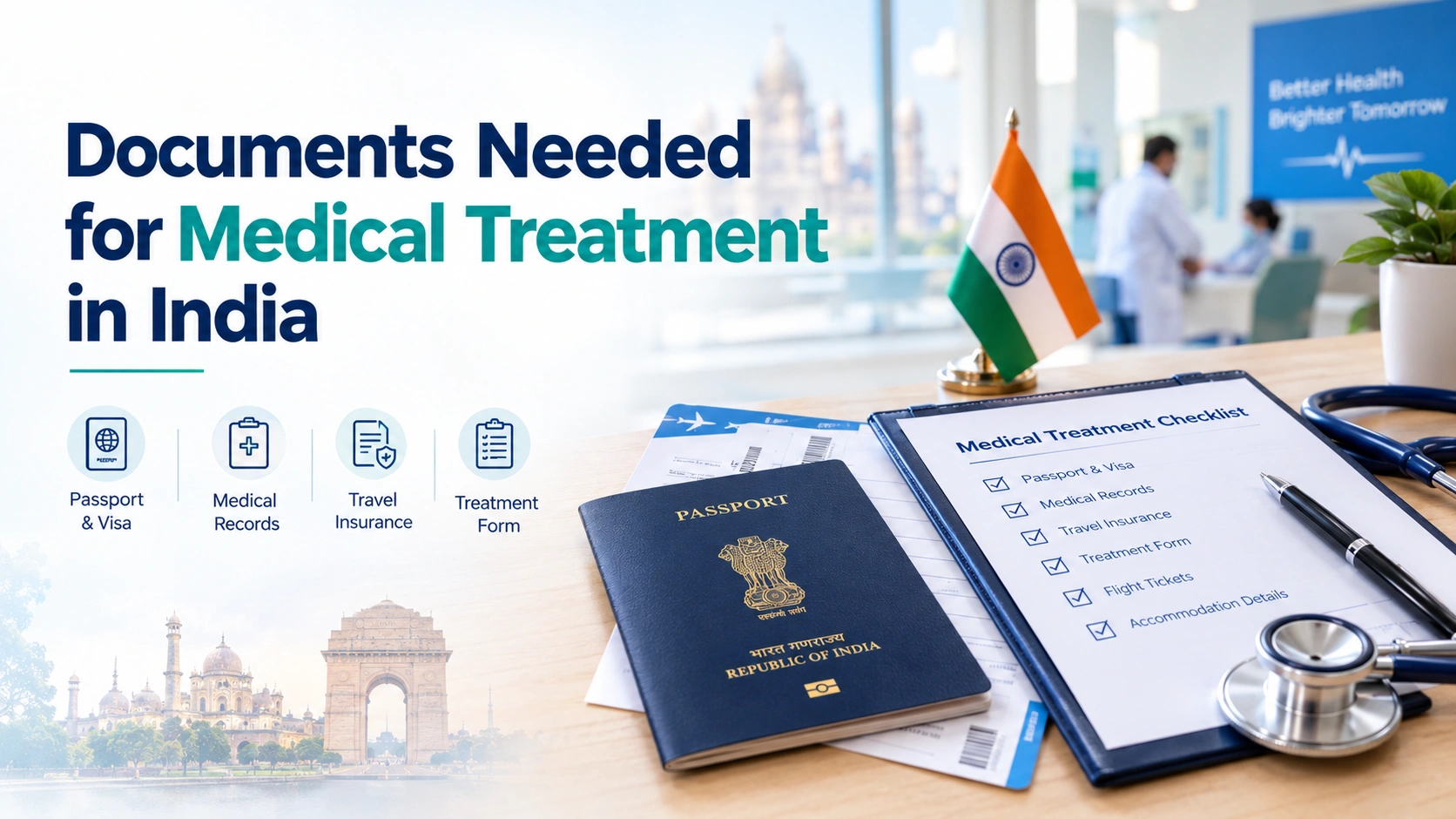
Keep your passport, visa, hospital appointment details, flight information and copies of important documents together.
Insurance Information
If you have health or travel insurance, check whether your policy covers treatment in India and keep the relevant documents with you.
Digital Backups
Create digital copies of important documents. It is also sensible to keep a separate copy with your travel companion if you are travelling with someone.
Medical Visa for India: What Foreign Patients Should Know
Visa requirements are an important part of India medical treatment for foreigners.
A medical visa is intended for eligible foreign nationals travelling to India for medical purposes, subject to current Indian visa rules.
Who Needs a Medical Visa?
The exact requirement depends on your nationality, purpose of travel and current immigration regulations.
Don't assume that the rules are the same for every country. Check the requirements that apply specifically to your passport before booking your trip.
Medical Visa Documents
Depending on your circumstances, you may need documents related to:
- Passport
- Medical treatment
- Hospital or treatment provider
- Identity
- Travel plans
- Visa application
- Supporting medical documentation
Can an Attendant Travel With the Patient?
Patients who need assistance may be able to travel with an eligible attendant, subject to applicable visa rules.
If you are travelling with a family member, confirm the visa requirements for both the patient and attendant before making travel arrangements.
How Much Does Medical Treatment in India Cost for Foreign Patients?
There is no single price for medical treatment in India.
Two patients receiving apparently similar procedures may have different total costs because their medical conditions, treatment plans, hospital stays and follow-up needs are not identical.
Main Factors Affecting Cost
The final cost may depend on:
- Type of treatment
- Complexity of the procedure
- Doctor's fees
- Hospital selected
- City
- Diagnostic tests
- Medicines
- Room category
- Length of hospital stay
- Follow-up treatment
For this reason, online prices should be treated as general information rather than a final quotation.
What Should You Ask About the Cost?
Before travelling, ask the hospital:
- What does the estimate include?
- Are tests included?
- Are medicines included?
- Is the doctor's fee included?
- What happens if hospitalisation is longer than expected?
- What expenses are excluded?
- Could additional procedures increase the cost?
A clear estimate makes financial planning much easier.
What Is the Medical Treatment Process Like in India?
Although the process differs depending on the condition, international patients can generally expect the following stages.
Initial Consultation. The doctor reviews your medical history and existing reports.
Evaluation and Diagnosis. Additional tests may be recommended to confirm the diagnosis or determine whether you are suitable for the proposed treatment.
Treatment Planning. The doctor discusses the recommended treatment, expected recovery, possible risks and follow-up requirements.
Admission and Treatment. If hospitalisation is required, the admission process takes place before the procedure or surgery.
Recovery. After treatment, the medical team monitors your condition and provides instructions about medicines, diet, movement, wound care or other recovery requirements.
Discharge and Follow-Up. Before leaving the hospital, make sure you receive your discharge summary, prescriptions, reports and follow-up instructions.
What Should International Patients Know About Travel and Accommodation?
Medical travel involves more than the hospital appointment. Your accommodation and transportation should also suit your medical condition.
Stay Close to the Hospital
If you need frequent appointments or assistance after discharge, staying reasonably close to the hospital can make things easier.
Look for accommodation with:
- Easy hospital access
- Lift or accessible rooms
- Suitable bathroom facilities
- Food options
- Reliable transportation
Arrange Airport Transportation
If available, consider arranging airport pickup before arriving in India. This can be particularly useful after a long international flight or when travelling with limited mobility.
Consider Travelling With an Attendant
Depending on the treatment, you may need help with transportation, meals, communication or daily activities.
If you plan to bring a family member, check the applicable visa requirements beforehand.
Keep Extra Time
Don't plan your entire trip around the shortest possible treatment timeline. Additional tests or changes to the treatment schedule can happen.
It is better to leave some flexibility in your accommodation and travel plans.
What International Patient Services Are Available in India?
International patient services can make the practical side of treatment easier.
Depending on the hospital or healthcare provider, services may include:
- Hospital appointment coordination
- Airport pickup
- Local transportation
- Language assistance
- Accommodation support
- Visa-related guidance
- Personal patient coordinator
- Follow-up coordination
These services are not identical everywhere. Confirm what you will receive before making arrangements.
What Should Patients Know About Recovery?
Recovery is an important part of traveling to India for medical treatment and should be planned before the procedure.
Recovery Depends on the Treatment. Recovery after a consultation is very different from recovery after major surgery. Ask your doctor how long you are expected to remain in India.
Follow Medical Instructions. Take your medicines as prescribed and follow instructions regarding activity, food, wound care and follow-up appointments.
Don't Rush Your Return Flight. Being discharged from the hospital does not necessarily mean you are ready for international travel. Ask your doctor when it is medically appropriate to fly.
Keep Your Medical Records. Before leaving India, collect all relevant records, including:
- Discharge summary
- Test reports
- Imaging reports
- Procedure notes
- Prescriptions
- Follow-up instructions
Plan Follow-Up Care at Home. Ask your doctor what follow-up care will be required after you return home. If another doctor will continue your care, make sure you have the records needed for that doctor.
10 Things to Do Before Travelling to India for Treatment
Use this simple checklist before your trip:
- Confirm your diagnosis and treatment requirement.
- Collect all medical records.
- Research hospitals and specialists.
- Send your reports for medical review.
- Request a treatment plan and cost estimate.
- Check current visa requirements.
- Arrange suitable accommodation.
- Plan airport and local transportation.
- Carry medicines, prescriptions, passport, visa and important documents.
- Save hospital and emergency contact numbers.
Common Mistakes International Patients Should Avoid
Choosing Only on the Basis of Price. A lower price does not automatically mean better value. Medical expertise, hospital facilities, safety and follow-up care should be considered first.
Travelling Without Sending Reports. If the hospital has not reviewed your medical history, the treatment plan may not be clear before arrival. Sending your reports early can help the medical team prepare.
Not Asking What the Cost Includes. Always ask for a detailed quotation and clarify possible additional expenses.
Ignoring Recovery Time. Your treatment schedule should include recovery, not just the procedure itself.
Booking the Return Flight Too Early. Medical plans can change after evaluation. If possible, keep your return arrangements flexible.
Travelling Without an Attendant When One Is Needed. Some treatments can leave patients unable to manage daily activities independently. Discuss this with your doctor before travelling.
Losing Medical Records. Keep both physical and digital copies of your important medical documents.
Why Choose Health Roop for Medical Treatment in India?
For people researching international patient services in India, having help with the practical side of treatment can make the process easier.
Health Roop can assist international patients with areas such as hospital and doctor coordination, treatment cost guidance, travel planning, visa-related assistance, airport pickup, accommodation and patient support.
The goal should be to help patients understand their options and organise the non-medical aspects of their treatment journey while keeping medical decisions with qualified healthcare professionals.
If you are planning medical travel to India, start preparing well before your departure. Share your medical records, compare suitable hospitals, understand your estimated expenses, check visa requirements and discuss recovery with your doctor.
A well-planned trip gives you a clearer idea of what to expect and helps avoid unnecessary problems after you arrive.
Key Takeaways
Before travelling for medical treatment in India, remember:
- Choose a doctor based on relevant expertise, not just price.
- Research the hospital and required facilities.
- Send medical reports before travelling.
- Ask for a written treatment plan and cost estimate.
- Understand what is included in the quotation.
- Verify the current medical visa requirements for your nationality.
- Arrange accommodation based on your treatment and recovery needs.
- Keep physical and digital copies of your medical documents.
- Allow enough time for recovery before flying home.
- Arrange follow-up care for after you return home.
This article is for general information and isn't a substitute for personal medical or legal advice. Anyone planning medical treatment in India should verify hospital, cost and visa details directly with official sources and their treating doctor.
Frequently Asked Questions
Answers on hospitals, costs, visas and travel for medical treatment in India.
Yes. Foreign nationals can seek medical care in India, subject to applicable visa and immigration requirements. Patients should first identify a suitable hospital or specialist, share their medical records, understand the proposed treatment and confirm the current visa rules applicable to their nationality.
Compare hospitals based on specialist expertise, relevant facilities, treatment options, accreditation, estimated costs, location and international patient support. Sending your medical reports to shortlisted hospitals can help you receive a more informed initial opinion before travelling.
There is no standard price. The cost depends on the treatment, hospital, doctor, city, tests, medicines, room category, hospital stay and follow-up care. Always request a detailed estimate and ask which services are included and which may cost extra.
Visa requirements depend on the patient's nationality and purpose of travel. Eligible patients travelling for medical care may need the appropriate medical visa. Check the latest requirements through official Indian visa resources before booking flights or finalising treatment arrangements.
Patients should carry their passport and visa documents along with medical reports, scans, test results, prescriptions, previous treatment records, doctor's recommendations and insurance information where applicable. Keeping digital copies of important documents is also recommended.
An eligible attendant may be able to accompany a patient, depending on the applicable visa rules. If you need assistance during treatment or recovery, discuss this with the hospital before travelling and confirm the visa requirements for your attendant.
The permitted stay depends on the visa issued and applicable immigration rules. The medical stay depends on the treatment and recovery period. Patients should confirm their permitted stay and discuss the expected duration of treatment with their hospital before travelling.
Yes. International patients can request a second opinion by sharing their medical history, diagnosis, reports, scans and previous treatment details with a suitable Indian specialist. The doctor may recommend additional tests or an in-person consultation before giving a final opinion.
Ask your doctor how long you are expected to remain in India after treatment. Plan accommodation, medicines, transportation, follow-up appointments and return travel around the expected recovery period rather than assuming you can fly home immediately after discharge.
Health Roop can assist with practical aspects of arranging treatment, including hospital and doctor coordination, treatment cost guidance, visa and travel assistance, airport pickup, accommodation support and international patient coordination. The exact services available should be confirmed according to the patient's requirements.
