Liver Transplant in India for Nigerian Patients: A Complete Guide
For patients with advanced liver disease, transplantation may become necessary when the liver can no longer perform its essential functions adequately. For Nigerian patients considering treatment abroad, Liver Transplant in India for Nigerian Patients involves several important steps, including medical evaluation, hospital selection, donor assessment, transplant surgery, visa documentation and postoperative follow-up.
India has established hospitals with specialist transplant teams and international patient departments. However, choosing a transplant centre should not be based only on price. The patient's medical condition, transplant-team experience, donor suitability, hospital infrastructure, legal requirements and long-term follow-up arrangements all need to be considered.
This guide explains the liver transplant cost in India for Nigerian patients, hospital options, living-donor transplantation, the treatment process, medical visa requirements, recovery and other practical information Nigerian families should understand before travelling to India.
What Is a Liver Transplant?
A liver transplant is a major surgical procedure in which a severely damaged or diseased liver is replaced with a healthy donor liver or an appropriate portion of a donor liver.
Transplantation may involve:
- Living donor liver transplantation
- Deceased donor liver transplantation
- Partial liver graft transplantation
- Specialised transplant procedures based on the patient's condition
The liver performs several essential functions, including processing nutrients, producing important proteins and helping remove waste substances from the blood. When severe liver disease causes irreversible loss of liver function, transplantation may become an appropriate treatment option.
A transplant is not automatically recommended for every patient with liver disease. A hepatologist and transplant team assess the patient's medical history, liver function, overall health, imaging, infection status and other factors before making a recommendation.
When Is a Liver Transplant Recommended?
A transplant may be considered when liver damage is severe and irreversible or when other treatments can no longer control the condition adequately.
Common conditions associated with liver transplantation include:
- End-stage liver disease
- Advanced cirrhosis
- Acute liver failure
- Selected cases of liver cancer
- Certain inherited liver disorders
- Severe complications caused by chronic liver disease
The evaluation can include blood tests, liver-function tests, CT or MRI scans, ultrasound, infection screening and assessment of other organs.
If a living donor is being considered, the donor undergoes a separate medical evaluation to determine whether donation is safe and legally permissible.
Why Choose India for Liver Transplant Treatment?
India has major hospitals with specialised transplant programmes and multidisciplinary teams. HealthRoop's hospital network includes several large Indian hospital groups offering transplant-related specialties and international patient services.
For Nigerian patients, some practical considerations include:
Specialist transplant care
Liver transplantation requires coordination between transplant surgeons, hepatologists, anaesthetists, critical-care specialists, radiologists and other medical professionals.
International patient support
Several hospitals provide services such as visa assistance, airport transfers, interpreters, accommodation support and international patient coordination.
Pre-travel medical assessment
Patients can share medical reports before travelling. The treating team can review the available information and advise which additional investigations may be necessary.
Treatment-cost planning
India can offer different treatment options across hospitals and cities. However, patients should always request a written estimate instead of relying on a general online price.
Liver Transplant Cost in India for Nigerian Patients
The liver transplant cost in India for Nigerian patients varies according to the hospital, transplant type, medical condition, donor evaluation, ICU requirements, length of stay, medicines and possible complications.
Published hospital information places the typical liver transplant cost in India around ₹20 lakh to ₹35 lakh, although individual cases can cost less or more depending on treatment requirements. Apollo Hospitals currently publishes this range as a typical estimate.
Indicative Liver Transplant Cost in India
| Treatment component | Indicative cost/requirement |
|---|---|
| Liver transplant | Approximately ₹20 lakh–₹35 lakh* |
| Recipient evaluation | Depends on investigations |
| Donor evaluation | Depends on tests required |
| ICU care | Depends on recovery |
| Medicines | Additional/variable |
| Extended hospital stay | Additional if required |
| Travel and accommodation | Separate |
| Visa and documentation | Separate |
Resource: The figures above are based on previously published Indian hospital cost information and should be used only as a general planning reference. The final quotation must come from the selected hospital.
Factors That Can Increase the Cost
The final treatment cost may change because of:
- Patient's medical condition
- Living or deceased donor pathway
- Donor investigations
- ICU stay
- Hospital room category
- Additional procedures
- Blood products
- Medicines
- Treatment of infections
- Postoperative complications
- Extended hospitalisation
Nigerian patients should ask for a written quotation explaining what is included in the package and what may be billed separately.
Price Disclaimer: The price figures in this article are based on previous-year 2025 data and published estimates and are provided for general planning only. Medical costs can change according to the hospital, patient's condition, exchange rates, treatment requirements and length of stay. For exact and updated pricing, Nigerian patients should contact HealthRoop or the selected hospital directly before making travel arrangements.
Best Hospitals for Liver Transplant in India
There is no single hospital that is appropriate for every transplant patient. The choice depends on the patient's diagnosis, transplant requirements, donor situation and medical evaluation.
HealthRoop's current hospital network lists the following major hospital groups with relevant transplant or liver-related specialties:
Apollo Hospitals
Apollo Hospitals lists organ transplantation among its specialties and provides international patient services including medical-tourism coordination, visa assistance, airport transfers, interpreters and post-discharge follow-up.
Fortis Healthcare
Fortis Healthcare lists liver transplant among its specialties and provides international patient services, including dedicated relationship managers, translation support and accommodation assistance.
Medanta – The Medicity
Medanta lists liver transplant among its specialties and provides services such as visa-letter assistance, airport pickup, interpreter services and video-based second opinions.
Narayana Health
Narayana Health lists organ transplantation among its specialties and provides international patient support, travel and visa assistance and post-treatment teleconsultation.
Manipal Hospitals
Manipal Hospitals lists organ transplantation among its specialties and provides international patient care, medical visa assistance, language support and dedicated coordinators.
Max Healthcare
Max Healthcare lists liver and biliary sciences among its specialties and provides international patient services including visa invitation letters, airport transfers and accommodation support.
Patients should compare hospitals based on transplant-team experience, donor assessment facilities, critical-care infrastructure, treatment plan and total estimated cost rather than selecting a hospital solely on price.
How to Choose a Liver Transplant Hospital in India
Before confirming treatment, Nigerian patients should evaluate:
- Experience of the liver transplant programme
- Qualifications and experience of transplant surgeons
- Availability of hepatology and critical-care specialists
- Donor evaluation facilities
- ICU and diagnostic infrastructure
- International patient services
- Written treatment estimate
- Post-transplant follow-up arrangements
- Legal and authorization requirements
Ask the hospital exactly what its quoted transplant package includes.
Liver Transplant Procedure in India
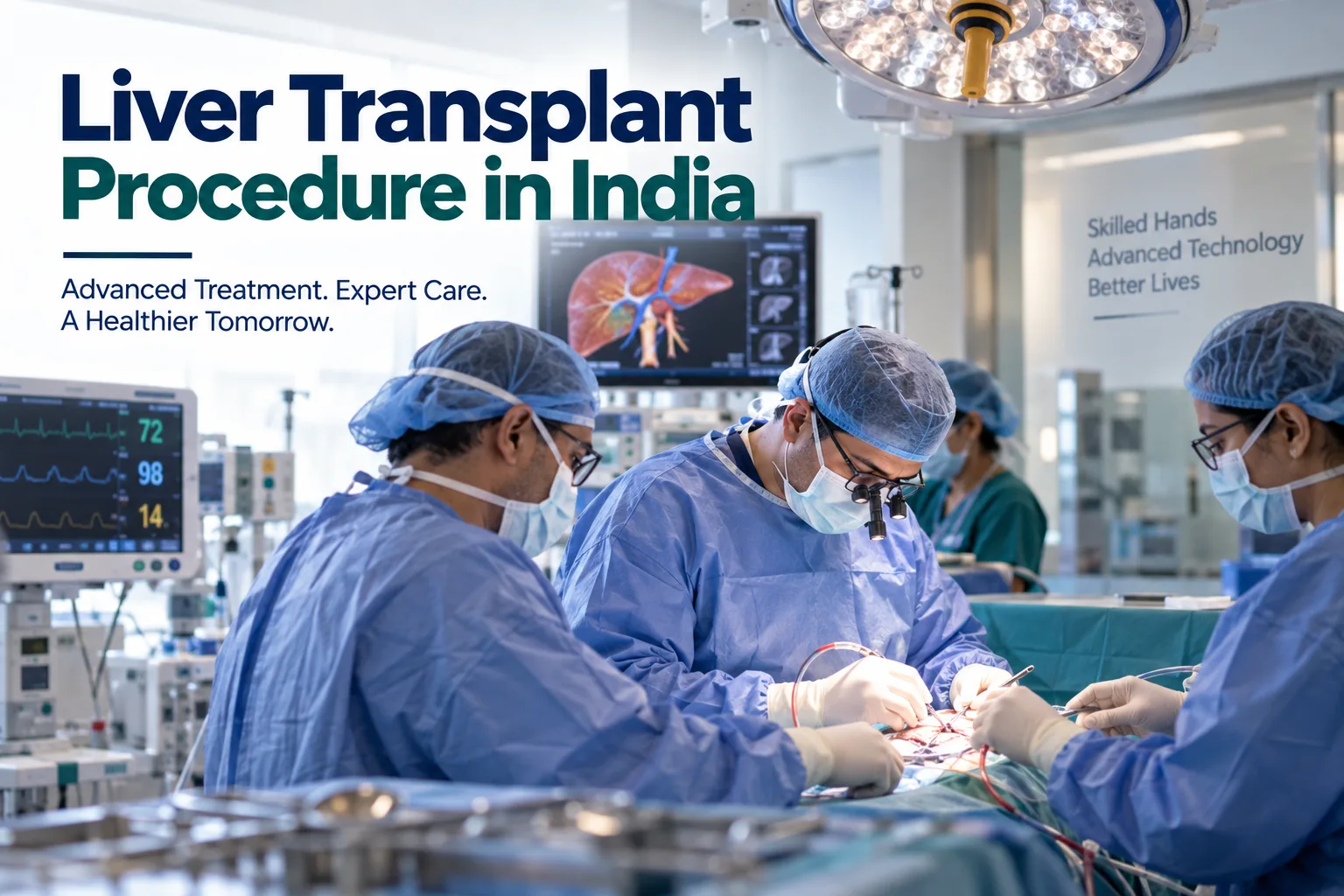
The exact procedure differs according to the patient's condition and donor type. A typical treatment pathway includes:
Pre-transplant evaluation
The recipient undergoes detailed blood tests, imaging and medical assessments to determine whether transplantation is appropriate.
Donor evaluation
For living donor transplantation, the donor undergoes medical testing to assess health, liver anatomy, compatibility and suitability for donation.
Surgical planning
The transplant team reviews the recipient's and donor's medical information and prepares the surgical plan.
Transplant surgery
The diseased liver is removed and replaced with the donor liver or appropriate liver segment. Blood vessels and bile ducts are reconstructed during the operation.
ICU and hospital care
After surgery, the patient is monitored closely for liver function, bleeding, infection, kidney function and other possible complications.
Postoperative treatment
Medication, blood tests, imaging and specialist consultations continue after surgery and discharge.
Living Donor Liver Transplant in India
Living donor transplantation allows a suitable person to donate part of their liver to the recipient. Because the liver can regenerate part of its volume, this approach can be used in appropriately selected cases.
However, living donation is subject to strict medical and legal requirements.
According to NOTTO guidance, living donors must be at least 18 years old. Near relatives can include a spouse, parent, child, sibling or grandparent. When the donor or recipient is a foreign national, prior Authorization Committee approval is required.
The donor may undergo:
- Blood-group testing
- Liver-function tests
- CT or MRI imaging
- Infection screening
- General health assessment
- Liver-volume and anatomy assessment
- Other tests required by the transplant team
Commercial organ dealing is prohibited in India.
For Nigerian patients, donor eligibility and documentation should be confirmed with the transplant hospital before making travel arrangements.
Liver Transplant Process for Nigerian Patients
Step 1: Share Medical Reports
Provide recent medical reports, scans, prescriptions, previous discharge summaries and other relevant records.
Step 2: Get Medical Evaluation
The transplant team reviews the reports and determines whether further tests or an in-person consultation are required.
Step 3: Receive Treatment Plan and Cost Estimate
The hospital provides a proposed treatment plan and estimated cost. Ask whether donor evaluation, ICU care, medicines and additional investigations are included.
Step 4: Select Hospital and Transplant Team
Compare suitable hospitals based on medical suitability, transplant expertise, infrastructure, cost and follow-up arrangements.
Step 5: Complete Visa Documentation
Once the hospital and treatment plan are confirmed, arrange the required medical travel documents.
Step 6: Travel to India
Travel after the hospital has confirmed the consultation or admission arrangements and the necessary documentation is ready.
Step 7: Hospital Admission and Evaluation
Additional tests may be performed after arrival. The final treatment decision can depend on these updated results.
Step 8: Transplant Treatment
Once medical and legal requirements are completed, the transplant procedure can be scheduled.
Step 9: Recovery and Follow-Up
The patient remains under medical supervision after surgery, with regular tests and medication adjustments.
Step 10: Return to Nigeria
Before returning home, obtain the discharge summary, medication schedule, follow-up instructions and recommended testing schedule.
Medical Visa for Nigerian Patients Coming to India for Liver Transplant
The Indian e-Visa system provides e-Medical and e-Medical Attendant visa categories for eligible applicants. The official Indian visa portal states that an e-Medical Visa application requires a hospital letter on the hospital's letterhead containing the proposed or tentative admission/treatment details.
For organ transplantation, NOTTO states that treatment requiring organ transplantation must be undertaken on a Medical Visa and that the Medical Visa requirement applies to both the donor and recipient. Foreign-national donor or recipient cases also require prior Authorization Committee approval.
The exact visa route and documentation should be checked before travel because requirements can change.
Documents Required for Liver Transplant in India
Common documents may include:
- Valid passport
- Recent medical reports
- Blood-test reports
- CT/MRI or ultrasound reports
- Previous discharge summaries
- Prescription and medication history
- Hospital invitation letter
- Passport photographs
- Donor medical records
- Donor identity documents
- Proof of donor-recipient relationship where applicable
Foreign-national transplant cases may require additional legal documentation. NOTTO guidance states that relationship certification may be required through the relevant embassy or government authority, along with Authorization Committee approval.
The hospital should provide the final document checklist for the individual case.
How Long Does a Liver Transplant Take in India?
The operation itself can take several hours, but the complete treatment journey is considerably longer.
It may include:
- Recipient evaluation
- Donor assessment
- Additional diagnostic tests
- Required approvals
- Surgery
- ICU monitoring
- Hospital recovery
- Follow-up before travelling home
The length of hospitalisation varies according to the patient's condition and recovery. Nigerian patients should allow additional time rather than booking a tightly scheduled return flight.
Recovery After Liver Transplant
Recovery continues well beyond hospital discharge.
The transplant team may monitor:
- Liver function
- Kidney function
- Blood counts
- Infection
- Rejection
- Medication levels
- Bile-duct and vascular complications
Patients generally require long-term medical follow-up and immunosuppressive medication after transplantation. Medicines should not be stopped or changed without instructions from the treating medical team.
Before returning to Nigeria, patients should have a clear plan for blood tests, medication management and follow-up consultations.
Risks and Possible Complications of Liver Transplant
Liver transplantation is major surgery and carries potential risks.
Possible complications include:
- Bleeding
- Infection
- Blood clots
- Bile-duct problems
- Vascular complications
- Kidney problems
- Rejection
- Medication side effects
- Prolonged ICU care
- Additional procedures
The risks vary between patients. The transplant team should explain the potential complications and expected recovery before surgery.
For living donors, the donor's safety must be assessed separately and carefully.
What Nigerian Patients Should Consider Before Choosing India
Before travelling, check the following:
Medical
- Has a transplant specialist reviewed the case?
- Is transplantation recommended?
- Has a potential donor been evaluated?
- Are all important reports available?
Financial
- Is there a written cost estimate?
- What does the package include?
- Are donor costs included?
- What happens if hospitalisation is extended?
Legal
- Are donor-recipient documents complete?
- Are required approvals in place?
- Are medical visa documents ready?
Travel
- How long might the family need to stay?
- Where will the patient stay after discharge?
- Is airport transportation arranged?
- Is an interpreter required?
Follow-Up
Before leaving India, obtain:
- Discharge summary
- Medication list
- Follow-up schedule
- Required laboratory tests
- Emergency contact information
- Copies of relevant medical records
How HealthRoop Helps Nigerian Patients With Liver Transplant in India
HealthRoop helps international patients coordinate the practical aspects of medical treatment in India, from reviewing reports and identifying suitable hospitals to arranging travel-related support and follow-up. Its published process includes medical report review, treatment planning, hospital and doctor assistance, visa-document guidance, travel and accommodation coordination, interpreter support and post-treatment follow-up.
For Nigerian patients, support can include:
- Medical report review
- Hospital selection assistance
- Specialist coordination
- Treatment-plan coordination
- Cost-estimate assistance
- Hospital appointment coordination
- Medical visa documentation support
- Travel and accommodation coordination
- Airport transfer assistance
- Interpreter support
- Hospital documentation assistance
- Post-treatment follow-up
Hospital and doctor fees are paid directly to the hospital according to HealthRoop's published process, while HealthRoop assists with the travel and coordination aspects selected by the patient.
Key Points for Nigerian Patients
Before travelling to India for a liver transplant:
- Get your medical reports reviewed by a transplant specialist.
- Compare suitable transplant hospitals.
- Obtain a written treatment estimate.
- Confirm living-donor eligibility if applicable.
- Complete required legal approvals.
- Arrange the appropriate medical visa.
- Plan accommodation and transportation.
- Keep sufficient time for postoperative recovery.
- Get a written follow-up plan before returning to Nigeria.
Final Thoughts
For Nigerian patients with advanced liver disease, India provides access to established hospitals and specialist transplant teams. The most important step is to obtain an individual medical evaluation rather than relying only on general information about liver transplantation or online prices.
Before travelling, confirm the treatment plan, donor eligibility, hospital quotation, medical visa requirements and postoperative follow-up arrangements. A clear plan can make the medical-travel process easier to manage for both the patient and family.
The cost figures mentioned in this article are based on previous-year 2025 estimates and should be used only for initial planning. Actual hospital charges can change according to the patient's condition, transplant type, hospital, length of stay and additional treatment requirements. Contact HealthRoop or the selected hospital for an updated case-specific estimate.
Medical Disclaimer: This article is intended for general educational purposes and does not replace advice from a qualified hepatologist, transplant surgeon or other medical professional. Liver transplantation is a major procedure, and treatment suitability, donor eligibility, risks, recovery and final cost must be determined by the treating medical team.
Frequently Asked Questions
Answers on liver transplant cost, hospitals, donor rules and recovery in India for Nigerian patients.
The liver transplant cost in India for Nigerian patients varies by hospital, transplant type and medical complexity. Published Indian hospital estimates commonly place the procedure around ₹20 lakh to ₹35 lakh, but the final international-patient quotation may differ. Patients should obtain a written estimate after medical evaluation.
Suitable hospitals depend on the patient's diagnosis and transplant requirements. HealthRoop's network includes Apollo Hospitals, Fortis Healthcare, Medanta, Narayana Health, Manipal Hospitals and Max Healthcare, with relevant transplant or liver-related specialties listed on its hospital network page.
Yes, foreign nationals can undergo organ-transplant treatment in India subject to applicable medical and legal requirements. NOTTO states that foreign-national donor or recipient cases require prior Authorization Committee approval, and organ-transplant treatment requires a Medical Visa for the donor and recipient.
The transplant surgery can take several hours, but the complete treatment period is longer because it includes medical evaluation, donor assessment, investigations, approvals, surgery, ICU care and recovery. The required hospital stay varies according to the patient's condition and postoperative progress.
A medically suitable family member may be able to donate part of the liver. The donor must meet medical and legal requirements. For foreign-national cases, additional authorization and relationship documentation may be required. The transplant hospital should confirm donor eligibility before the family makes travel arrangements.
Patients generally need a valid passport, recent medical reports, scans, previous treatment records, prescriptions and a hospital invitation or admission letter. Living donors may require identity, medical and relationship documents. Additional paperwork can apply to foreign-national transplant cases.
Patients travelling to India for medical treatment need the applicable medical visa arrangement. India's official visa portal provides an e-Medical Visa category for eligible applicants. For organ transplantation, NOTTO states that a Medical Visa is mandatory for both the donor and recipient.
Recovery differs between patients. Initial recovery takes place in hospital, followed by regular blood tests, medication adjustments and specialist consultations. Many patients need several months to regain their previous level of activity, while long-term medical monitoring remains necessary after transplantation.
Yes. Follow-up can be coordinated between the Indian transplant centre and healthcare professionals in Nigeria. Patients should return with their discharge summary, medication instructions, laboratory schedule and follow-up plan. Teleconsultation may also be possible if offered by the treating hospital.
