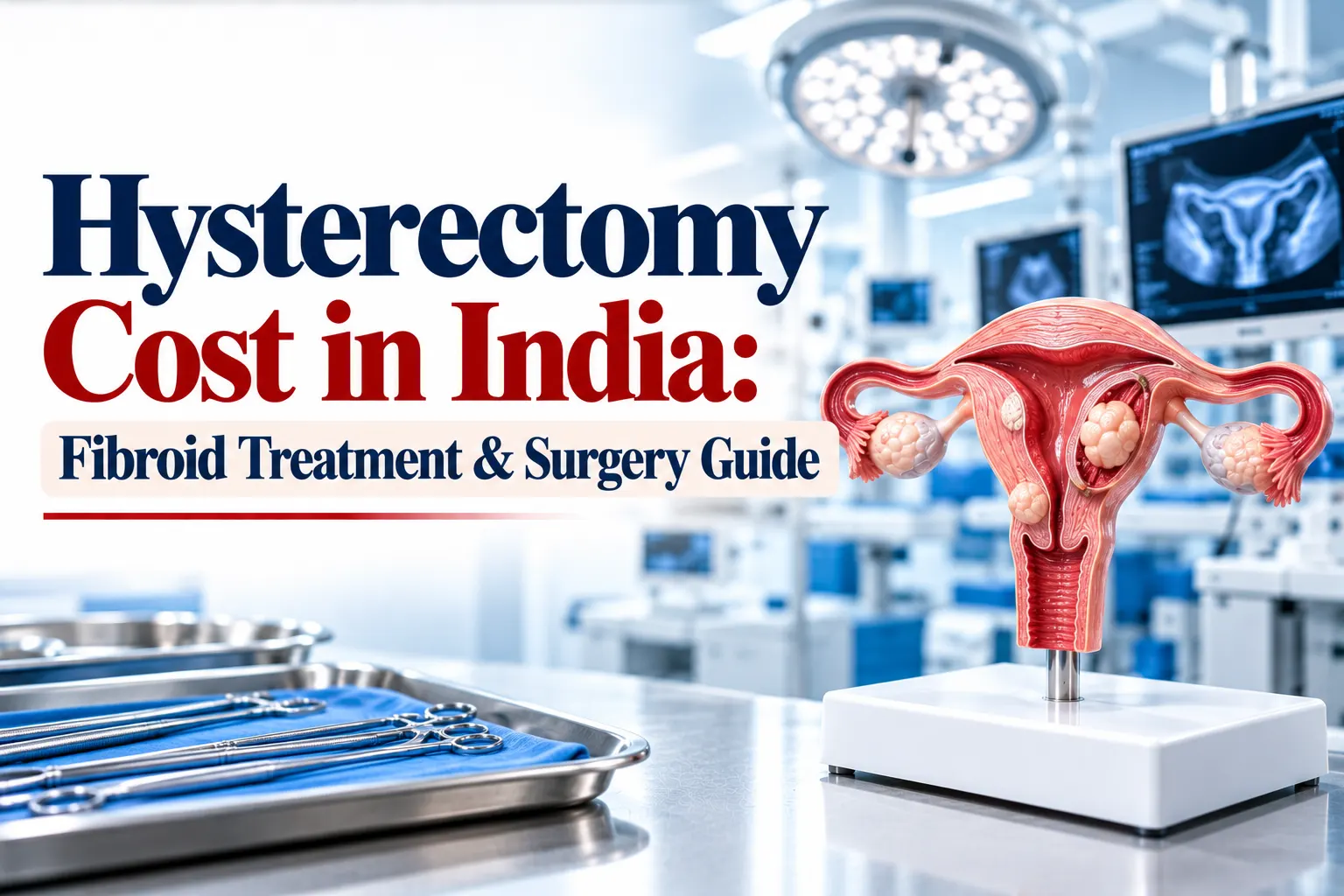
Hysterectomy and Fibroid Treatment in India: Cost, Surgery, Hospitals and Recovery
Uterine fibroids are common growths that develop in or around the uterus. They are usually non-cancerous, but they can cause heavy periods, pelvic pressure, abdominal pain, frequent urination and fertility problems. Treatment depends on the size and location of the fibroids, symptoms, age, general health and whether a woman wants to become pregnant in the future.
For women researching hysterectomy and fibroid treatment in India, there are several possible approaches. Some patients can manage their symptoms with medicines, while others may need a procedure such as hysteroscopic myomectomy, laparoscopic myomectomy or uterine artery embolization. Hysterectomy may be considered when fibroids are large, symptoms are severe, other treatments have not worked, or the patient has completed her family.
Before choosing surgery, a gynecologist should assess the individual case rather than recommending a procedure based only on the size of a fibroid.
What Are Uterine Fibroids?
Uterine fibroids are growths that develop from the muscle tissue of the uterus. They can occur inside the uterine cavity, within the muscular wall or on the outer surface of the uterus.
Some women have fibroids without noticeable symptoms. In other cases, even a relatively small fibroid can cause significant bleeding or discomfort depending on where it is located.
Common symptoms include:
- Heavy or prolonged menstrual bleeding
- Painful periods
- Pelvic pressure or discomfort
- Lower abdominal swelling or fullness
- Frequent urination
- Constipation
- Pain during intercourse
- Anaemia caused by heavy menstrual bleeding
- Difficulty becoming pregnant in some cases
Fibroids can vary considerably in size and number. A woman may have one fibroid or several growths affecting different parts of the uterus.
Does Every Fibroid Need Treatment?
No. Fibroids that cause no symptoms may only need monitoring.
Treatment is generally considered when symptoms are affecting daily life or when the fibroids are associated with problems such as:
- Very heavy menstrual bleeding
- Anaemia
- Persistent pelvic pain
- Pressure on the bladder or bowel
- Fertility problems
- Significant growth or changes in symptoms
- A large or difficult-to-treat fibroid
- Failure of medication to control symptoms
The treatment decision should consider the patient's age, symptoms, fibroid characteristics, medical history and reproductive plans.
When Is Fibroid Treatment Necessary?
There is no single size at which every fibroid must be removed. Two women with fibroids of a similar size may receive completely different treatment recommendations.
Doctors usually look at four major factors.
Symptoms
Heavy bleeding, severe pain, anaemia or pressure symptoms may justify treatment even when fibroids are not extremely large.
Location
The position of a fibroid matters. A fibroid growing into the uterine cavity can cause heavy bleeding and may affect fertility. A fibroid growing outward from the uterus may cause pressure on nearby organs.
Number and Size
Multiple or very large fibroids can make surgery more complicated and may influence which surgical technique is appropriate.
Pregnancy Plans
This is particularly important. A woman who wants to preserve the possibility of pregnancy may be offered a uterus-preserving procedure when medically suitable.
Fibroid Treatment Options in India
Treatment can range from observation and medication to minimally invasive procedures or major surgery.
1. Medicines for Fibroid Symptoms
Medicines do not necessarily remove fibroids, but they may help control symptoms.
Depending on the patient's condition, treatment may be used to reduce:
- Heavy menstrual bleeding
- Period pain
- Anaemia
- Hormone-related symptoms
Some medicines can temporarily reduce fibroid size or make surgery easier in selected patients. Their use depends on age, symptoms, medical history and treatment goals.
Medication may be suitable for women with manageable symptoms, women approaching menopause or patients who need their health improved before surgery.
2. Hysteroscopic Myomectomy
Hysteroscopic myomectomy is generally used for fibroids that project into the uterine cavity.
The surgeon passes a thin instrument through the vagina and cervix to reach the uterus. There is no large abdominal incision.
This procedure may be considered when a submucosal fibroid contributes to:
- Heavy menstrual bleeding
- Infertility
- Repeated pregnancy loss in selected cases
Whether it is appropriate depends on the size and depth of the fibroid within the uterine wall.
3. Laparoscopic Myomectomy India
Laparoscopic myomectomy India is a minimally invasive procedure used to remove fibroids while keeping the uterus in place.
The surgeon makes small abdominal incisions and uses a camera and specialized instruments to remove the fibroids.
It can be an option for selected women who want to preserve their uterus.
Possible advantages include:
- Smaller surgical incisions
- Less postoperative discomfort for many patients
- Shorter hospital stay in suitable cases
- Earlier return to routine activities compared with some open procedures
However, laparoscopic surgery is not suitable for every patient.
A surgeon may recommend another approach when:
- Fibroids are very large
- There are many fibroids
- Fibroids are located in difficult positions
- The uterus is significantly enlarged
- Previous abdominal surgeries have created extensive scar tissue
The final decision should be made after reviewing imaging and the patient's medical history.
4. Uterine Artery Embolization
Uterine artery embolization, often called UAE, is a procedure that reduces the blood supply reaching fibroids. As the blood supply decreases, the fibroids can shrink and symptoms may improve.
It may be considered for some women who want to avoid traditional surgery.
However, women who are planning pregnancy should discuss this option carefully with their gynecologist. The effect of UAE on future pregnancy needs to be considered before choosing the procedure.
5. Hysterectomy for Fibroids
A hysterectomy is surgery to remove the uterus.
For women with severe fibroid-related symptoms who have completed their families, hysterectomy can provide a definitive treatment because the uterus containing the fibroids is removed.
It may be considered when:
- Fibroids are very large
- Bleeding is severe
- Anaemia keeps returning
- Pain or pressure is affecting daily life
- Other treatments have failed
- Other treatments are not suitable
- The patient does not want future pregnancy
Hysterectomy permanently removes the ability to carry a pregnancy. Therefore, it should be considered carefully, particularly for women who still want children.
What Are the Types of Hysterectomy?
The surgical approach depends on the patient's condition, uterine size, fibroid location and the surgeon's assessment.
Total Hysterectomy
The uterus and cervix are removed.
Supracervical Hysterectomy
The upper part of the uterus is removed while the cervix remains.
Vaginal Hysterectomy
The uterus is removed through the vagina. This avoids an abdominal incision but is not suitable for every patient.
Laparoscopic Hysterectomy
The procedure is performed through small abdominal incisions using a camera and specialized surgical instruments.
Abdominal Hysterectomy
The uterus is removed through an abdominal incision. This approach may be necessary when the uterus is very large or the surgical situation makes minimally invasive surgery unsuitable.
The ovaries are a separate consideration. Having a hysterectomy does not automatically mean that both ovaries must be removed. The surgeon will decide based on the patient's age, medical history and condition of the ovaries and fallopian tubes.
Hysterectomy Cost in India
The hysterectomy cost in India varies from patient to patient. There is no single fixed price that applies to every hospital or every type of hysterectomy.
The cost may depend on:
- Surgical technique
- Hospital and city
- Surgeon's fees
- Anaesthesia
- Room category
- Diagnostic tests
- Medicines
- Surgical consumables
- Length of hospital stay
- Histopathology
- Additional procedures
- Medical complications, if any
Approximate Cost of Fibroid Treatment in India
| Treatment | Approximate Cost in India (INR) | Approximate Cost (USD) |
|---|---|---|
| Hysterectomy | ₹50,000 – ₹2,50,000 | $555 – $2,780 |
| Laparoscopic Hysterectomy | ₹70,000 – ₹1,40,000 | $780 – $1,555 |
| Laparoscopic Myomectomy | ₹65,000 – ₹1,20,000 | $720 – $1,335 |
| Open Myomectomy | ₹55,000 – ₹1,00,000 | $610 – $1,110 |
| Hysteroscopic Myomectomy | ₹45,000 – ₹90,000 | $500 – $1,000 |
| Robotic Myomectomy | ₹1,20,000 – ₹2,00,000 | $1,335 – $2,220 |
Resource: Indicative figures based on previously published Indian healthcare and hospital cost estimates. Actual hospital quotations can vary according to the patient's diagnosis, surgical approach and treatment requirements.
What Is Usually Included in the Surgical Cost?
A hospital quotation may include some or all of the following:
- Surgeon charges
- Anaesthesia
- Operation theatre charges
- Hospital room
- Nursing care
- Routine medicines
- Standard investigations
- Surgical consumables
- Pathology
- Postoperative care
But these inclusions differ between hospitals.
Before confirming treatment, ask for an itemized estimate. It is better to know exactly what the quoted package includes than to compare hospitals only by the starting price.
Hysterectomy vs Myomectomy: Which Is Better?
This is one of the most important decisions for a woman with fibroids.
The two procedures have different purposes.
| Factor | Myomectomy | Hysterectomy |
|---|---|---|
| Fibroids removed | Yes | Yes, with uterus |
| Uterus retained | Yes | No |
| Future pregnancy | May remain possible | Not possible |
| New fibroids | May develop later | Uterine fibroids cannot recur after uterus removal |
| Fertility preservation | Possible | Not possible |
| Definitive treatment | No | Yes |
| Suitable for completed families | Sometimes | Often considered |
Myomectomy is generally considered when preserving the uterus is important and the fibroids can be safely removed.
Hysterectomy may be appropriate when the patient has completed childbearing and wants definitive treatment, particularly when symptoms are severe or other options are unsuitable.
The choice should be made after discussing both options with a qualified gynecologist.
How Doctors Diagnose Fibroids Before Surgery
A proper diagnosis helps the surgeon select the appropriate treatment.
Ultrasound
Ultrasound is commonly used to identify fibroids and assess their number, size and location.
A transvaginal ultrasound may provide more detailed information about the uterus in appropriate patients.
MRI
MRI may be recommended when more detailed information is needed, particularly before complex fibroid surgery.
It can help map the size and location of multiple fibroids and assist with surgical planning.
Blood Tests
A complete blood count may be performed when heavy periods are present to check for anaemia.
Hysteroscopy
Hysteroscopy allows the doctor to examine the inside of the uterine cavity. It can also be used to treat certain fibroids located within the cavity.
The exact combination of tests depends on the patient's symptoms and clinical findings.
How to Choose a Gynecologist for Fibroid Treatment
Searching for the best gynecologist in India should not be based only on rankings, advertisements or the name of a hospital.
A better approach is to assess the doctor's experience with the specific procedure you may need.
Look for experience in:
- Fibroid diagnosis
- Laparoscopic surgery
- Hysteroscopic procedures
- Myomectomy
- Hysterectomy
- Complex fibroid cases
- Minimally invasive gynecological surgery
- Fertility-preserving treatment
During your consultation, ask the doctor why a particular procedure is being recommended.
For example:
"Can my fibroids be removed while keeping my uterus?"
If hysterectomy has been suggested, ask:
"Why is hysterectomy more appropriate for me than myomectomy?"
The answer should be based on your individual condition rather than a general rule.
Hospitals for Fibroid and Hysterectomy Treatment in India
Patients looking for treatment in India have access to many multi-specialty hospitals. The hospital directory maintained by Healthroop currently includes several major hospital groups across different Indian cities.
Some of the hospitals listed in the network include:
Apollo Hospitals
Apollo Hospitals has a large multi-specialty network and offers a broad range of surgical and women's health services across its facilities.
Fortis Healthcare
Fortis has multiple hospitals in India with specialist departments and international patient services.
Medanta – The Medicity
Located in Gurugram, Medanta is a large multi-specialty hospital with several specialist institutes and advanced surgical facilities.
Manipal Hospitals
Manipal Hospitals operates a large network of multi-specialty hospitals and provides services across several medical specialties, including fertility-related care.
Max Healthcare
Max Healthcare has hospitals across North India and provides multi-specialty treatment and international patient support.
Narayana Health
Narayana Health operates hospitals in several Indian cities and provides multi-specialty medical and surgical care.
Patients should choose a hospital based on the gynecologist's experience, required procedure, available surgical facilities, medical history and postoperative support rather than hospital name alone.
Fibroid Treatment Abroad: What International Patients Should Know
For women considering fibroid treatment abroad, preparation should begin before travelling.
Send your medical records to the hospital or specialist before making a final treatment decision.
Useful documents include:
- Recent ultrasound reports
- MRI reports, if available
- Blood test results
- Previous treatment records
- Previous surgery reports
- Current medication list
- Medical history
- Information about menstrual bleeding
- Previous fertility treatment, if relevant
The specialist can then assess whether you may need medication, myomectomy, hysterectomy or another treatment.
Ask for a Written Treatment Estimate
International patients should ask for a detailed estimate covering:
- Doctor's fees
- Hospital charges
- Operation theatre
- Anaesthesia
- Room charges
- Investigations
- Medicines
- Surgical consumables
- Pathology
- Expected hospital stay
- Follow-up care
Do not plan your return journey immediately after discharge. Your treating doctor should advise you when it is medically appropriate to travel.
Recovery After Fibroid Surgery
Recovery depends on the procedure.
A patient undergoing hysteroscopic surgery may recover faster than someone undergoing an open abdominal operation. Laparoscopic procedures may also allow an earlier return to normal activities than open surgery in suitable patients.
After surgery, some women may experience:
- Mild to moderate pain
- Tiredness
- Temporary bloating
- Vaginal discharge or bleeding
- Changes in bowel movements
- Temporary urinary symptoms
- Incision discomfort after laparoscopic surgery
Your doctor will tell you when you can:
- Drive
- Return to work
- Exercise
- Lift heavy objects
- Have sexual intercourse
- Travel
- Resume normal household activities
Do not judge recovery by another patient's timeline. The type of surgery and your general health make a significant difference.
What Should You Ask Before Fibroid Surgery?
A consultation becomes much more useful when you go prepared.
Ask these questions:
- How many fibroids do I have?
- Where are they located?
- Are they responsible for my symptoms?
- Do I need surgery now?
- Can medication be considered first?
- Can my uterus be preserved?
- Am I suitable for laparoscopic surgery?
- Why are you recommending hysterectomy?
- What are the alternatives?
- Will my ovaries remain?
- How long will I stay in hospital?
- How long should I remain in India if I am travelling from another country?
- What does the quoted treatment cost include?
- Are additional tests or procedures likely?
- What follow-up will I need after returning home?
Writing down these questions before your appointment can help you compare treatment plans more clearly.
Healthroop Support for International Patients
Healthroop assists international patients who are seeking medical treatment in India by helping them connect with hospitals and specialists and by supporting practical arrangements around their treatment.
The support may include:
- Hospital selection assistance
- Specialist appointment coordination
- Medical report sharing
- Treatment estimate assistance
- Hospital admission coordination
- Medical travel support
- Visa-related assistance
- Airport transfer arrangements
- Accommodation coordination
- Follow-up assistance
Medical treatment decisions are made by the treating specialist after reviewing the patient's medical records, examination findings and diagnostic reports.
Price Disclaimer
The prices mentioned in this article are indicative and have been taken from previously available healthcare cost data, including data from the previous year. Medical treatment prices can change based on hospital, city, surgeon, procedure, room category, investigations, medicines and the patient's individual condition. For the latest and exact cost, patients should call or email the hospital or medical care coordinator and request a case-specific quotation before planning treatment.
Medical Disclaimer: This article is intended for general educational purposes only. It does not replace an examination, diagnosis or treatment plan from a qualified gynecologist. The appropriate treatment for fibroids varies from patient to patient.
Frequently Asked Questions
Answers on hysterectomy cost, fibroid treatment, and planning care in India.
The hysterectomy cost in India can vary widely depending on the surgical method, hospital, city, surgeon, room category and medical requirements. An approximate range may be ₹50,000 to ₹2,50,000, but this should not be treated as a fixed quotation. Patients should request an updated, itemized estimate before treatment.
Hysterectomy is not necessary for every woman with fibroids. Doctors may consider it when symptoms are severe, fibroids are very large, other treatments have failed or the patient has completed childbearing. Women who want to preserve fertility may have other treatment options, depending on their condition.
Yes. Myomectomy removes fibroids while keeping the uterus in place. It can be performed through hysteroscopy, laparoscopy or open surgery depending on the number, size and location of the fibroids. This approach may be suitable for women who want to preserve their reproductive options.
Yes, laparoscopic myomectomy India is performed at specialist hospitals for appropriately selected patients. The procedure uses small abdominal incisions to remove fibroids while preserving the uterus. It may not be suitable when fibroids are very large, numerous or located in difficult positions.
Recovery varies according to the type of hysterectomy and the patient's general health. Laparoscopic and vaginal procedures generally allow a quicker recovery than abdominal surgery for suitable patients. Your surgeon will provide specific instructions about work, exercise, driving, lifting, sexual activity and travel.
The fibroids removed during myomectomy do not grow back in the same way, but new fibroids can develop later. The possibility depends on individual factors such as age, number of fibroids and hormonal influences. Follow-up may be recommended if symptoms return after surgery.
Not necessarily. Hysterectomy means removal of the uterus, while removal of the ovaries is a separate decision. A surgeon may recommend keeping the ovaries depending on age, medical history and ovarian health. Patients should discuss the planned extent of surgery before signing consent.
When searching for the best gynecologist in India, focus on experience with the procedure you may need rather than relying only on online rankings. Ask about laparoscopic surgery, myomectomy, hysterectomy, complex fibroids, fertility preservation and the doctor's recommended alternatives for your particular case.
Fibroid treatment abroad can be considered when appropriate specialist care is available, but patients should complete a medical evaluation before travelling. Send diagnostic reports, previous treatment records and medication details to the hospital and obtain a written treatment plan and cost estimate before making travel arrangements.
Pregnancy may remain possible after myomectomy because the uterus is preserved. However, the impact on fertility depends on the location and number of fibroids, the surgical technique and other fertility factors. Some women may require additional pregnancy monitoring after surgery, so specialist advice is important.
