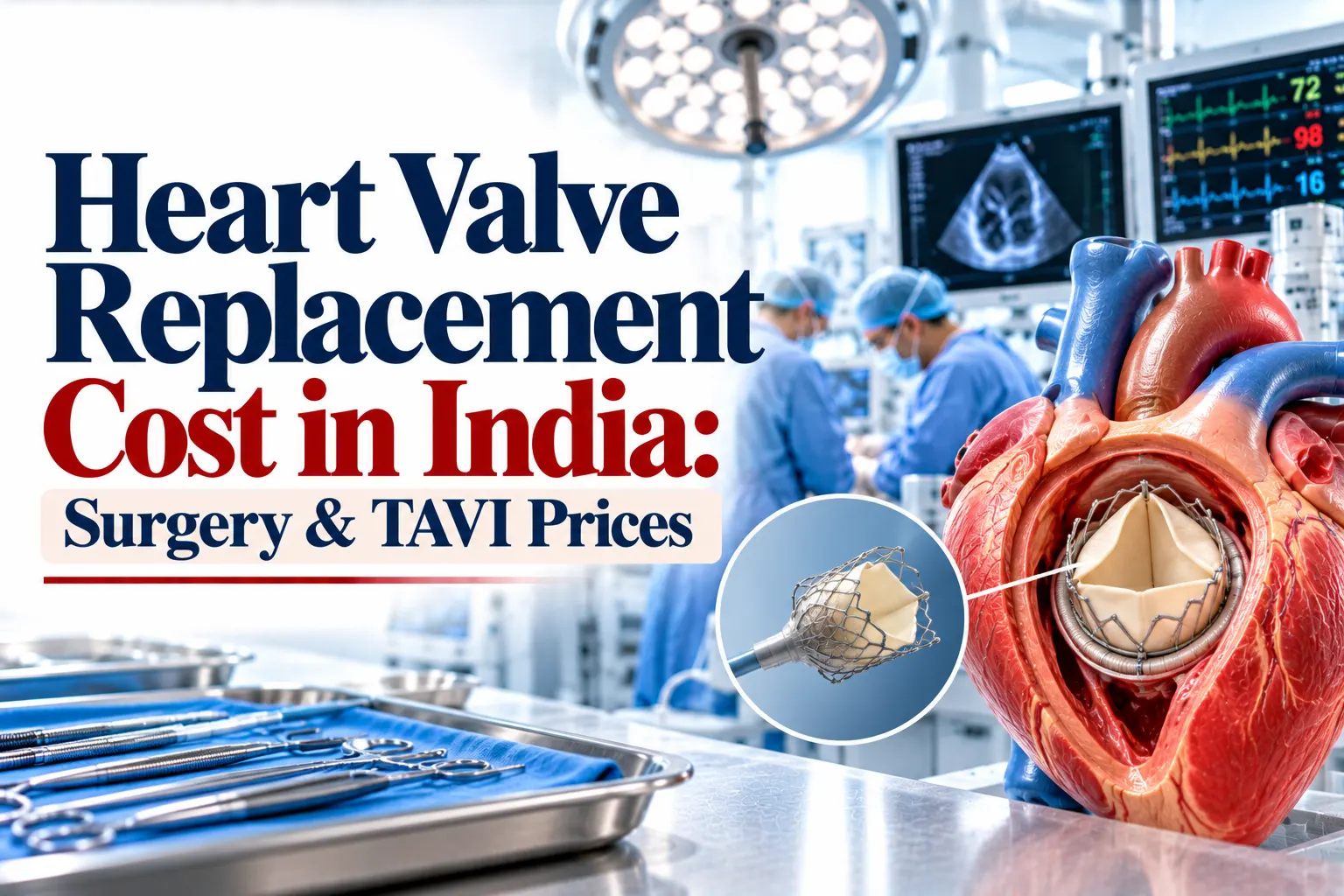
Heart Valve Replacement Cost in India: A Complete Price Guide
The heart valve replacement cost in India depends on the type of valve, surgical technique, hospital, city, and patient's medical condition. Conventional open-heart valve replacement may cost approximately ₹2 lakh to ₹6 lakh at many private hospitals, while transcatheter aortic valve implantation (TAVI) can cost considerably more. These figures are indicative estimates, not confirmed quotations from individual hospitals.
Patients researching heart valve treatment options in India should understand what each procedure involves, which expenses a hospital package covers, and how to compare treatment plans before making a decision. The most suitable option depends on a cardiologist's assessment, not cost alone.
Key Takeaways
- Heart valve replacement cost in India: Approximately ₹2 lakh–₹6 lakh for conventional surgery, depending on the hospital and clinical requirements.
- TAVI cost in India: Often approximately ₹15 lakh–₹30 lakh, depending on the valve device, hospital, and case complexity.
- Mechanical valves: Usually offer greater durability but generally require lifelong anticoagulation.
- Biological valves: May avoid lifelong anticoagulation solely because of the valve, but can wear out over time.
- Additional expenses: Diagnostic tests, ICU care, medicines, rehabilitation, and treatment of complications can increase the total bill.
- Best next step: Obtain a written, itemised estimate after the treating team reviews the patient's medical reports.
What Is Heart Valve Replacement Surgery?
Heart valve replacement is a procedure in which a damaged heart valve is replaced with a mechanical or biological valve to restore effective blood flow. It may be recommended when a valve becomes severely narrowed or fails to close properly and repair is unsuitable.
The heart has four valves: aortic, mitral, tricuspid, and pulmonary. The aortic and mitral valves are commonly involved in adult valve replacement procedures.
Common conditions that may require treatment include:
- Aortic stenosis: Narrowing of the aortic valve that restricts blood flow.
- Mitral regurgitation: Leakage of blood backwards through the mitral valve.
- Mitral stenosis: Narrowing of the mitral valve.
- Severe valve damage: Damage caused by infection, congenital abnormalities, degeneration, or other cardiac conditions.
Not every patient with valve disease needs replacement surgery. Medication may help control symptoms in selected cases, while valve repair or a catheter-based procedure may be appropriate for others.
What Is the Heart Valve Replacement Cost in India?
The heart valve replacement cost in India generally varies according to the procedure, valve material, hospital facilities, and complexity of the operation. A straightforward single-valve replacement usually costs less than double-valve surgery or a procedure combined with coronary artery bypass grafting.
Estimated Heart Valve Surgery Cost in India
| Type of heart valve procedure | Estimated cost in India (INR) | Approx. cost in USD |
|---|---|---|
| Single mechanical valve replacement | ₹2 lakh–₹4 lakh | 2,080–4,160 |
| Single biological valve replacement | ₹2.5 lakh–₹5 lakh | 2,600–5,200 |
| Double valve replacement | ₹3.5 lakh–₹7 lakh | 3,640–7,290 |
| Minimally invasive valve surgery | ₹3 lakh–₹6 lakh | 3,120–6,240 |
| TAVI/TAVR | ₹15 lakh–₹30 lakh | 15,600–31,200 |
Important: These are broad planning estimates, not verified current tariffs or guaranteed hospital package prices. Actual charges may fall outside these ranges. Minimally invasive surgery costs vary considerably, and TAVI pricing depends heavily on the valve device and clinical requirements.
Sources and references: Published Indian study on valve replacement expenditure; Apollo Hospitals — TAVI procedure and cost; TAVI cost information in India. The published expenditure study uses historical data and should not be treated as a current price list.
Why Do Hospital Quotations Differ?
Two hospitals can quote different prices for the same named procedure because their packages may include different services. One quotation might include the replacement valve, ICU stay, and routine medicines, while another may list these separately.
Before comparing prices, confirm:
- Whether the valve implant is included.
- The number of ICU and general ward days covered.
- Whether pre-operative investigations are included.
- The surgeon's, anaesthetist's, and operating theatre fees.
- Whether blood products, medicines, and consumables are included.
- How complications or a longer hospital stay will be billed.
A lower initial quotation is not necessarily the lower final cost if essential services are excluded.
Which Factors Affect the Cost of Valve Replacement Surgery in India?
Several medical and administrative factors determine the final bill.
1. Type of Replacement Valve
Mechanical valves and biological valves have different purchase costs, maintenance requirements, and expected durability. The appropriate choice depends on age, lifestyle, bleeding risk, other medical conditions, and the ability to maintain long-term follow-up.
2. Number of Valves Replaced
Replacing two valves generally involves a more complex operation than replacing one. The duration of surgery, monitoring requirements, and recovery plan can all affect expenses.
3. Surgical Technique
Traditional open-heart surgery, minimally invasive surgery, and catheter-based valve implantation involve different equipment, staffing, and hospital resources.
4. Hospital and City
Costs may differ between government hospitals, charitable institutions, and private tertiary-care centres. Room category, specialist fees, location, and hospital package policies also affect the total.
5. Patient's Health
Patients with kidney disease, diabetes, lung disease, previous cardiac surgery, or other significant conditions may need additional investigations, monitoring, or treatment.
6. Length of Hospital Stay
A longer ICU stay or an unexpected complication can increase the bill. Ask the hospital how additional days are charged and whether the package includes a defined period of post-operative care.
What Are the Different Types of Heart Valve Replacement Procedures?
Choosing a procedure requires an assessment of the damaged valve, the severity of the disease, and the patient's overall health.
Open-Heart Valve Replacement
Traditional valve replacement involves accessing the heart surgically, often using a heart-lung bypass machine while the damaged valve is replaced.
Advantages
- Established treatment for many types of valve disease.
- Suitable for a wide range of complex valve conditions.
- Can sometimes be combined with other cardiac procedures.
Considerations
- Requires surgery and anaesthesia.
- Usually involves a longer hospital stay than an uncomplicated catheter-based procedure.
- Recovery may take several weeks or months.
Minimally Invasive Valve Surgery
This approach uses smaller surgical incisions in selected patients. It is not suitable for every valve condition, and availability depends on the surgical team and hospital facilities.
Advantages
- Smaller incision in suitable cases.
- May reduce surgical trauma for selected patients.
Considerations
- Eligibility depends on the valve problem and anatomy.
- Specialised expertise and equipment may affect cost.
- A smaller incision does not eliminate the risks of cardiac surgery.
TAVI or TAVR
Transcatheter aortic valve implantation (TAVI), also called transcatheter aortic valve replacement (TAVR), places a replacement valve using a catheter rather than conventional open-heart surgery. It is primarily used for appropriately selected patients with aortic stenosis.
Advantages
- Does not usually require opening the chest through a traditional sternotomy.
- Often allows a shorter hospital stay.
- Can be appropriate for selected patients for whom conventional surgery carries substantial risk.
Considerations
- The implanted valve and specialised procedure can make it expensive.
- It is not suitable for every patient or every type of valve disease.
- The heart team must assess anatomy, procedural risks, expected benefits, and long-term treatment needs.
TAVI should not be assumed to be better than open-heart surgery for every patient. The appropriate procedure depends on individual clinical circumstances and specialist assessment.
Mechanical vs Biological Heart Valve: Which Is Better?
There is no single best valve for every patient. Mechanical valves are durable, whereas biological valves are made from treated human or animal tissue and may eventually need replacement.
| Feature | Mechanical valve | Biological valve |
|---|---|---|
| Material | Durable manufactured materials | Treated biological tissue |
| Durability | Generally longer-lasting | May wear out over time |
| Blood-thinning treatment | Usually lifelong anticoagulation | Depends on the patient's circumstances and treatment plan |
| Monitoring | Regular anticoagulation monitoring is required | Follow-up remains necessary |
| Cost | Depends on valve model and package | Often higher for some devices |
| Main consideration | Long-term medication and bleeding risk | Possibility of future valve deterioration |
The choice should consider the patient's age, preferences, pregnancy plans where relevant, bleeding risk, lifestyle, and ability to attend follow-up appointments. Biological valves do not automatically mean that a patient will never need anticoagulant medication.
Which Hospitals in India Can Be Considered for Heart Valve Surgery?
When comparing hospitals, assess the cardiac surgery department, the treating surgeon's experience with the specific procedure, intensive care facilities, and access to emergency cardiac support. Hospital reputation alone is not enough to determine suitability.
The following hospitals appear in Healthroop's hospital directory and list cardiac or heart-related services.
| Hospital | City or headquarters | What to assess |
|---|---|---|
| Apollo Hospitals | Chennai (headquarters) | Cardiac sciences and the specific treating centre |
| Fortis Healthcare | Gurugram (headquarters) | Cardiac surgery services and surgeon experience |
| Medanta – The Medicity | Gurugram | Heart Institute and valve surgery expertise |
| Narayana Health | Bengaluru (headquarters) | Cardiac surgery facilities and package details |
| Manipal Hospitals | Bengaluru (headquarters) | Cardiac sciences and post-operative support |
| Max Healthcare | New Delhi (headquarters) | Cardiac sciences and the relevant hospital branch |
How to Choose the Best Valve Surgeon in India
Searching for the best valve surgeon India can help you identify potential specialists, but the decision should be based on qualifications, relevant experience, and the patient's individual needs.
Ask the surgeon or hospital:
- How frequently does the surgeon perform the proposed valve procedure?
- Does the surgeon routinely manage the specific valve and condition involved?
- Is a repair option possible, or is replacement necessary?
- What are the expected benefits and major risks in this particular case?
- Which valve type is recommended, and why?
- What follow-up and rehabilitation will be required?
- Can the hospital provide an itemised written estimate?
For TAVI, ask about the experience of the complete multidisciplinary heart team, not just one clinician.
What Is Included in a Heart Valve Surgery Package?
A comprehensive quotation may include several of the following:
- Pre-operative assessment and selected investigations.
- Surgeon and anaesthetist fees.
- Replacement valve and related surgical consumables.
- Operating theatre and equipment charges.
- ICU and ward accommodation for the specified period.
- Medicines and routine monitoring during admission.
- Discharge instructions and scheduled follow-up.
Not every package includes all these items. Travel, accommodation, additional diagnostic tests, extended admission, rehabilitation, and treatment of complications may be billed separately.
Practical tip: Request a written quotation that clearly separates included services, excluded services, additional-day charges, and possible costs if the treatment plan changes.
How Can Patients Manage Heart Valve Replacement Expenses?
Patients can take several practical steps to understand and plan for treatment expenses without compromising medical suitability.
- Obtain a specialist assessment. Confirm which valve is affected and whether repair, replacement, or TAVI is appropriate.
- Compare itemised quotations. Ask at least two suitable hospitals for estimates based on the same procedure and valve type.
- Check insurance coverage. Confirm pre-authorisation requirements, room limits, co-payments, exclusions, and the applicable hospital network.
- Ask about government assistance. Eligibility for schemes such as Ayushman Bharat PM-JAY depends on applicable rules, beneficiary status, and hospital empanelment. Confirm the relevant package and coverage before admission.
- Plan for recovery. Include travel, accommodation, follow-up appointments, medicines, and possible time away from work in the budget.
- Keep medical records organised. Recent echocardiograms, angiography reports where relevant, prescriptions, and discharge summaries can help specialists assess the case.
Do not delay urgent medical evaluation solely to compare prices. Severe breathlessness at rest, fainting, chest pain, or sudden worsening of symptoms warrants prompt medical attention.
What Happens After Heart Valve Replacement Surgery?
Recovery depends on the procedure, the patient's health, and whether complications occur. After conventional open-heart surgery, returning to normal activities may take several weeks, with fuller recovery often taking a few months. Selected TAVI patients may recover more quickly, but individual timelines vary.
Post-operative care commonly includes:
- Taking prescribed medication exactly as directed.
- Attending scheduled cardiology appointments.
- Monitoring the surgical wound, if applicable.
- Following activity restrictions and rehabilitation advice.
- Keeping up with recommended echocardiograms and other tests.
- Monitoring anticoagulation when prescribed.
Patients with mechanical valves usually need lifelong anticoagulant treatment and regular INR monitoring. Never stop or change blood-thinning medication without the treating clinician's advice.
How Healthroop Can Help With Hospital Comparisons
Healthroop provides a hospital directory that patients and families can use as a starting point when researching treatment options in India. The goal is to help people identify relevant hospitals and seek information before arranging consultations.
- Review hospitals that list cardiac sciences or cardiac surgery services.
- Compare available treatment options and written estimates.
- Ask about the specialist's experience with the proposed procedure.
- Confirm the replacement valve, package inclusions, and exclusions.
- Check insurance or eligible assistance options with the hospital.
- Arrange a consultation to clarify the recommended treatment plan.
Hospital selection should always be guided by clinical suitability, transparent pricing, and the treating team's assessment.
Medical and pricing disclaimer: The prices in this article are indicative estimates compiled using previously published information, including historical data from the previous year where available. They are not live hospital tariffs and may not reflect current prices in 2026. Actual costs depend on the hospital, valve device, procedure, clinical complexity, and package inclusions. For exact and updated pricing, contact the hospital directly or email Healthroop at info@healthroop.com. This article is for general educational purposes and does not replace consultation with a qualified cardiologist or cardiac surgeon.
Frequently Asked Questions
Answers on heart valve replacement cost, TAVI, and planning care in India.
The heart valve replacement cost in India may range from approximately ₹2 lakh to ₹6 lakh for conventional surgery, depending on the hospital, valve type, and patient's condition. Double-valve procedures and complex cases can cost more. Request a written quotation to confirm the current package price and exclusions.
The tavi cost india patients may encounter is approximately ₹15 lakh to ₹30 lakh, although prices vary by hospital, valve device, and clinical complexity. TAVI is a catheter-based procedure primarily used for selected patients with aortic stenosis. Confirm the implant cost, ICU charges, and follow-up expenses before admission.
The main factors include the type and number of valves replaced, mechanical or biological valve selection, surgical technique, hospital location, surgeon fees, ICU stay, and existing medical conditions. Additional treatment or complications may increase the final bill. Comparing itemised quotations helps patients understand differences between hospital packages.
Neither option is best for everyone. Mechanical valves are generally more durable but usually require lifelong anticoagulant medication. Biological valves may deteriorate over time and require another intervention, but their medication requirements differ. The surgeon considers age, bleeding risk, lifestyle, medical history, and patient preferences before recommending a valve.
TAVI may be suitable for selected patients with severe aortic stenosis, particularly when their clinical circumstances favour a catheter-based approach. Open-heart surgery remains appropriate for many patients and valve conditions. The heart team evaluates anatomy, age, surgical risk, expected outcomes, and other cardiac problems before recommending either treatment.
Recovery depends on the procedure and the patient's general health. Many patients need several weeks to resume routine activities after open-heart surgery, and fuller recovery may take two to three months. Recovery after uncomplicated TAVI can be quicker. Follow the treating team's advice about activity, medicines, and follow-up.
Many health insurance policies cover medically necessary heart valve replacement, subject to policy conditions, waiting periods, exclusions, co-payments, and pre-authorisation requirements. Coverage differs between insurers and plans. Ask your insurer and the hospital's insurance desk to confirm the approved treatment, eligible package, and potential out-of-pocket expenses before admission.
To identify the best valve surgeon India can offer for your needs, review relevant qualifications, experience with your specific procedure, hospital facilities, and follow-up arrangements. Ask about the benefits and risks of the proposed treatment and whether repair is possible. Seek another specialist opinion if you remain uncertain.
Some patients can undergo catheter-based valve replacement, such as TAVI, without conventional open-heart surgery. However, this approach is mainly used for selected aortic valve conditions and is not appropriate for every patient. A cardiologist and cardiac surgery team must assess the valve anatomy, medical history, and procedural risks.
Arrange a consultation with a qualified cardiac specialist and share the available echocardiography reports, medical history, and prescriptions. Ask the hospital for a written estimate covering the valve implant, surgery, ICU stay, medicines, and follow-up. Contact the hospital billing team for current prices rather than relying solely on online estimates.
