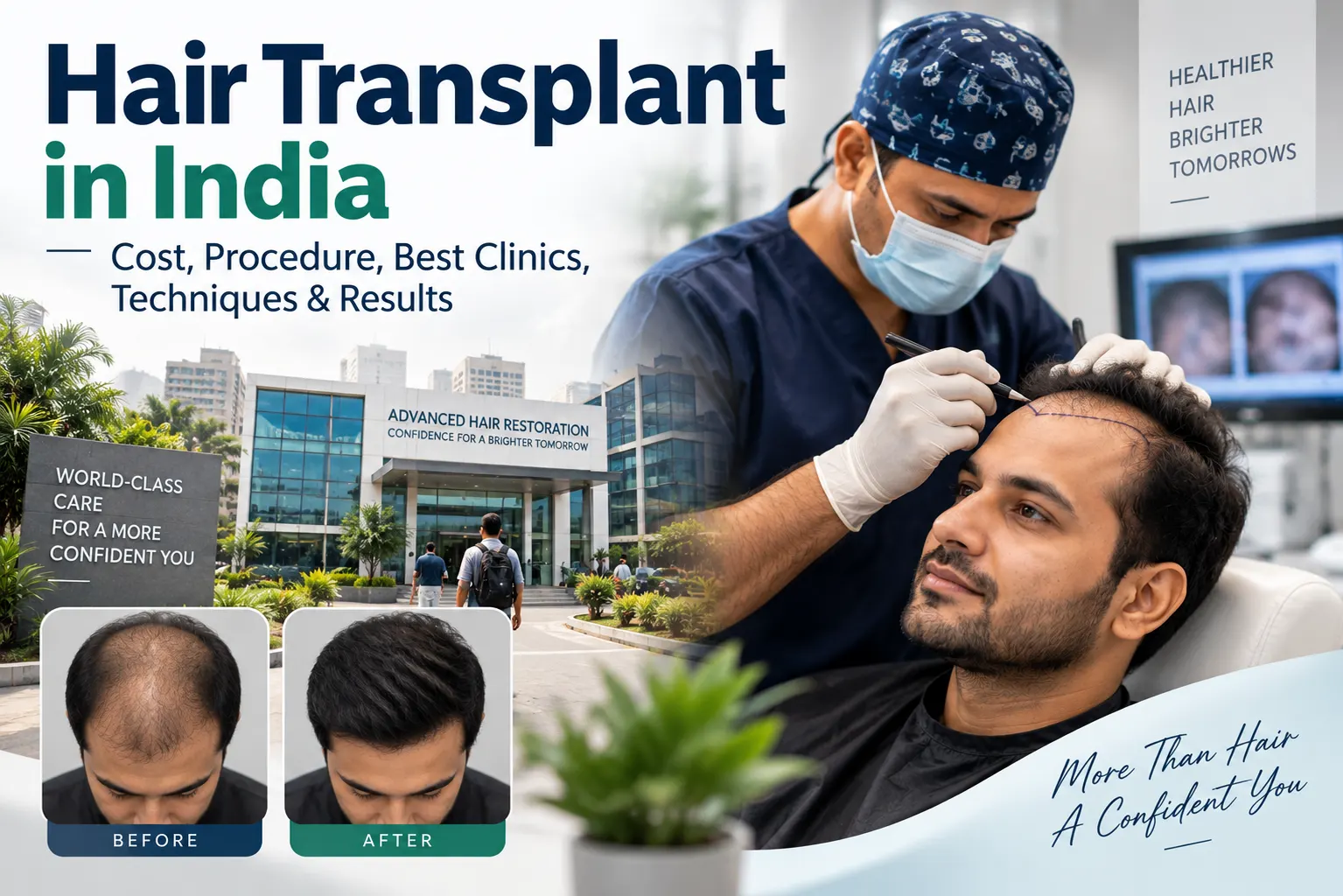
Hair Transplant in India: Cost, Procedure, Best Clinics, Techniques & Results
Hair loss can be caused by genetics, hormonal changes, medical conditions, ageing, nutritional problems, or other factors. Before considering surgery, it is important to identify the reason for hair loss because not every type of hair loss requires a transplant.
A Hair Transplant in India is a surgical procedure in which healthy hair follicles are taken from a donor area, usually the back or sides of the scalp, and placed into areas affected by thinning or baldness. Modern transplantation focuses on placing individual follicular units in a pattern that follows natural hair growth rather than creating the artificial "plug" appearance associated with older techniques.
India has become a popular destination for hair restoration because patients can access experienced surgeons, multiple transplantation techniques, modern medical facilities and comparatively competitive treatment costs. However, the lowest price should not be the main deciding factor. Surgeon involvement, diagnosis, donor-hair management, graft handling, hairline design and long-term planning have a direct influence on the final result.
Hair Transplant in India at a Glance
| Factor | What Patients Should Know |
|---|---|
| Procedure | Surgical hair restoration |
| Common techniques | FUE, FUT and DHI/implanter-based approaches |
| Donor area | Usually the back or sides of the scalp |
| Anaesthesia | Usually local anaesthesia |
| Typical procedure time | Around 4–8 hours, depending on graft numbers and technique |
| Recovery | Most routine activities can resume within several days, but complete growth takes months |
| Visible growth | Commonly develops over several months |
| Final assessment | Often around 9–12 months |
| Cost | Depends on grafts, technique, surgeon, clinic and city |
| Main goal | Natural-looking coverage using available donor hair |
The American Academy of Dermatology notes that hair transplant surgery commonly takes four to eight hours, while larger procedures may require additional operating time. Most patients see meaningful results several months later rather than immediately after surgery.
What Is a Hair Transplant?
A hair transplant moves hair follicles from a donor area to a recipient area where hair is thinning or absent. The transplanted follicles continue to grow hair after successful transplantation because donor hair is generally selected from areas that are more resistant to pattern hair loss.
A transplant does not create new hair follicles. It redistributes the patient's existing donor hair. This is why donor supply is one of the most important factors when planning surgery.
How Does Hair Transplant Surgery Work?
The process generally involves four stages:
- Evaluating the cause and pattern of hair loss.
- Selecting and harvesting suitable donor follicles.
- Preparing the recipient area and designing the hairline.
- Implanting the grafts in the planned direction, angle and density.
The surgeon must balance the immediate cosmetic objective with future hair loss. Using too many donor grafts during one session can leave insufficient reserves for later treatment.
Who Is a Good Candidate for Hair Transplant?
A suitable candidate generally has:
- Stable or reasonably predictable hair loss.
- Adequate donor hair.
- A recipient area capable of supporting transplanted follicles.
- Realistic expectations about density and coverage.
- No untreated scalp condition that could compromise the procedure.
The AAD explains that candidates need sufficient healthy hair that can be transplanted and the ability to grow hair in the thinning recipient area. A scalp examination, and sometimes additional testing, may be required to identify the cause of hair loss.
Who May Not Be Suitable for Hair Transplant?
A transplant may not be appropriate when:
- Hair loss is still rapidly progressing.
- The donor area has insufficient density.
- The cause of hair loss has not been diagnosed.
- An active scalp disorder needs treatment first.
- Expectations are unrealistic.
- The available donor supply cannot provide adequate coverage.
Younger patients with rapidly progressing hair loss may sometimes be advised to stabilize their condition before surgery.
Is Hair Transplant Permanent?
Transplanted hair can provide long-lasting or permanent growth when appropriate donor follicles are selected and the procedure is performed correctly. However, transplantation does not stop non-transplanted hair from becoming thinner.
For this reason, a doctor may recommend medical treatment alongside surgery to help preserve existing hair.
Why Choose India for Hair Transplant?
India offers several advantages for patients considering surgical hair restoration.
Experienced Hair Transplant Surgeons
India has dermatologists, plastic surgeons and hair-restoration specialists performing FUE, FUT and other transplantation procedures. Patients should evaluate a surgeon based on training, hands-on experience, surgical involvement and results in cases similar to their own.
Advanced Hair Restoration Techniques
Clinics in major Indian cities offer FUE, FUT, DHI-style implantation, Sapphire FUE and robotic-assisted systems. Technology should be viewed as a tool rather than a guarantee of better results.
Affordable Hair Transplant Cost
The hair transplant cost in India varies substantially according to graft requirements, technique, clinic and surgeon. Publicly listed prices from Indian providers show that treatment can range from tens of thousands of rupees for smaller procedures to well above ₹1 lakh for larger sessions.
International-Standard Medical Facilities
Patients travelling from overseas should check whether the facility follows appropriate sterilization, infection-control and surgical protocols. The quality of the operating team matters more than the appearance of the clinic alone.
Treatment Options for International Patients
International patients may receive remote consultations, assistance with appointments and guidance regarding treatment planning. They should still have a proper medical assessment before surgery.
Post-Procedure Care and Follow-Up
Aftercare is an important part of transplantation. Patients should know who will handle follow-up consultations, wound concerns and questions after returning home.
Hair Transplant Techniques Available in India
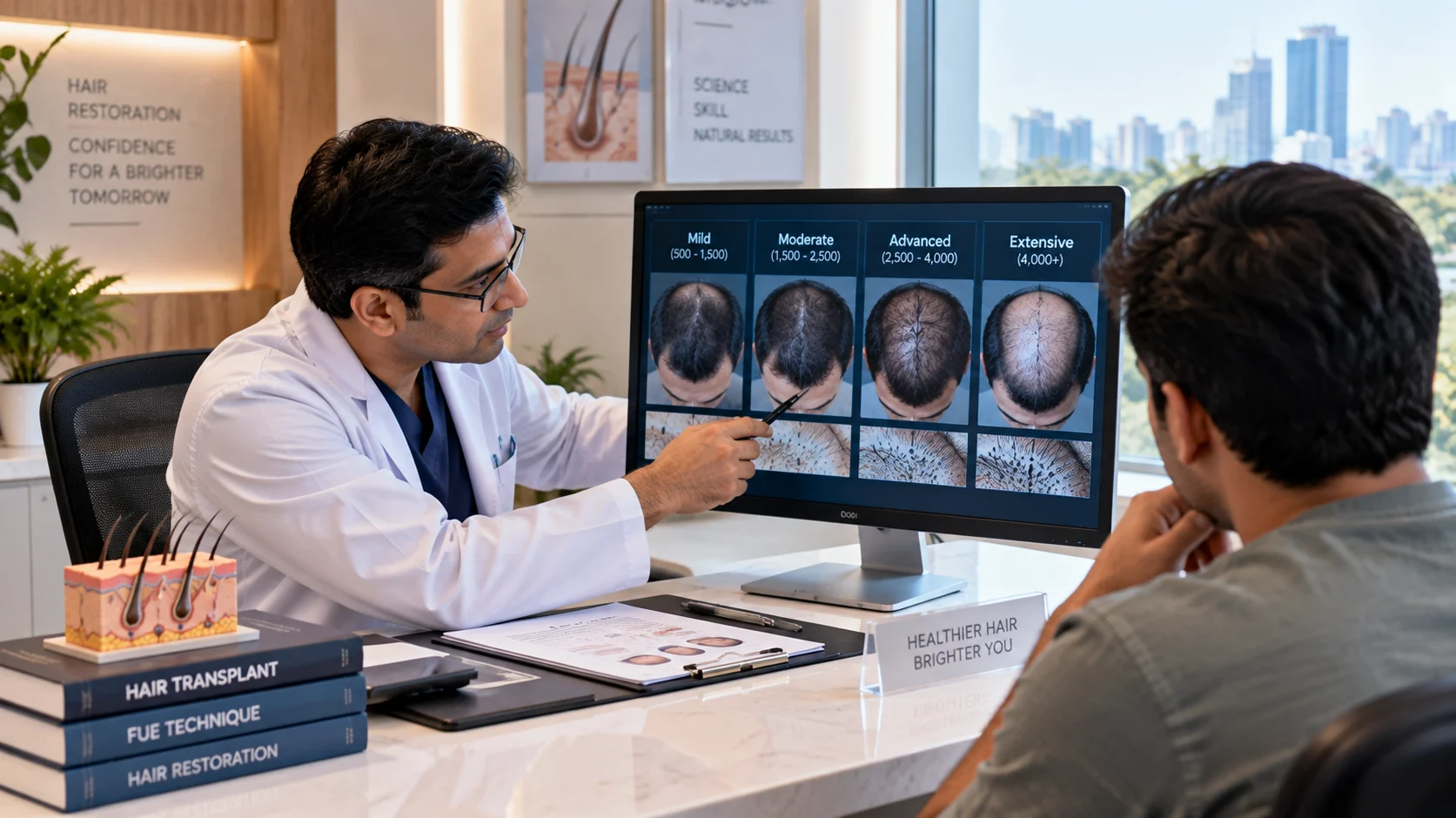
FUE Hair Transplant
FUE hair transplant in India involves extracting individual follicular units from the donor area using a small punch. The grafts are then prepared and implanted into recipient sites.
How FUE Works
The donor area is usually trimmed and numbed with local anaesthesia. Individual follicular units are extracted, sorted and kept under controlled conditions before implantation.
Benefits of FUE
- No linear strip scar.
- Suitable for patients who prefer shorter hairstyles.
- Individual graft selection is possible.
- Generally less invasive than strip harvesting.
- Donor sites heal as small extraction wounds.
FUE does not mean "scarless." The International Society of Hair Restoration Surgery states that FUE produces small round scars, although they may be difficult to see when properly performed.
FUE Hair Transplant Cost in India
The FUE hair transplant cost in India depends mainly on the number of grafts, surgeon, clinic and location. Publicly listed Indian pricing can vary widely, so a consultation-based estimate is more useful than a single national figure.
FUE Recovery Time
Many patients can return to light work within several days. Swelling, redness, small crusts and temporary sensitivity may occur. Exercise and strenuous activities should be resumed only according to the surgeon's instructions.
FUT Hair Transplant
FUT, or Follicular Unit Transplantation, involves removing a strip of hair-bearing scalp from the donor area and separating it into individual follicular units.
How FUT Works
The donor wound is closed with sutures or staples. The harvested strip is dissected into grafts, which are subsequently implanted into the recipient area.
Benefits and Limitations
Benefits:
- Can provide a substantial number of grafts in one session.
- Useful for selected patients requiring larger graft numbers.
- Does not involve widespread individual extraction.
Limitations:
- Leaves a linear donor scar.
- Requires wound closure.
- May be less suitable for people who regularly wear very short hairstyles.
FUT Hair Transplant Cost in India
FUT may be less expensive than some FUE procedures, although pricing depends on the clinic and surgeon. The technique should be selected because it suits the patient's donor characteristics, not simply because it costs less.
DHI Hair Transplant
DHI generally refers to implantation using a specialized implanter device after follicular-unit extraction.
How DHI Works
Grafts are harvested and then loaded into an implanter. The surgeon uses the device to place grafts into the recipient area while controlling direction and positioning.
Benefits of DHI
DHI may provide precise placement and can be useful for selected cases, particularly where controlled implantation is important. It is not automatically better than FUE simply because an implanter is used.
DHI Hair Transplant Cost in India
The hair transplant cost India patients are quoted for DHI can be higher than conventional FUE at some clinics because of the equipment, technique and level of surgical service involved.
Sapphire FUE and Other Advanced Techniques
Sapphire FUE
Sapphire FUE uses sapphire blades for recipient-site creation. Marketing names vary considerably between clinics, so patients should ask exactly what surgical steps are being performed.
Robotic Hair Transplant
Robotic systems can assist with donor-graft identification and extraction. They do not replace the need for an experienced surgeon. ISHRS specifically cautions against claims that a machine can independently perform every part of hair restoration surgery.
Which Advanced Technique Is Right for You?
There is no universally superior technique. The appropriate approach depends on:
- Donor density.
- Hair characteristics.
- Degree and pattern of hair loss.
- Number of grafts required.
- Previous transplant history.
- Desired hairstyle.
- Surgeon assessment.
FUE vs FUT vs DHI: Which Hair Transplant Technique Is Best?
| Feature | FUE | FUT | DHI |
|---|---|---|---|
| Donor harvesting | Individual grafts | Strip harvesting | Usually individual grafts |
| Linear scar | No | Yes | Usually no |
| Short hairstyle | Generally suitable | May expose linear scar | Generally suitable |
| Large sessions | Possible | Can be useful | Depends on case |
| Recovery | Usually relatively quick | Wound healing required | Similar to FUE harvesting |
| Best choice | Case-dependent | Selected donor patterns | Selected implantation needs |
Is FUE Better Than FUT?
Not automatically. FUE is attractive because it avoids a linear strip scar, but FUT remains useful for selected patients. The ISHRS recognizes both as established donor-harvesting methods.
Is DHI Worth the Extra Cost?
Only when the implantation method provides a meaningful benefit for the patient's treatment plan. A higher price does not guarantee greater density or better long-term survival.
How Does a Doctor Choose the Right Technique?
A qualified surgeon should examine the donor area, assess hair loss, estimate graft requirements and discuss the expected result before recommending a technique.
Hair Transplant Cost in India
The hair transplant cost in India can vary considerably. Publicly available pricing from Indian providers shows different ranges depending on graft numbers and technique. For example, Pristyn Care currently publishes procedure ranges from approximately ₹30,000 for smaller graft sessions to ₹1.45 lakh for 3,500–4,000 grafts, while other clinic listings show different per-graft pricing.
Average Hair Transplant Cost in India
For planning purposes, patients may encounter quotes ranging from approximately ₹40,000 to ₹1.5 lakh or more. Complex cases, premium clinics, experienced surgeons and larger graft requirements can increase the final cost.
Hair Transplant Cost Per Graft in India
The hair transplant cost per graft in India is not standardized. Published rates can range from around ₹20 per graft to considerably higher figures depending on the clinic, surgeon and technique.
Hair Transplant Cost by Number of Grafts
| Approx. Grafts | Indicative Cost Range |
|---|---|
| 1,000 | ₹30,000–₹50,000 |
| 1,500 | ₹40,000–₹70,000 |
| 2,000 | ₹55,000–₹90,000 |
| 2,500 | ₹70,000–₹1,05,000 |
| 3,000 | ₹90,000–₹1,20,000 |
| 3,500 | ₹95,000–₹1,35,000 |
| 4,000 | ₹1,20,000–₹1,50,000+ |
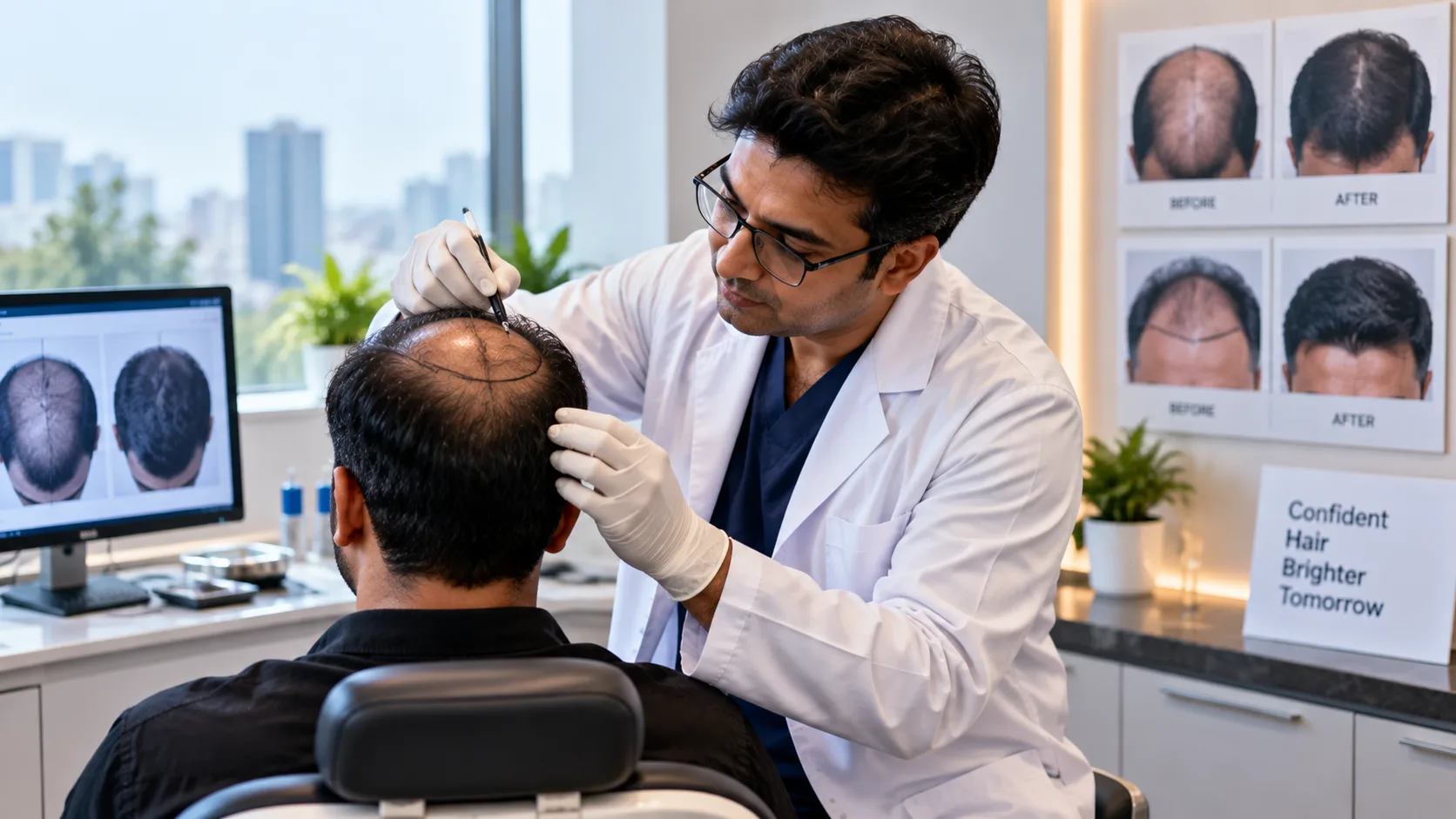
Resource: These figures are based on publicly available Indian hair-transplant pricing references, including published graft-based estimates from Pristyn Care and clinic pricing information reviewed during competitor research.
Price disclaimer: The table is provided only as an indicative reference based on previous-year pricing data and publicly available estimates. Actual hair transplant in India cost can change according to the clinic, surgeon, technique, graft requirement, city, medical assessment and additional services. For exact and current pricing, patients should contact the clinic directly by phone or email and obtain a personalized quotation.
What Factors Affect Hair Transplant Cost?
The final quotation can depend on:
- Number of grafts.
- FUE, FUT or DHI technique.
- Surgeon experience.
- Clinic location.
- Degree of hair loss.
- Donor-area quality.
- Number of sessions.
- Anaesthesia and operating-room charges.
- Medication and follow-up care.
- Whether additional treatments are recommended.
What Is Included in a Hair Transplant Package?
Ask whether the package includes:
- Consultation.
- Hair-loss assessment.
- Graft extraction.
- Graft preparation.
- Implantation.
- Medicines.
- Follow-up visits.
- Post-operative instructions.
Do not assume that every quoted price includes the same services.
How Many Grafts Do You Need for a Hair Transplant?
The required number of grafts cannot be accurately determined from a general online calculator. A surgeon needs to assess the extent of hair loss, donor density, hair calibre and desired coverage.
1,000 Grafts Hair Transplant
Usually considered for smaller areas such as limited temple or hairline work.
2,000 Grafts Hair Transplant
May be suitable for moderate hairline or frontal restoration in selected patients.
3,000 Grafts Hair Transplant
Often considered for more extensive frontal or mid-scalp coverage.
4,000 Grafts Hair Transplant
Can be considered for broader areas, depending on donor availability.
5,000+ Grafts Hair Transplant
Large graft requirements require careful donor planning. A high graft number is not automatically better and may not be appropriate for every patient.
How Does a Surgeon Calculate the Number of Grafts?
The calculation considers the size of the bald area, existing hair density, donor supply, hair characteristics, desired density and the possibility of future hair loss.
Hair Transplant Procedure in India: Step-by-Step
- Step 1: Initial Consultation. The surgeon reviews your medical and hair-loss history and discusses expectations.
- Step 2: Scalp and Hair Loss Assessment. The cause and pattern of hair loss are assessed. In selected patients, further diagnostic testing may be required.
- Step 3: Treatment Planning and Graft Estimation. The doctor estimates the number of grafts and discusses the appropriate donor-harvesting method.
- Step 4: Hairline Design. The hairline should be designed according to age, facial proportions, existing hair and future hair-loss risk.
- Step 5: Donor Area Preparation. The donor region is prepared and local anaesthesia is administered.
- Step 6: Graft Extraction. FUE extracts individual follicular units, while FUT removes a strip of donor tissue.
- Step 7: Graft Preparation. The harvested grafts are inspected and prepared for implantation.
- Step 8: Recipient Area Preparation. Small recipient sites are created according to the planned direction, angle and density.
- Step 9: Graft Implantation. The grafts are carefully placed into the recipient sites.
- Step 10: Post-Procedure Instructions. The patient receives instructions for washing, sleeping position, medications, activity restrictions and follow-up.
How Long Does Hair Transplant Surgery Take?
A typical procedure may take around four to eight hours, although larger sessions can require more time.
| Graft Requirement | Approximate Procedure Time* |
|---|---|
| 1,000 grafts | 4–5 hours |
| 2,000 grafts | 5–7 hours |
| 3,000 grafts | 7–9 hours |
| 4,000 grafts | 8–10+ hours |
*Actual duration varies according to technique, surgical team, graft characteristics and clinic protocol.
Hair Transplant Recovery and Results
Hair Transplant Recovery Timeline
- First few days: Redness, swelling, tenderness and small crusts can occur.
- First 1–2 weeks: The recipient area gradually heals. Gentle washing is generally introduced according to the clinic's instructions.
- Weeks 2–8: Temporary shedding of transplanted hair can occur. This is commonly known as shock loss or shedding and does not necessarily mean the transplant has failed.
- Around 3 months: Early regrowth may begin.
- 6 months: Noticeable improvement is often visible.
- 9–12 months: Many patients can assess the majority of their result.
The AAD reports that transplanted hair commonly sheds between two and eight weeks after surgery and that visible results often appear between six and nine months, although some patients need up to 12 months.
Can You Return to Work After Hair Transplant?
Many people return to non-physical work within several days, but the exact timing depends on the procedure and individual recovery.
What Activities Should You Avoid During Recovery?
Your surgeon may advise temporarily avoiding:
- Heavy exercise.
- Swimming.
- Excessive sweating.
- Direct trauma to the recipient area.
- Scratching or picking crusts.
- Activities that increase the risk of infection or graft displacement.
Hair Transplant Success Rate in India
There is no single hair transplant success rate in India that applies to every clinic or patient.
Some clinics publicly advertise graft-survival figures around 90–95%, but such figures should not be interpreted as a guaranteed outcome for every patient.
What Determines Hair Transplant Success?
Important factors include:
- Correct diagnosis.
- Appropriate candidate selection.
- Donor-hair quality.
- Surgeon skill.
- Graft handling.
- Recipient-site design.
- Implantation technique.
- Post-operative care.
- Long-term management of existing hair.
Does FUE Have a High Success Rate?
FUE can produce good results when properly planned and performed. The method itself does not guarantee a particular survival rate.
How Does Surgeon Experience Affect Results?
Hair transplantation requires judgment in hairline design, donor management, graft extraction and placement. The AAD states that the result depends largely on the surgeon selected.
Why Graft Survival Matters
A graft contains one or more hair follicles. Poor extraction, excessive handling, dehydration or inappropriate implantation can reduce the likelihood of successful growth.
Why Results Differ From Patient to Patient
Two patients receiving the same number of grafts can have very different visual results because hair thickness, colour, donor density, scalp characteristics and existing hair vary.
Hair Transplant Before and After: What Results Can You Expect?
Before Hair Transplant
The surgeon evaluates hair loss, donor density and the desired restoration pattern.
Immediately After Surgery
Small scabs and redness are normal. The recipient area may look significantly different from the final result.
3 Months After Hair Transplant
New growth may just be starting. Some patients still appear thinner at this stage.
6 Months After Hair Transplant
Hair density and shaft thickness generally become more noticeable.
9–12 Months After Hair Transplant
The result is usually much easier to assess. Hair can continue to mature beyond this period.
Before-and-after photographs are useful when comparing clinics, but ask for cases with a similar degree and pattern of hair loss rather than relying only on selected promotional photographs.
How to Choose the Best Hair Transplant Clinic in India
There is no single best hair transplant clinic in India for every patient.
Before booking surgery, check:
- Who is the operating surgeon?
- What are the surgeon's qualifications and experience?
- How much of the procedure is performed or supervised by the doctor?
- Which technique is recommended and why?
- How many grafts are being proposed?
- Is the graft estimate medically justified?
- Can you see comparable before-and-after cases?
- What does the quotation include?
- What happens if additional treatment is required?
- What follow-up care is available?
The ISHRS recommends asking detailed questions about the surgeon, surgical options, personnel involved and possible risks rather than relying on advertising claims.
Best Cities in India for Hair Transplant
Hair Transplant in Delhi
Delhi has a large healthcare ecosystem with numerous dermatology, cosmetic surgery and hair-restoration clinics. Patients should compare individual surgeons rather than selecting a clinic solely because of its city.
Hair Transplant in Mumbai
Mumbai offers established hospitals and specialist cosmetic and dermatology practices. Prices can vary significantly between clinics.
Hair Transplant in Bangalore
Bangalore is another major destination for hair-restoration procedures, with options ranging from specialist clinics to larger healthcare networks.
Hair Transplant in Hyderabad
Hyderabad has numerous dermatology and hair-restoration providers and may offer a broad range of techniques.
Hair Transplant in Chennai
Chennai has established hospitals and specialist clinics with experience in cosmetic and reconstructive procedures.
Hair Transplant in Jaipur
Jaipur can be convenient for patients from Rajasthan and nearby regions. Compare surgeon experience, procedure quality and follow-up arrangements before selecting a clinic.
Hair Transplant in Ahmedabad
Ahmedabad has a strong medical ecosystem and several hair-restoration providers. Patients should compare treatment plans rather than choosing solely on advertised price.
India vs Turkey for Hair Transplant
India and Turkey are both popular medical-tourism destinations for hair restoration. The better choice depends on the individual patient rather than country alone.
| Factor | India | Turkey |
|---|---|---|
| Treatment availability | High | High |
| Major-city options | Numerous | Numerous |
| Cost | Often competitive | Often competitive |
| Travel for Indian patients | Easier | Requires international travel |
| Follow-up for Indian residents | Convenient | More difficult after returning |
| Technique options | FUE, FUT, DHI and others | FUE, DHI and others |
For Indian residents, treatment in India can simplify consultation, follow-up and management of any post-operative concerns.
Risks and Possible Side Effects of Hair Transplant
Hair transplantation is surgery and carries potential risks.
Possible effects include:
- Pain or tenderness.
- Swelling.
- Redness.
- Infection.
- Bleeding.
- Temporary numbness.
- Visible scarring.
- Poor graft growth.
- Uneven density.
- Unnatural hairline design.
- Donor-area thinning.
- Need for additional surgery.
The ISHRS emphasizes that both FUE and FUT produce scars, although the pattern and visibility differ.
How to Prepare for a Hair Transplant
Before surgery:
- Complete the recommended medical assessment.
- Tell the doctor about medicines and supplements.
- Follow instructions regarding medications that may affect bleeding.
- Avoid smoking if your surgeon advises you to do so.
- Arrange transportation if necessary.
- Wear comfortable clothing.
- Understand the expected recovery period.
- Confirm the total price and what it includes.
Do not start or stop medication without discussing it with your treating doctor.
What Happens After You Return Home?
International patients should have a written aftercare plan before travelling.
Keep copies of:
- Surgical records.
- Graft count.
- Medication instructions.
- Follow-up schedule.
- Emergency contact details.
- Clinic and surgeon information.
If significant swelling, persistent bleeding, fever, severe pain or other concerning symptoms develop, contact the treating medical team promptly.
Is Hair Transplant in India Worth It?
For an appropriately selected patient, hair transplantation can be an effective long-term method of restoring hair in areas affected by permanent hair loss. The decision should be based on diagnosis, donor availability, realistic expectations and surgeon expertise.
The most important question is not simply "How much does it cost?" It is "What treatment plan gives me the best long-term use of my donor hair?"
Why Choose HealthRoop for Your Hair Transplant Journey in India?
HealthRoop can help patients approach the treatment process with greater clarity by assisting with:
Hospital and Clinic Selection Support
Patients can receive guidance when comparing suitable hospitals and clinics.
Doctor Selection Assistance
The focus should be on matching the patient's hair-loss pattern and treatment needs with an appropriate specialist.
Treatment Cost Guidance
Patients can understand the factors that influence the quotation rather than relying on a generic advertised price.
International Patient Coordination
International patients may require assistance with consultations, appointments and treatment scheduling.
Travel and Accommodation Assistance
Planning accommodation and local travel can make the treatment journey easier for patients coming from another city or country.
Pre-Treatment and Post-Treatment Support
Patients can receive guidance before surgery and understand what follow-up arrangements need to be confirmed.
Personalized Treatment Planning
Every hair-loss case is different. The final technique and graft requirement should be determined after an appropriate medical assessment rather than selected from a standard package.
Final Thought
A successful Hair Transplant in India depends on much more than the number of grafts or the advertised price. The diagnosis, donor supply, surgeon's expertise, hairline planning, graft handling and long-term management of existing hair all contribute to the final appearance.
FUE is widely used because it avoids a linear strip scar, while FUT remains useful in selected cases. DHI and robotic-assisted methods can have a role for particular patients, but no technology can replace appropriate medical assessment and skilled surgical decision-making.
Before choosing among hair transplant clinics in India, compare the surgeon, proposed graft count, technique, expected outcome, total cost and aftercare. A careful consultation is the best starting point for deciding whether transplantation is appropriate for you. Patients who want a broader view of treatment options can also check HealthRoop's specialties page to see the departments and specialists available across partner hospitals.
Ready to explore your options? Share your case details with HealthRoop and get personalized clinic and cost guidance before you decide. Learn more at healthroop.com.
Key Takeaways
- Hair Transplant in India involves moving healthy donor follicles to areas affected by hair loss.
- FUE, FUT and DHI are different approaches and are not interchangeable for every patient.
- Hair transplant cost in India depends mainly on graft numbers, technique, surgeon, clinic and location.
- The number of grafts should be determined through a professional assessment.
- FUE does not mean completely scar-free surgery.
- Transplanted hair can be long-lasting, but existing non-transplanted hair may continue to thin.
- Visible growth usually takes several months, with final assessment commonly around 9–12 months.
- Surgeon experience and donor management are more important than simply choosing the latest-sounding technology.
- Before-and-after photographs should be compared using cases similar to your own.
- Always confirm current pricing directly with the clinic because published estimates can change.
Frequently Asked Questions
Answers on hair transplant cost, techniques and results in India.
The hair transplant in India cost can range from roughly ₹40,000 to ₹1.5 lakh or more, depending on graft numbers, technique, surgeon and clinic. Smaller procedures generally cost less, while large sessions and premium surgical services can cost more. A personalized consultation is necessary for an accurate quotation.
Hair transplantation is a surgical procedure and can be performed safely when appropriate patients are treated by qualified professionals in suitable clinical settings. Risks include infection, bleeding, scarring, poor growth and uneven results. Patients should verify the surgeon's credentials, surgical involvement and aftercare arrangements before proceeding.
There is no universally best technique. FUE is widely used and avoids a linear strip scar, FUT can be useful for selected patients needing substantial graft numbers, and DHI uses an implanter-based approach. The appropriate technique depends on donor quality, hair-loss pattern, graft requirements and the surgeon's assessment.
FUE is not automatically better than FUT. FUE produces small individual extraction scars, while FUT produces a linear donor scar. FUE may suit patients who prefer short hairstyles, whereas FUT can be appropriate in selected cases requiring efficient harvesting of larger numbers of grafts. The surgeon should recommend the method.
Graft requirements vary according to the size of the bald area, donor density, hair thickness, existing hair and desired coverage. Some patients need around 1,000 grafts for limited restoration, while extensive cases may require 3,000–4,000 or more. A physical donor-area assessment is needed before deciding the number.
Most hair transplant procedures take approximately four to eight hours, although large sessions can take longer. The duration depends on the graft count, harvesting method, implantation technique and surgical team. Some extensive cases may require treatment over more than one day or more than one surgical session.
Initial healing usually occurs over the first one to two weeks, although individual recovery varies. Many patients can return to desk-based work within several days. Strenuous exercise and activities that could affect the grafts should be avoided until the surgeon gives clearance. Complete cosmetic results take several months.
New growth usually does not appear immediately. Transplanted hair may shed during the first several weeks, followed by gradual regrowth. Noticeable improvement commonly develops around six months, while many patients assess their main result between nine and twelve months. Hair can continue to mature beyond this period.
Transplanted follicles can provide long-lasting or permanent hair growth when appropriately selected and successfully transplanted. However, the procedure does not stop future thinning of non-transplanted hair. Doctors may recommend medical treatment to preserve existing hair and maintain a balanced appearance over the long term.
Yes. International patients can seek hair restoration treatment in India, subject to normal medical and travel requirements. They should arrange a proper consultation before surgery and confirm the clinic's international-patient services, medical documentation, follow-up process, accommodation needs and post-operative support before travelling.
