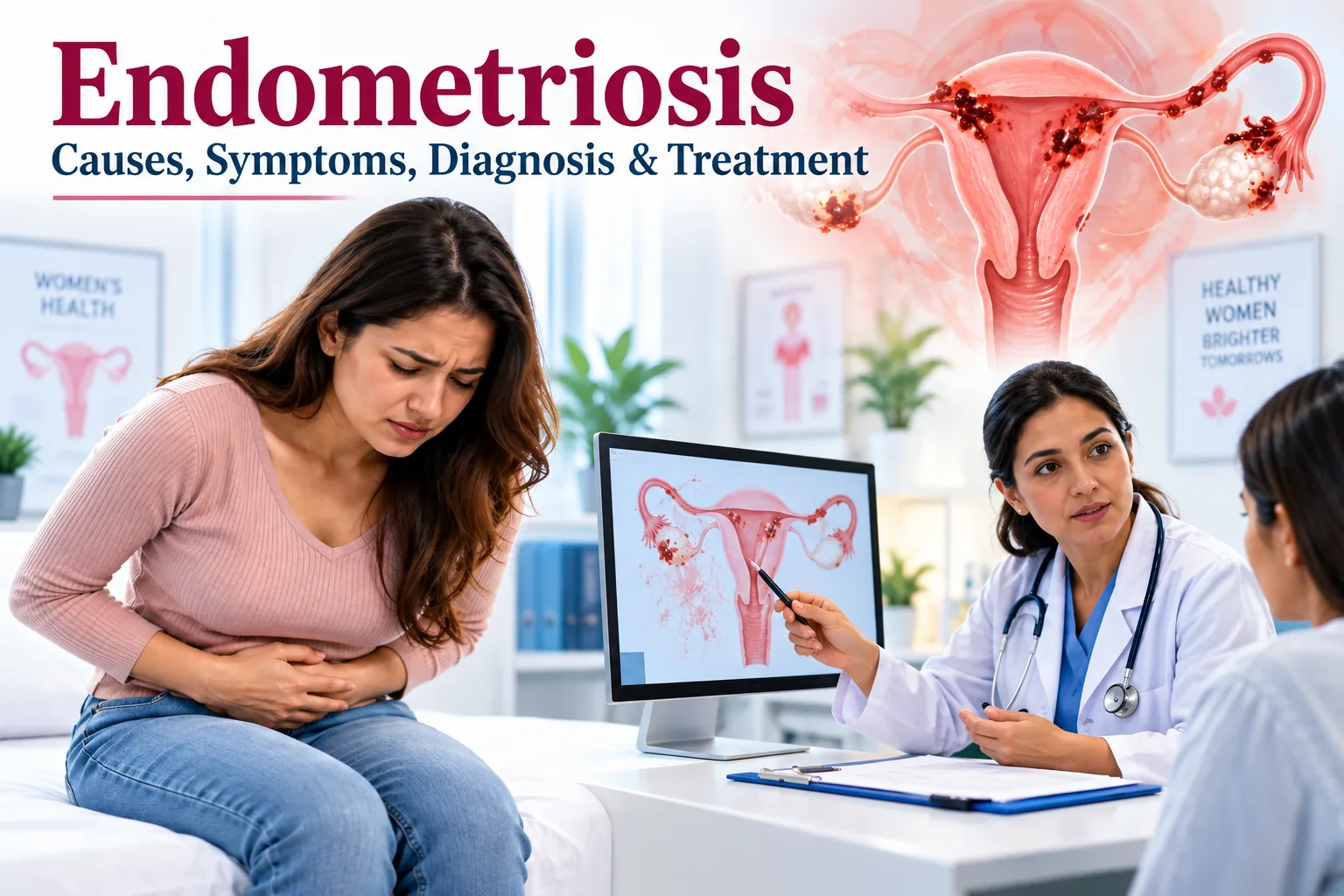
Endometriosis Treatment in India: Causes, Symptoms, Diagnosis & Treatment
Endometriosis Treatment in India may include medicines, hormonal therapy, laparoscopic surgery, fertility treatment, or a combination of these approaches. The right treatment depends on the severity and location of endometriosis, symptoms, age, previous treatment and whether the patient wants to become pregnant.
Endometriosis is a chronic gynecological condition in which tissue similar to the lining of the uterus grows outside the uterus. It commonly affects the ovaries, fallopian tubes and pelvic tissues, although it can sometimes involve the bowel, bladder and other areas.
For some women, endometriosis causes severe menstrual and pelvic pain. Others may have few symptoms and only learn about the condition during an infertility evaluation. Because symptoms can vary significantly, treatment should be based on an individual medical assessment rather than the disease stage alone.
Patients travelling to India for treatment should review their medical records, scans and previous treatment with a qualified gynecologist before deciding on surgery or other procedures.
What Is Endometriosis?
Endometriosis occurs when tissue resembling the endometrium develops outside the uterine cavity. This tissue can respond to hormonal changes during the menstrual cycle, resulting in inflammation and irritation.
Over time, inflammation may lead to scar tissue and adhesions. In some women, endometriosis can also cause an ovarian endometrioma, commonly known as a chocolate cyst.
The condition can affect:
- Ovaries
- Fallopian tubes
- Pelvic lining
- Uterus and surrounding tissues
- Bowel
- Bladder
According to the World Health Organization, endometriosis affects approximately 10% of women of reproductive age worldwide. It can occur from the first menstrual period through menopause.
The amount of visible disease does not always correspond to the level of pain. Someone with limited disease may have severe symptoms, while another person with extensive endometriosis may experience relatively little pain.
What Causes Endometriosis?
The exact endometriosis causes are still not completely understood. Researchers have identified several possible mechanisms, but there is no single explanation that applies to every patient.
Possible contributing factors include:
- Family history and genetic factors
- Hormonal influences
- Immune-system factors
- Movement of menstrual tissue through the fallopian tubes
- Changes in cells outside the uterus
- Previous pelvic procedures in some circumstances
Having a close family member with endometriosis may increase the risk of developing the condition.
There is currently no proven method that completely prevents endometriosis. Early assessment of persistent symptoms can, however, help patients receive appropriate treatment sooner.
What Are the Symptoms of Endometriosis?
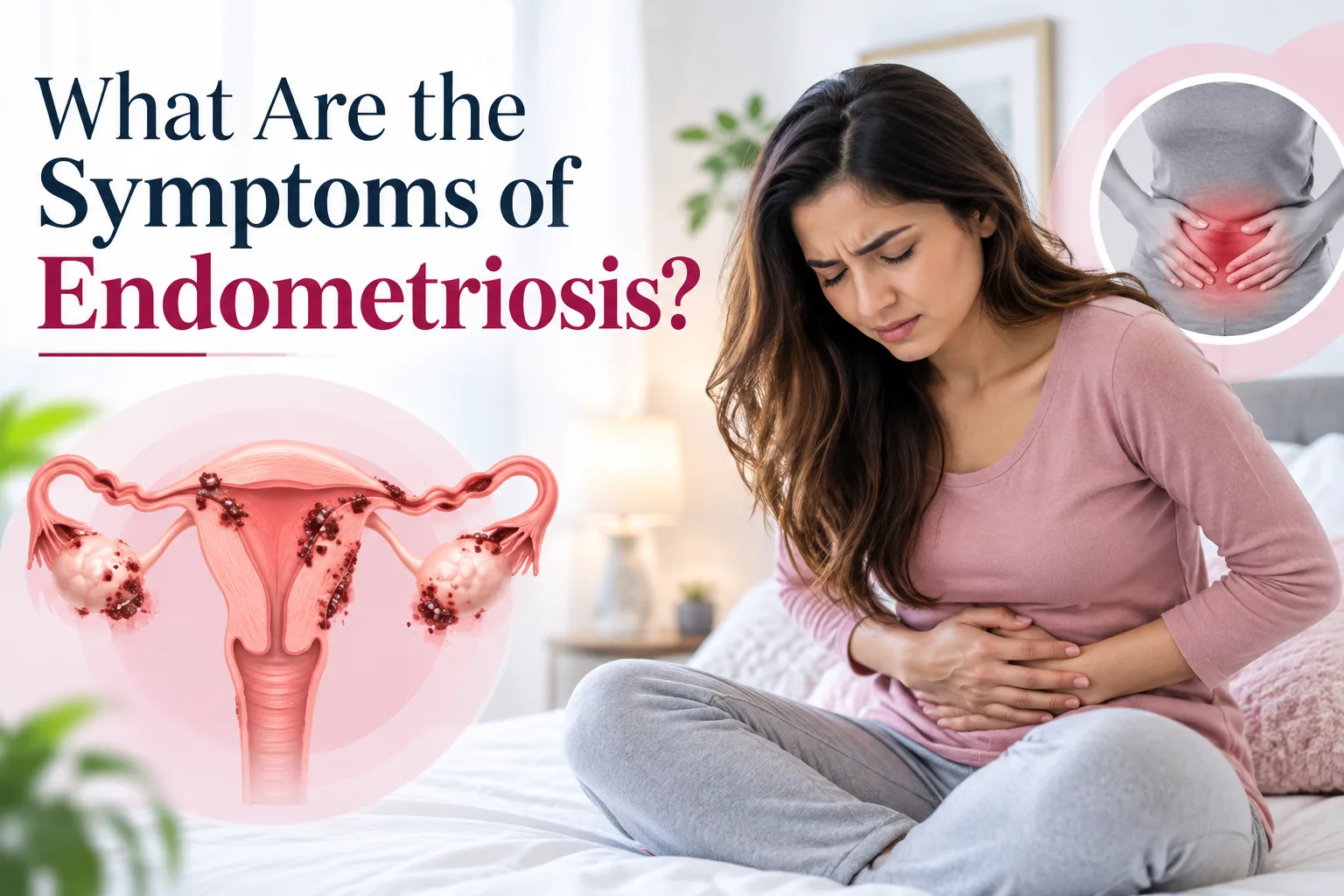
Endometriosis symptoms can range from mild to severe. Some women experience symptoms every month, while others have pain at different times of the cycle.
Common endometriosis symptoms in women include:
- Severe or worsening menstrual pain
- Chronic pelvic pain
- Lower abdominal or lower back pain
- Pain during or after sexual intercourse
- Pain during bowel movements
- Pain while urinating, especially during periods
- Heavy or irregular bleeding
- Bloating
- Fatigue
- Nausea
- Difficulty becoming pregnant
Endometriosis pain can be particularly troublesome when it interferes with work, education, exercise, sleep or normal daily activities.
When Should You See a Doctor?
Painful periods are common, but severe pain that repeatedly affects daily life deserves medical evaluation.
A gynecological consultation is especially important when:
- Period pain is getting worse over time.
- Regular painkillers are not providing adequate relief.
- Sexual intercourse is painful.
- Bowel or urinary pain occurs around menstruation.
- Pelvic pain continues between periods.
- You have difficulty becoming pregnant.
- Previous treatment has not controlled the symptoms.
These symptoms can also occur with other gynecological conditions, so proper diagnosis is important.
What Are the Stages of Endometriosis?
The stages of endometriosis are generally classified from Stage I to Stage IV according to the extent, depth and location of disease.
| Stage | General description |
|---|---|
| Stage I – Minimal | Small or superficial lesions with limited involvement |
| Stage II – Mild | More lesions and deeper involvement |
| Stage III – Moderate | Deeper disease, ovarian involvement and adhesions may occur |
| Stage IV – Severe | Extensive disease, significant adhesions and larger endometriomas may be present |
These stages help doctors describe the extent of disease, particularly during surgical assessment.
However, stage does not tell doctors exactly how much pain a patient will experience. Treatment therefore should not be based on stage alone. Symptoms, fertility plans, imaging findings and previous response to treatment also matter.
How Is Endometriosis Diagnosed?
Endometriosis diagnosis starts with a detailed medical history and gynecological examination.
A doctor may ask about menstrual pain, bleeding, bowel and urinary symptoms, sexual pain, fertility history, previous surgeries and family history.
Ultrasound
Pelvic ultrasound, particularly transvaginal ultrasound when appropriate, can identify ovarian endometriomas and some forms of deep endometriosis.
A normal ultrasound does not necessarily rule out endometriosis.
MRI
MRI may be recommended when deep endometriosis is suspected or when more detailed information about the pelvic organs is required before surgery.
Laparoscopy
Laparoscopy is a minimally invasive surgical procedure that allows the surgeon to inspect the pelvic organs directly. It may also allow treatment during the same procedure.
Surgery is not automatically required for every suspected case. Current clinical guidance supports using symptoms, examination and imaging to guide diagnosis and treatment, with laparoscopy considered when clinically appropriate.
What Are the Treatment Options for Endometriosis?
The appropriate endometriosis treatment depends on symptoms, disease location, fertility plans, age, previous treatment and overall health.
Treatment may focus on controlling pain, suppressing disease activity, treating anatomical problems or improving fertility.
Pain-Relief Medicines
Pain-relieving medicines can help manage menstrual and pelvic pain. Non-steroidal anti-inflammatory drugs such as ibuprofen or naproxen may be recommended when medically suitable.
Patients should follow medical advice regarding dosage and possible side effects. Pain medicines can control symptoms but do not remove endometriotic lesions.
Hormonal Therapy
Hormonal medicines can reduce hormonal stimulation of endometriotic tissue and may decrease pain.
Depending on the patient, treatment may include:
- Combined hormonal contraceptives
- Progestin-based medicines
- Hormonal intrauterine systems
- Other hormone-modulating treatments
Hormonal treatment may be particularly useful for patients who are not currently trying to become pregnant.
GnRH Medicines
Gonadotropin-releasing hormone (GnRH) agonists or antagonists can reduce ovarian hormone production and may be prescribed when other hormonal treatments are unsuitable or ineffective.
These medicines can have side effects related to reduced estrogen levels, so they should be used under specialist supervision.
Conservative Surgery
Conservative surgery aims to treat endometriosis while preserving the uterus and ovaries whenever clinically appropriate.
It may be considered when:
- Pain continues despite medical treatment.
- An endometrioma is causing symptoms.
- Significant adhesions are present.
- Deep endometriosis is suspected.
- Fertility is being affected by anatomical changes.
- Medication is not suitable or has not worked adequately.
Laparoscopic Surgery
Laparoscopy is commonly used for selected cases of endometriosis.
Depending on the disease, the surgeon may perform:
- Excision of endometriotic lesions
- Adhesion removal
- Endometrioma surgery
- Treatment of affected pelvic tissues
Complex disease involving the bowel, bladder or ureters may require a multidisciplinary surgical team.
Hysterectomy in Selected Cases
Hysterectomy involves removal of the uterus and may be considered in selected patients with severe symptoms who have completed their family and have not obtained sufficient relief from other treatments.
It is not required for every patient with endometriosis. It also cannot guarantee that all endometriosis-related symptoms will disappear if disease remains outside the uterus.
Endometriosis Treatment in India
India has hospitals offering gynecology, minimally invasive surgery and fertility services for patients with endometriosis.
The treatment process for an international patient may include:
- Sharing medical records and previous scans.
- Reviewing the case with a gynecologist.
- Completing additional tests if required.
- Discussing medication, surgery or fertility treatment.
- Receiving a treatment and cost estimate.
- Travelling to India for the planned treatment.
- Completing follow-up before returning home.
Patients with suspected deep or complicated disease should ask about the surgeon's experience with advanced laparoscopic procedures and whether other specialists can be involved if necessary.
Endometriosis Surgery in India
Endometriosis surgery in India may include diagnostic laparoscopy, excision of lesions, treatment of adhesions, ovarian endometrioma surgery or more complex pelvic procedures.
Before surgery, patients should ask:
- What type of endometriosis is suspected?
- Which organs are affected?
- Is surgery intended to diagnose, treat or both?
- Will the lesions be excised?
- Is an ovarian endometrioma present?
- Could bowel, bladder or ureteral involvement be present?
- How could the surgery affect fertility?
- How long is hospitalisation expected to last?
- What is included in the quoted cost?
For complex endometriosis, access to colorectal, urology and fertility specialists can be important.
Endometriosis Treatment Cost in India
The endometriosis treatment cost in India varies depending on the type of treatment and the complexity of the disease.
Factors affecting the final cost include:
- Type of surgery
- Disease severity
- Ovarian endometriomas
- Bowel or bladder involvement
- Hospital and city
- Surgeon and anaesthesia fees
- Diagnostic tests
- Medicines and consumables
- Length of hospital stay
- Pathology
- Additional procedures
Indicative Cost of Endometriosis Treatment
| Treatment | Approximate Cost in India (USD) | Approximate Cost in US/UK (USD) |
|---|---|---|
| Consultation & diagnostic workup | $50-$150 | $300-$600 |
| Diagnostic laparoscopy | $1,200-$2,000 | $6,000-$10,000 |
| Laparoscopic excision surgery (Stage 1-2) | $2,500-$4,000 | $10,000-$18,000 |
| Laparoscopic excision surgery (Stage 3-4, deep infiltrating) | $4,500-$7,000 | $15,000-$25,000+ |
| Hysterectomy (selected cases) | $3,000-$5,500 | $12,000-$20,000 |
Resource: Cost ranges compiled from industry data published by international medical travel platforms and hospital price disclosures (2025-2026).
Patients should request an itemized estimate covering surgeon fees, hospital charges, anaesthesia, medicines, investigations, consumables, pathology and follow-up.
Price Disclaimer: The cost figures above are based on older data, primarily from the previous year, and may not represent current hospital prices. For exact and updated information, patients should call or email the hospital or medical coordination team and request a case-specific quotation.
Best Hospitals for Endometriosis Treatment in India
There is no single hospital that is the right choice for every endometriosis patient. The appropriate hospital depends on the patient's condition, required procedure, specialist expertise, fertility needs and access to multidisciplinary care.
The following hospitals are listed in the hospital page on HealthRoop's website and are presented here without ranking:
- Apollo Hospitals
- Fortis Healthcare
- Medanta – The Medicity
- Narayana Health
- Manipal Hospitals
- Max Healthcare
Patients should compare the individual specialist, proposed treatment, hospital facilities and total estimated cost rather than choosing a hospital name alone.
Endometriosis and Infertility
Endometriosis and infertility can be associated because the condition may affect the ovaries, fallopian tubes and pelvic anatomy.
Possible factors include:
- Pelvic adhesions
- Ovarian endometriomas
- Distortion of pelvic organs
- Inflammation
- Changes affecting ovarian function in some patients
However, having endometriosis does not mean that pregnancy is impossible.
Fertility planning should take into account age, ovarian reserve, fallopian tube function, sperm factors and the severity of endometriosis.
Depending on the situation, treatment may include trying naturally, IUI or IVF.
Women planning pregnancy should discuss fertility goals before undergoing ovarian or extensive pelvic surgery because some procedures can affect ovarian reserve.
Recovery After Endometriosis Treatment
Recovery depends on the type of treatment.
After uncomplicated laparoscopic surgery, patients may experience abdominal soreness, bloating, fatigue and temporary discomfort around the incision sites. Many patients can gradually return to normal activities over the following weeks.
Recovery can take longer after extensive surgery involving the bowel, bladder, ureters or multiple pelvic structures.
International patients should discuss:
- When they can safely fly home
- Follow-up requirements
- Wound care
- Medication
- Physical activity restrictions
- Warning signs requiring medical attention
- Remote follow-up after returning home
The surgeon should provide individual recovery instructions because recovery times differ between procedures.
Why Consider India for Endometriosis Treatment?
Patients considering treatment in India may find several practical advantages, including access to large multi-specialty hospitals, gynecologists, laparoscopic surgeons and fertility specialists.
Many major hospitals also have international patient departments that assist with appointments, medical documentation and travel-related coordination.
Another important factor is the possibility of obtaining a treatment plan before travelling. Patients can share their previous reports and scans for preliminary review and then receive advice about additional investigations or consultations.
The decision to travel should be based on medical suitability, expected treatment, total costs, travel requirements and follow-up arrangements.
How HealthRoop Helps International Patients
HealthRoop helps international patients coordinate their medical treatment journey in India, while diagnosis and treatment decisions remain with qualified doctors and hospitals.
Support may include:
- Collecting medical reports for hospital review
- Connecting patients with suitable hospitals and specialists
- Appointment coordination
- Treatment and cost estimate assistance
- Hospital admission coordination
- Medical visa guidance
- Airport and local transportation support
- Accommodation assistance
- Interpretation support where available
- Medical documentation coordination
- Follow-up consultation arrangements
Patients should provide complete medical records, previous scans, medication details and surgical history whenever possible. This helps the treating team understand the case before the patient travels.
Medical Disclaimer: This article is for general educational purposes and should not replace consultation, diagnosis or treatment from a qualified medical professional. Endometriosis treatment should be selected according to the patient's symptoms, medical history, examination, imaging and fertility plans.
Cost Disclaimer: The prices mentioned in this article are based on older published data and are provided only as general reference figures. Hospital charges, surgeon fees, investigations, medicines and procedure costs can change. Actual endometriosis treatment cost in India may vary significantly according to the hospital, city, disease severity and treatment plan. For the latest and exact cost, patients should call or email the hospital or medical coordination team and request a personalized quotation.
Frequently Asked Questions
Answers on endometriosis causes, diagnosis, and treatment.
There is no single treatment that works best for every patient. Medicines and hormonal therapy may control symptoms, while surgery can be considered for selected cases. The treatment plan depends on symptoms, disease location, fertility goals, previous treatment and overall health.
There is currently no treatment that guarantees permanent elimination of endometriosis. Treatment can control symptoms and remove visible disease in selected cases, but symptoms or lesions may return. Long-term management depends on the patient's symptoms, treatment response and reproductive plans.
The cost varies depending on whether treatment involves medicines, diagnostic testing, laparoscopy or complex surgery. Previously published Indian estimates range from tens of thousands of rupees to several lakh rupees. Patients should request a current, itemized quotation directly from the hospital.
No. Many patients can initially manage symptoms with medicines or hormonal treatment. Surgery may be considered when symptoms remain severe, significant disease is present, complications develop or there is another medical reason for an operation.
Recovery depends on the procedure. Uncomplicated laparoscopic surgery may allow a gradual return to normal activities within a few weeks, while extensive surgery can require more time. The surgeon will provide specific advice based on the organs treated and the extent of surgery.
Yes. Endometriosis can contribute to infertility by causing adhesions, ovarian endometriomas, inflammation or changes in pelvic anatomy. However, many women with endometriosis become pregnant naturally or with fertility treatment. Fertility assessment should consider age, ovarian reserve, tubes and other reproductive factors.
Yes. Laparoscopic endometriosis surgery is available at many Indian hospitals. Depending on the case, surgery may involve removing lesions, treating adhesions or managing ovarian endometriomas. Patients with deep or complicated disease should ask about the surgeon's experience with advanced laparoscopic procedures.
Yes. International patients can seek consultations and treatment in India, subject to applicable travel and medical requirements. It is useful to send medical reports, scans and previous treatment records before travelling so the hospital can assess the case and provide a treatment plan.
Yes. Symptoms or endometriotic lesions can recur after treatment. Recurrence depends on several factors, including disease characteristics and treatment approach. Persistent or returning symptoms should be reviewed by a gynecologist rather than treated with repeated self-medication.
Endometriosis can affect fertility, but pregnancy is still possible for many women with the condition. Some conceive naturally, while others may need fertility treatment such as IUI or IVF. The appropriate approach depends on age, ovarian reserve, tubal function, sperm factors and the extent of endometriosis.
