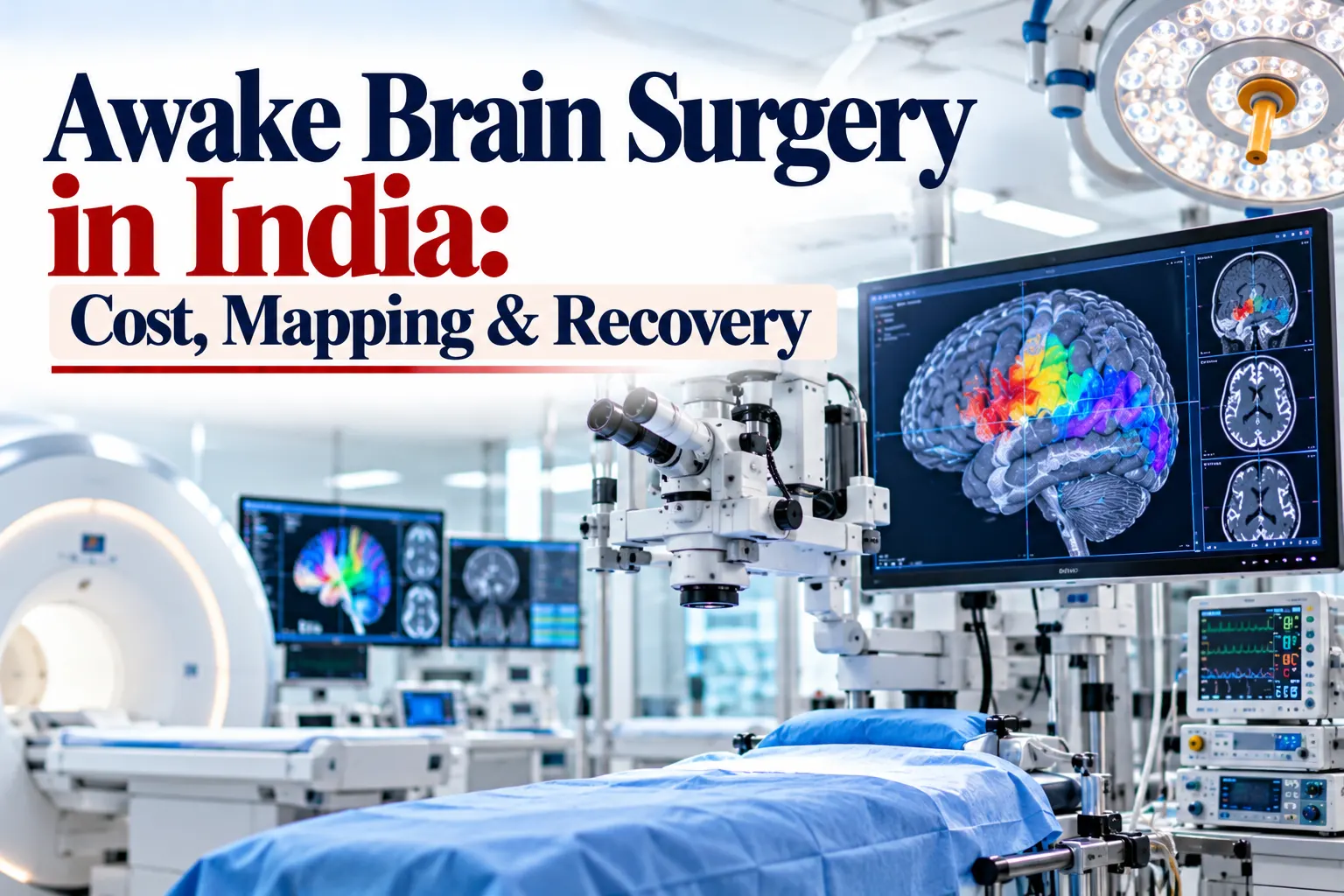
Awake Brain Surgery in India: Mapping, Eligibility & Recovery
Awake brain surgery in India is a specialised procedure used when surgeons need to monitor important brain functions during an operation. The patient remains awake for the part of surgery when the team tests abilities such as speaking, understanding language or moving a limb. This helps the neurosurgeon make informed decisions while removing a brain tumour or treating certain neurological conditions.
The procedure, also known as an awake craniotomy in India, may be recommended when a tumour lies close to areas responsible for speech, movement or other essential functions. The surgical team uses brain mapping to identify these areas and assess how they respond during the operation.
For patients considering brain tumour treatment, the important questions are whether awake surgery is appropriate, how mapping works, what the procedure costs and what recovery involves. The answer depends on the diagnosis, tumour location and the patient's overall health.
What Is Awake Brain Surgery?
Awake brain surgery is a type of neurosurgery in which the patient is conscious during the stage when doctors need to assess brain function. Medication may be used to keep the patient relaxed or sleepy during other parts of the procedure.
The surgeon opens a section of the skull to reach the affected area. During mapping, the patient may be asked to name pictures, count, speak or move a hand. The team observes the responses and uses them to guide decisions about which tissue can be removed safely.
The brain itself does not have pain receptors. However, the scalp and surrounding tissues do, so local anaesthesia and carefully managed medication are used to control discomfort.
Awake surgery is not required for every brain tumour. It is most useful when testing brain function during the operation could help protect abilities that are important to everyday life.
Why Is Brain Mapping Used During Surgery?
Brain tumor mapping surgery helps identify areas involved in speech, movement, sensation and other functions. These areas can vary between individuals, and a tumour may affect their normal position or activity.
Mapping can involve two stages.
Preoperative brain mapping
Before surgery, the team may use MRI, functional MRI or specialised imaging to understand the tumour's position and its relationship to important brain pathways.
The patient may also complete speech, language or movement assessments. These establish a baseline for comparison during surgery.
Mapping during the operation
The surgeon may use controlled electrical stimulation to test selected brain areas. The patient performs simple tasks while the team observes whether stimulation affects speech, movement or another function.
If a response suggests that an area is important, the surgeon can adjust the surgical plan to reduce the risk of damaging it.
Mapping helps guide tumour removal, but it cannot guarantee that all neurological functions will remain unchanged. The surgeon must balance the amount of tumour removed against the risk of affecting essential brain tissue.
Who Is Eligible for Awake Craniotomy in India?
Awake craniotomy eligibility depends on the tumour's location, the planned operation and the patient's ability to participate in testing.
A neurosurgeon may consider this approach when:
- The tumour is close to speech, language or movement areas.
- Functional testing is likely to influence surgical decisions.
- The patient can understand instructions and perform the required tasks.
- The patient can cooperate with the procedure with appropriate support.
- The anaesthesia and neurosurgical teams consider the approach medically suitable.
Who may not be suitable?
Awake surgery may not be appropriate for patients who cannot participate reliably in mapping, have severe confusion or cannot tolerate the procedure despite suitable support.
Certain airway problems, medical conditions or tumour locations may also make another surgical approach safer.
These factors are assessed individually. A patient who is not suitable for awake surgery may still have other treatment options, including surgery under general anaesthesia with appropriate monitoring.
The treating neurosurgical team must make the final decision after reviewing the scans, diagnosis, medical history and expected benefits of mapping.
How Is Awake Brain Surgery Performed?
The exact procedure varies according to the tumour and the hospital's surgical protocol. Some patients are sedated at the beginning and end of surgery but awake during mapping.
Step 1: Preoperative assessment
The team reviews MRI scans, medical history, current medicines and neurological symptoms. Blood tests and other investigations may be required.
Step 2: Preparation and anaesthesia
The patient receives medication according to the anaesthetic plan. Local anaesthesia is used to numb the scalp, and the head is secured to prevent movement.
Step 3: Opening the skull
The neurosurgeon makes an incision and temporarily removes a section of skull to access the brain.
Step 4: Functional brain mapping
The patient performs selected tasks while the surgeon tests relevant areas of the brain. These may include speaking, naming objects, counting or moving a limb.
Step 5: Tumour removal
The surgeon removes the tissue that can be treated safely. If testing indicates that further removal could damage an important function, the surgeon may stop or modify the procedure.
Step 6: Closing the surgical site
The surgeon closes the protective coverings, replaces the bone flap and closes the scalp incision. The patient is then monitored closely after surgery.
The procedure can take several hours. Its duration depends on tumour complexity, mapping requirements and the patient's condition.
What Are the Benefits of Awake Brain Surgery?
The main benefit is that the surgical team can assess selected brain functions in real time instead of relying only on preoperative scans.
Potential benefits include:
- Functional assessment during surgery: The team can observe changes in speech or movement while testing relevant areas.
- Better-informed surgical decisions: Mapping helps identify tissue that should be protected.
- Support for selected complex tumours: The technique can be useful when a tumour lies close to important functional regions.
- Individualised planning: Testing can be tailored to the patient's abilities and the location of the tumour.
Awake surgery does not automatically provide better results than conventional surgery. Its value depends on whether functional testing is likely to improve surgical planning in that particular case.
What Are the Risks of Awake Craniotomy?
Awake craniotomy carries many of the same risks as other brain operations. Possible complications include:
- Bleeding or infection.
- Brain swelling.
- Seizures during surgery.
- Temporary or lasting weakness.
- Changes in speech, language, memory or concentration.
- Headache, nausea or vomiting.
- Anaesthesia-related complications.
- Incomplete tumour removal if further surgery would put essential functions at unacceptable risk.
The team may need to change the anaesthetic plan or stop mapping if the patient becomes unable to participate or a safety concern develops.
The risks depend on tumour location, the extent of surgery and the patient's health. Before consenting, ask the neurosurgeon which complications are most relevant to your case and whether additional treatment may be required.
Which Awake Brain Surgery Hospitals Can Patients Consider in India?
Patients looking for awake brain surgery hospitals should compare neurosurgical expertise, functional mapping facilities, neuroanaesthesia and postoperative support.
The following hospitals are listed in Healthroop's hospital network and can be starting points for enquiries. Their inclusion does not confirm that every branch currently performs awake craniotomy with functional brain mapping.
| Hospital | Location | What to confirm |
|---|---|---|
| Apollo Hospitals | Chennai and other locations | Awake craniotomy availability and mapping expertise |
| Fortis Healthcare | Gurugram and other locations | Neurosurgical experience and intraoperative monitoring |
| Medanta – The Medicity | Gurugram | Availability of awake surgery and specialist support |
| Narayana Health | Bengaluru and other locations | Neurosurgical services at the selected centre |
| Manipal Hospitals | Bengaluru and other locations | Functional mapping and neuroanaesthesia services |
| Max Healthcare | Delhi NCR and other locations | Experience with tumours near functional brain areas |
What Is the Cost of Awake Brain Surgery in India?
The cost of awake brain surgery in India depends on the hospital, tumour complexity, surgeon's fees, mapping requirements and length of admission.
For preliminary budgeting, an indicative range of ₹2 lakh to ₹8 lakh may be considered for some cases. This is not a verified current tariff or a guaranteed package price. Complex operations, intensive care or additional treatment may increase the final bill.
Estimated Cost Breakdown
| Expense | What it may include |
|---|---|
| Neurosurgeon fees | Surgical planning and operation |
| Anaesthesia | Sedation, local anaesthesia and monitoring |
| Brain mapping | Functional testing and related equipment |
| Operating theatre | Theatre charges and surgical supplies |
| Hospital admission | Room, nursing and inpatient care |
| Intensive care | Monitoring when medically required |
| Investigations | MRI, blood tests and other assessments |
| Pathology | Examination of removed tissue |
| Rehabilitation | Speech or physical therapy, if needed |
Cost resources: Apollo Hospitals and Mayo Clinic — Awake Brain Surgery. These resources explain the procedure and related care; they do not verify the cost range above. Patients should request a current quotation from the selected hospital.
What Can Increase the Total Cost?
- Tumour complexity: More difficult cases may require longer operating time.
- Mapping requirements: The duration and type of functional testing affect resources.
- Hospital and room category: Charges differ between facilities.
- Length of stay: Additional inpatient or intensive care days increase expenses.
- Further treatment: Radiotherapy, medicines or rehabilitation may be needed.
- Complications: Unexpected medical care can add to the bill.
Request an itemised estimate covering mapping, anaesthesia, surgery, medicines, admission, pathology and follow-up. International patients should budget separately for flights, accommodation, transport and visa-related expenses.
What Is Recovery After Awake Brain Surgery Like?
Recovery after awake brain surgery varies according to the tumour's location, the extent of surgery and the patient's neurological condition.
| Recovery stage | What patients may expect |
|---|---|
| First 24–48 hours | Neurological monitoring, pain management and assessment of speech and movement |
| First few days | Gradual movement, wound care and further assessment |
| First 1–2 weeks | Rest, follow-up planning and light activity as advised |
| Weeks 2–6 | Gradual return to everyday activities, depending on progress |
| Beyond six weeks | Continued recovery, rehabilitation or additional treatment if needed |
Some patients leave hospital after several days, while others require a longer stay. Recovery can take weeks or months, particularly when neurological changes or further treatment are involved.
Tips for Recovery at Home
- Take medicines exactly as prescribed.
- Follow instructions for wound care.
- Increase activity gradually.
- Avoid driving, heavy lifting and strenuous exercise until cleared by the treating team.
- Attend follow-up appointments and recommended scans.
- Complete speech, physical or occupational therapy when advised.
- Seek urgent medical attention for seizures, sudden weakness, new speech difficulties, confusion, severe worsening headaches, repeated vomiting, fever or wound discharge.
Will Speech and Movement Return to Normal?
The outcome depends on the function affected, the tumour's location and the extent of surgery. Some postoperative changes improve with time, while others may persist and require rehabilitation.
Brain mapping helps the surgeon make informed decisions, but it cannot guarantee that speech, movement or memory will remain unchanged. Ask the specialist about the specific functions at risk and the likely rehabilitation needs.
What Happens After the Tumour Is Removed?
The removed tissue is usually examined in a laboratory to determine the tumour type and other relevant features. The results help the medical team decide whether surgery is sufficient or further treatment should be considered.
Depending on the diagnosis, the next steps may include:
- Follow-up MRI scans.
- Neurological examinations.
- Radiotherapy or chemotherapy for certain tumours.
- Further review if tumour tissue remains.
- Speech or physical rehabilitation.
- Long-term monitoring for recurrence.
Not every patient needs additional cancer treatment. The decision depends on the pathology report, the extent of removal and the treating specialist's assessment.
How Healthroop Helps Patients Arrange Treatment in India
Healthroop helps patients explore hospital options and coordinate medical enquiries for treatment in India. Patients considering awake brain surgery can organise their medical records, enquire about specialist consultations and request hospital-specific estimates before making travel arrangements. The treating neurosurgeon must determine whether awake craniotomy is suitable and explain the expected benefits and risks.
Support may include:
- Medical report coordination: Organising MRI scans, pathology reports and relevant medical records for specialist review.
- Hospital enquiries: Checking which centres may provide the required neurosurgical services.
- Cost estimates: Requesting a case-specific quotation and clarifying package inclusions.
- Second opinions: Coordinating another specialist consultation when appropriate.
- Travel assistance: Helping international patients plan appointments, accommodation and local transport.
- Follow-up planning: Clarifying postoperative review arrangements before returning home.
What Should International Patients Prepare Before Travelling?
Before travelling to India, organise the medical documents and practical arrangements needed for assessment and recovery.
Prepare:
- Recent MRI or CT images and reports.
- Previous biopsy or pathology reports, if available.
- Neurological assessments and discharge summaries.
- A list of medicines, allergies and existing medical conditions.
- Records of previous surgery, radiotherapy or chemotherapy.
- Passport and applicable medical visa documents.
- A written treatment estimate and admission plan.
- Details of follow-up appointments and possible rehabilitation.
Ask the treating team how long you should remain in India after discharge. The medical team should confirm when air travel is appropriate, especially if complications or neurological changes occur.
Final Thoughts
Awake brain surgery in India may be suitable for selected patients whose tumours lie near areas responsible for speech, movement or other essential functions. Functional mapping helps surgeons assess these abilities during the operation and use the findings to guide tumour removal.
The right approach depends on the diagnosis, tumour location, patient suitability and surgical team's experience. Before making a decision, discuss the expected benefits, possible complications, cost, rehabilitation needs and follow-up plan with the treating specialist. A second opinion may be useful for complex cases.
Price disclaimer: The cost figures in this article are indicative estimates based on previously published pricing information, including data from the previous year. They are not guaranteed current hospital quotations. Actual charges can change according to the hospital, surgeon, mapping requirements, tumour complexity, length of stay and individual medical needs. For exact, updated pricing, call or email Healthroop or the selected hospital and request a personalised estimate after medical records have been reviewed.
Frequently Asked Questions
Answers on awake brain surgery cost, recovery, and planning care in India.
Awake brain surgery is a procedure in which the patient remains conscious during the part of the operation when doctors need to assess brain function. It is used for selected tumours near speech or movement areas. Brain mapping helps guide tumour removal while protecting important abilities.
The surgical team uses local anaesthesia to numb the scalp and medication to manage discomfort and anxiety. Patients may experience pressure, sounds or pulling sensations during the procedure. The anaesthesia team monitors comfort throughout the operation and adjusts medication according to the patient's needs.
Patients with selected tumours near speech, language or movement regions may be candidates. Eligibility depends on tumour location, medical condition, ability to participate in mapping and the expected benefit of the procedure. A neurosurgeon and anaesthesia team assess each patient individually before recommending surgery.
The cost varies by hospital, tumour complexity, mapping requirements and length of admission. An indicative planning range of ₹2 lakh to ₹8 lakh may apply to some cases, but it is not a confirmed current tariff. Patients should obtain a written estimate from the selected hospital.
The operation often takes several hours, depending on tumour location, surgical complexity and mapping requirements. The team may adjust the plan if functional changes or safety concerns arise. The neurosurgeon can provide a more specific estimate after reviewing the patient's scans and treatment requirements.
Possible risks include seizures, bleeding, infection, brain swelling, weakness and changes in speech, memory or concentration. Some complications may be temporary, while others can persist. Brain mapping helps guide surgical decisions but cannot remove every risk associated with brain surgery.
Many patients remain in hospital for several days and continue recovering at home over the following weeks. Some need longer rehabilitation or additional treatment. Recovery depends on the tumour, the extent of surgery and any neurological changes. The treating team determines when normal activities can resume.
Complete removal may be possible for some tumours, but it is not always safe or achievable. If the tumour lies close to critical brain tissue, the surgeon may leave some tissue behind to protect important functions. Further treatment depends on the pathology and clinical findings.
Awake surgery provides real-time information about selected brain functions, which can help guide the operation. However, it is not automatically safer for every patient. The appropriate method depends on tumour location, the planned procedure, patient suitability and the expertise of the surgical team.
Apollo Hospitals, Fortis Healthcare, Medanta, Narayana Health, Manipal Hospitals and Max Healthcare are possible starting points for enquiries. Patients should confirm that the selected branch offers awake craniotomy with functional mapping and has an experienced neurosurgical and neuroanaesthesia team.
